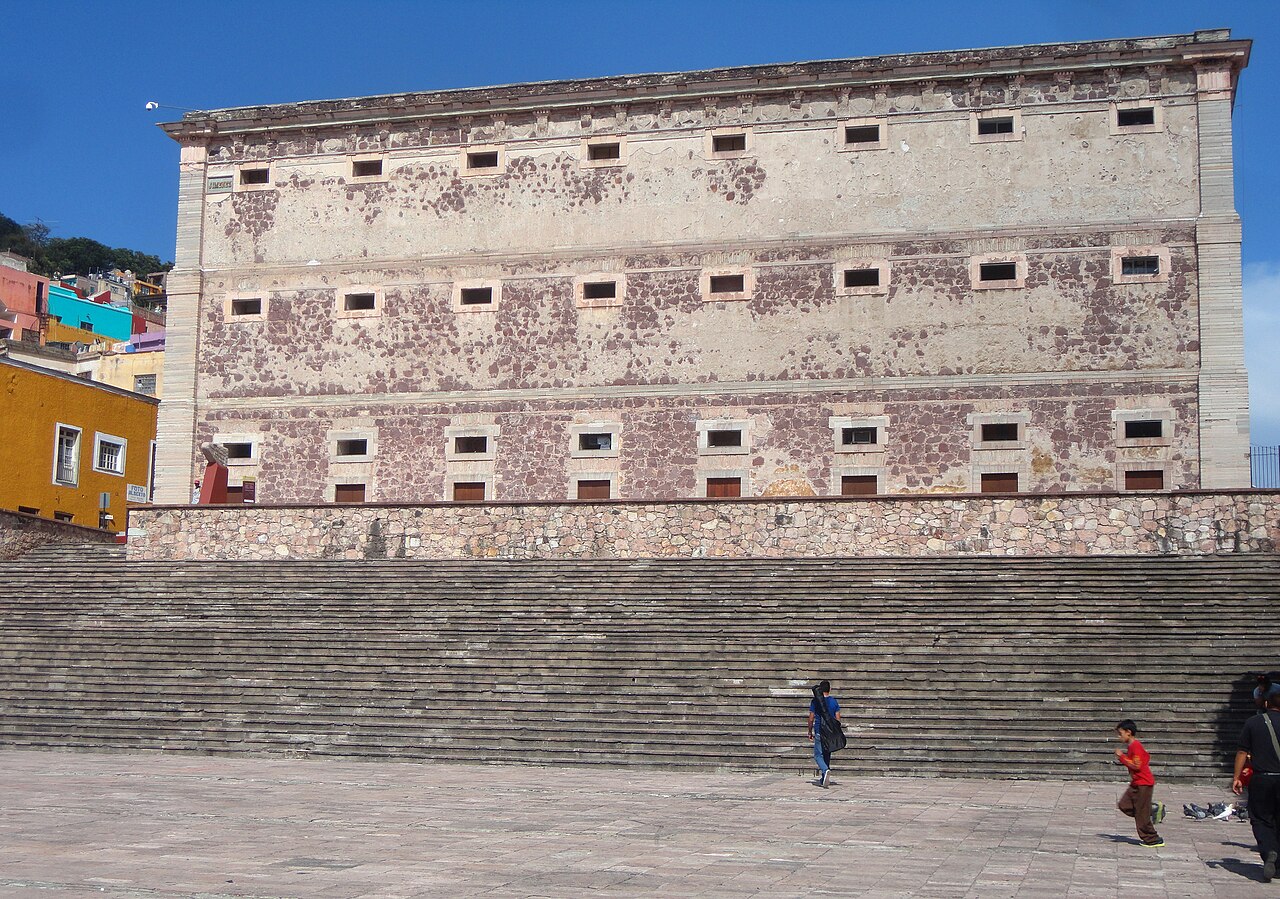
The Alhóndiga de Granaditas is a stout, fortress-like building that played a central part in Mexican history. It was built as a public grain warehouse, a place to store maize for the city in lean years, and its thick walls made it an obvious refuge when the independence movement began in 1810. The first battle of that war was fought here, and it is the reason Guanajuato appears in every Mexican history book. The building opened as a museum in 1958 and now houses the Museo Regional de Guanajuato, with more than nine thousand pieces and fourteen permanent exhibition rooms covering the history and culture of the region. Highlights include a room of pre-Hispanic stamps, a Mesoamerican art hall with archaeological objects and representations of ancient gods, a nineteenth-century room that follows the independence troops, and a room of exvotos, the small painted offerings left in thanks for miracles, which are among the most touching objects in the collection. The museum also runs workshops, talks and activities for all ages. The building is interesting in its own right, with its great stone courtyard and staircase, and it sits a short walk from the centre, close to the market, so it is easy to combine with other stops.
To read the building properly, remember who used it. The Alhóndiga's stout walls were built for storage, not comfort, and in 1810 the Spanish and royalist families of the city barricaded themselves inside with their valuables. The insurgent army, aided by the miner known as El Pípila, famously set fire to the door to break in, which is why his monument towers over the city today.
The building later served as a prison before it was converted into the museum, and visitors can still feel the austerity of the architecture as they move from room to room.
Working the visit
The collection is more about Guanajuato's long human story than about any single battle, so take your time in the archaeology and exvoto rooms, which put the independence story in context. Admission is modest and free for children under thirteen, seniors, students and teachers who bring identification.
Days and hours vary, and the tourism board's schedule shows the museum closed on Mondays with shorter hours on Sundays, so check before you go and avoid a wasted trip. Give it an hour or ninety minutes, and look out for temporary exhibitions and festival-season programmes.
Who it suits
History fans, families with older children and anyone who wants the backstory of the independence monument seen from the Pípila terrace. It also rewards a rainy afternoon. For context before you go, read about El Pípila and then follow his route in reverse: from this building, up the hill by funicular or on foot, to the monument and the best view of the rooftops. The two stops tell a single story, and doing them in the same day makes it far easier to remember.
What to expect
The experience
A self-guided visit through fourteen permanent rooms, from pre-Hispanic archaeology to independence-era history, set in a fortress-like former grain warehouse.
Best time
A weekday morning, when the galleries are quiet; confirm opening days first because Monday is not a visiting day on the tourism board schedule.
How long
One to one and a half hours for the permanent rooms, longer if you join an activity or see a temporary show.
Tips
Bring identification if you qualify for free entry as a student, teacher or senior, and do not miss the exvoto room.
Quick picks
- Best for
- History lovers who want the full story behind Mexican independence and the region's earlier past.
- Families
- Good for older children, with workshops and activities at times; younger ones may tire of the long galleries.
- Couples
- A quiet, absorbing hour, ideal before a late lunch near the market.
- Pair with
- The Pípila monument, the Cultural Walk and the Mercado Hidalgo a few minutes away.
- Time needed
- Up to ninety minutes.
Good questions
Why is the Alhóndiga famous?+
It was the site of the first major battle of Mexico's independence movement in 1810. The building was originally a grain warehouse.
What can you see inside?+
More than nine thousand pieces in fourteen permanent rooms, including pre-Hispanic stamps, Mesoamerican art, an independence-era room and a room of exvotos.
How much does it cost?+
Admission is modest. It is free for children under thirteen, seniors, students and teachers, so bring identification if you qualify.
Which days is it open?+
The tourism board shows it closed on Mondays with shorter Sunday hours, but schedules change, so confirm before visiting.
How long does a visit take?+
Plan about an hour to ninety minutes for the permanent galleries. Add time if there is a temporary exhibition.