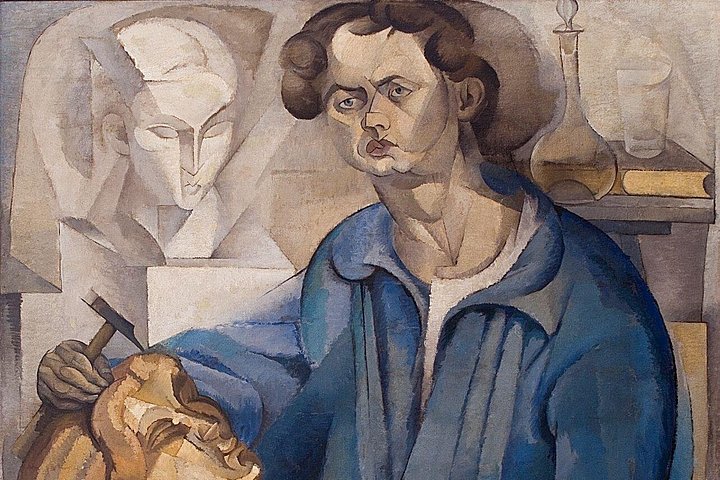
Diego Rivera was born in Guanajuato in 1886, and the house where he lived as a child is now one of the city's most rewarding small museums. The Museo Casa Diego Rivera sits on Positos street, in a colonial-style house restored with the help of his daughter, Guadalupe Rivera Marín, and with support from the federal government and the National Institute of Fine Arts. The ground floor recreates the family's rooms with period furniture and decor, giving a sense of a middle-class Guanajuato household in the late nineteenth century. Upstairs, the galleries hold a collection assembled by the engineer Marte R. Gómez, with rooms for nudes and drawings, including a self-portrait and nudes of Frida Kahlo and Dolores Olmedo, and for lithographs and portraits such as La Maestra Rural, Zapata and Niño en Rojo. Other rooms hold watercolours and inks that Rivera made as the Paricutín volcano erupted, preliminary sketches for the mural Historia del Teatro, postwar works reflecting the country's conflicts, and a photomural of his famous Sueño de una Tarde Dominical en la Alameda. Temporary exhibitions by Mexican and foreign artists rotate through the upper halls. It is compact, quiet and cheap, and it adds real depth to a city visit.
The house matters because it connects the artist to the place. Rivera left Guanajuato as a child and went on to become a founder of the Mexican muralist movement, with enormous public works in Mexico City and the United States, and his turbulent marriage to Frida Kahlo made him famous around the world.
Here the focus is on the intimate side: the drawings, the studies and the family setting. If you know the famous murals, it is fascinating to see how the ideas began on paper, and if you do not, the museum is a gentle introduction.
Working the visit
The tourism board lists the museum as open Tuesday to Sunday, closing in the late afternoon, with a modest general admission and a lower price for students with valid credentials, so bring identification. Mondays are not a visiting day, and temporary exhibitions can change at short notice, so call or check before you go if a particular show matters to you. Allow an hour, more if you like to read the labels, and note that the rooms are small, which means it is best visited outside the busiest midday hours.
Who it suits
Art lovers, history fans and anyone curious about Mexican modernism. Teenagers with an interest in art, or in Frida Kahlo, tend to enjoy it, and younger children can be entertained by the recreated rooms for a short while. It combines well with the University steps and the Teatro Juárez, and the Cultural Walk on this site passes the door, though it only gives a few minutes outside, so come back for the full visit.
What to expect
The experience
A self-guided visit through a restored colonial house, with recreated family rooms downstairs and drawing, lithograph and portrait galleries upstairs.
Best time
A weekday morning, when the small rooms are quietest; the museum is closed on Mondays.
How long
About an hour for the permanent collection, a little longer if there is a temporary show.
Tips
Bring a student card for the lower fare, check the current temporary exhibition and look for the Paricutín watercolours and the Historia del Teatro sketches.
Quick picks
- Best for
- Art lovers and anyone who wants to connect Rivera's famous murals to the city that shaped him.
- Families
- Best for older children and teenagers; the recreated rooms help younger ones, but the galleries are quiet.
- Couples
- A relaxed, inexpensive hour followed by lunch in the nearby lanes.
- Pair with
- The University steps, the Teatro Juárez and the Alhóndiga museum.
- Time needed
- One hour.
Good questions
Was Diego Rivera really born in Guanajuato?+
Yes, he was born in the city in 1886. The museum is in the house where he lived during his early years.
What does the collection include?+
Rooms of drawings, nudes, lithographs and portraits, Paricutín watercolours, sketches for the mural Historia del Teatro and a photomural of his Alameda painting. Temporary exhibitions rotate.
When is the museum open?+
The tourism board lists Tuesday to Sunday, from ten in the morning to five in the afternoon. It is not open on Mondays, so check before you go.
How much does it cost?+
General admission is low, and students with valid credentials pay less. Bring identification if you want the discount.
Where is it?+
On Positos street in the historic centre, a short walk from the University and the Teatro Juárez.