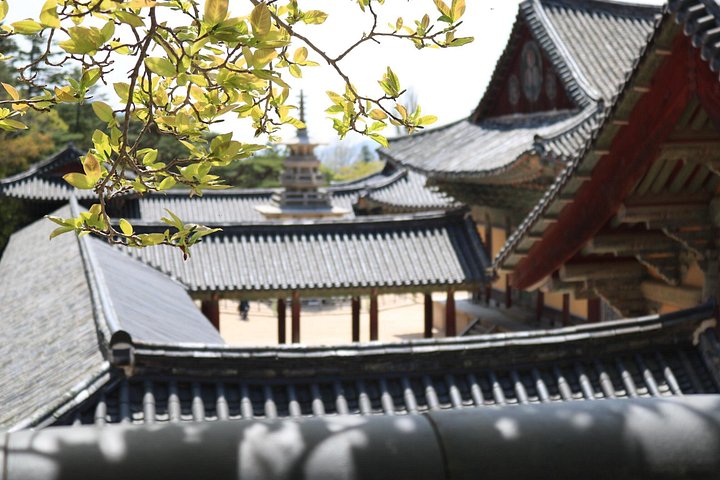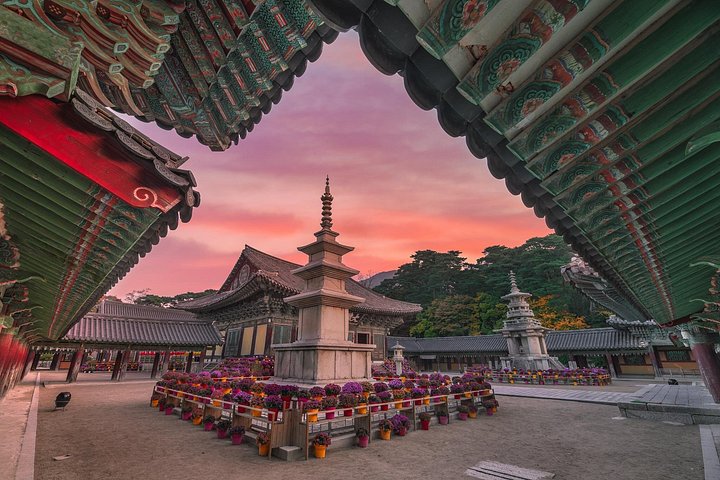
Bulguksa is the temple most visitors cross Korea to see, and it earns the trip. Founded in the Silla era and expanded in the mid-eighth century, it sits on a wooded terrace of Mount Toham east of Gyeongju city, reached by a short climb through gardens and a gate guarded by painted heavenly kings. The great stone platforms are the oldest surviving part: two staircase bridges, Cheongun-gyo and Baegun-gyo, rise to the Jahamun gate, symbolising the passage from the human world to the Buddha land. Inside the main courtyard stand the twin pagodas, the plain Seokgatap and the intricately carved Dabotap, each a masterpiece of Silla stonework. The wooden halls were rebuilt after the sixteenth-century Japanese invasions and restored again in the twentieth, so what you walk through is part ancient stone, part careful reconstruction. UNESCO inscribed Bulguksa together with Seokguram Grotto in 1995, and the pair is almost always visited on the same trip. Expect a modest entrance fee, a wide paved approach, and a gentle, shaded circuit that takes about ninety minutes at an unhurried pace.
Understanding what you see makes the visit richer. The temple was conceived as a model of a Buddhist paradise, with the stone terraces representing the boundary between worlds and each hall dedicated to a different Buddha. The twin pagodas face each other across the courtyard as a deliberate pair: one austere, one ornate, a contrast guides love to explain. Look closely at the stone foundations, which fit together without mortar and have survived centuries of rain, earthquakes and war. Inside the halls, shoes come off and photography is restricted, so follow the signs.
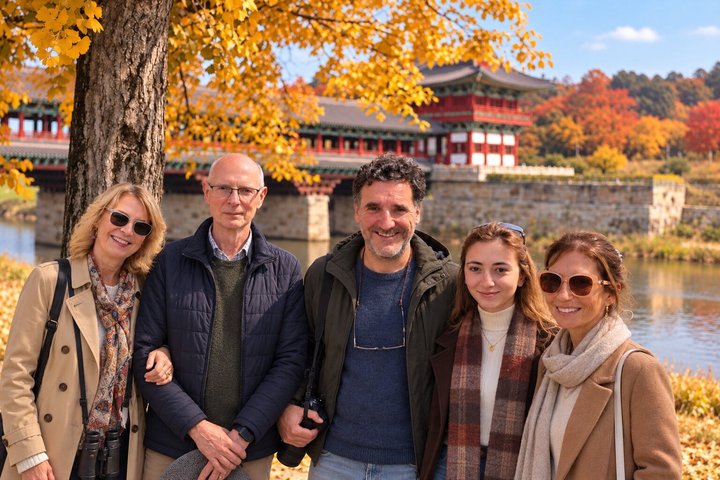
Autumn is a special season here. From late October into mid November the maple and ginkgo trees around the lower gardens and the path to the main gate change colour, and the stone stairs framed by red leaves are one of the best-known photographs in Korea. Weekends are crowded, so aim for the first hour after opening or the last hour before closing, when the light is soft and the tour groups have left.
Wear shoes with grip, because the stone is slippery after rain, and bring a light layer, since the temple stays cool in the shade.
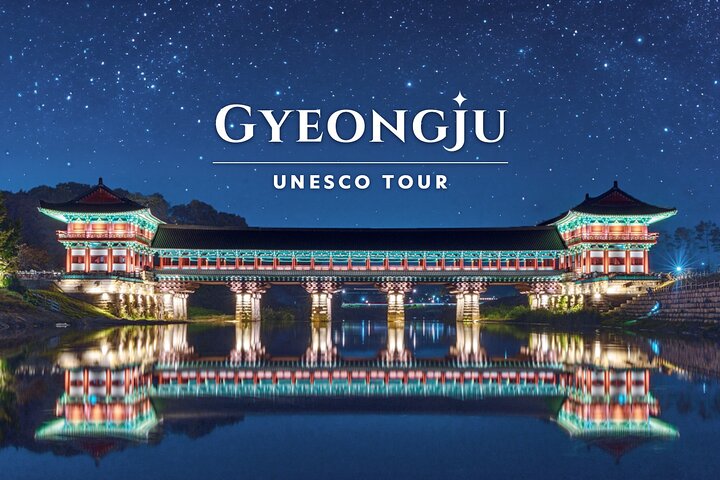
Getting there is easy. From central Gyeongju, city buses and taxis take roughly twenty to thirty minutes, and many visitors join a day tour that bundles Bulguksa with other sights and handles admission. If you travel independently, plan Bulguksa in the morning and continue by bus or taxi up the mountain to Seokguram Grotto, which closes earlier than the city sights. Allow a half day for both. There are cafes and simple restaurants in the car park area, and the temple stay programme can be arranged for those who want an overnight experience.
What to expect
The experience
A self-guided walk through the temple gate, up the stone staircases and around the main courtyards, or a guided day tour that includes admission and transport.
Best time
Early morning or the last hour before closing, with late October to mid November the peak for red maples.
How long
About ninety minutes inside the temple, plus travel time from the city.
Tips
Wear grippy shoes, arrive early on weekends, and pair Bulguksa with Seokguram Grotto the same morning before the grotto closes.
Quick picks
- Best for
- Anyone on a first visit to Gyeongju, because this is the temple that defines the city.
- Families
- Easy, mostly flat paths and plenty of space to wander, though younger children may tire at the stairs.
- Couples
- A slow stroll at opening time among the autumn leaves before the groups arrive.
- Pair with
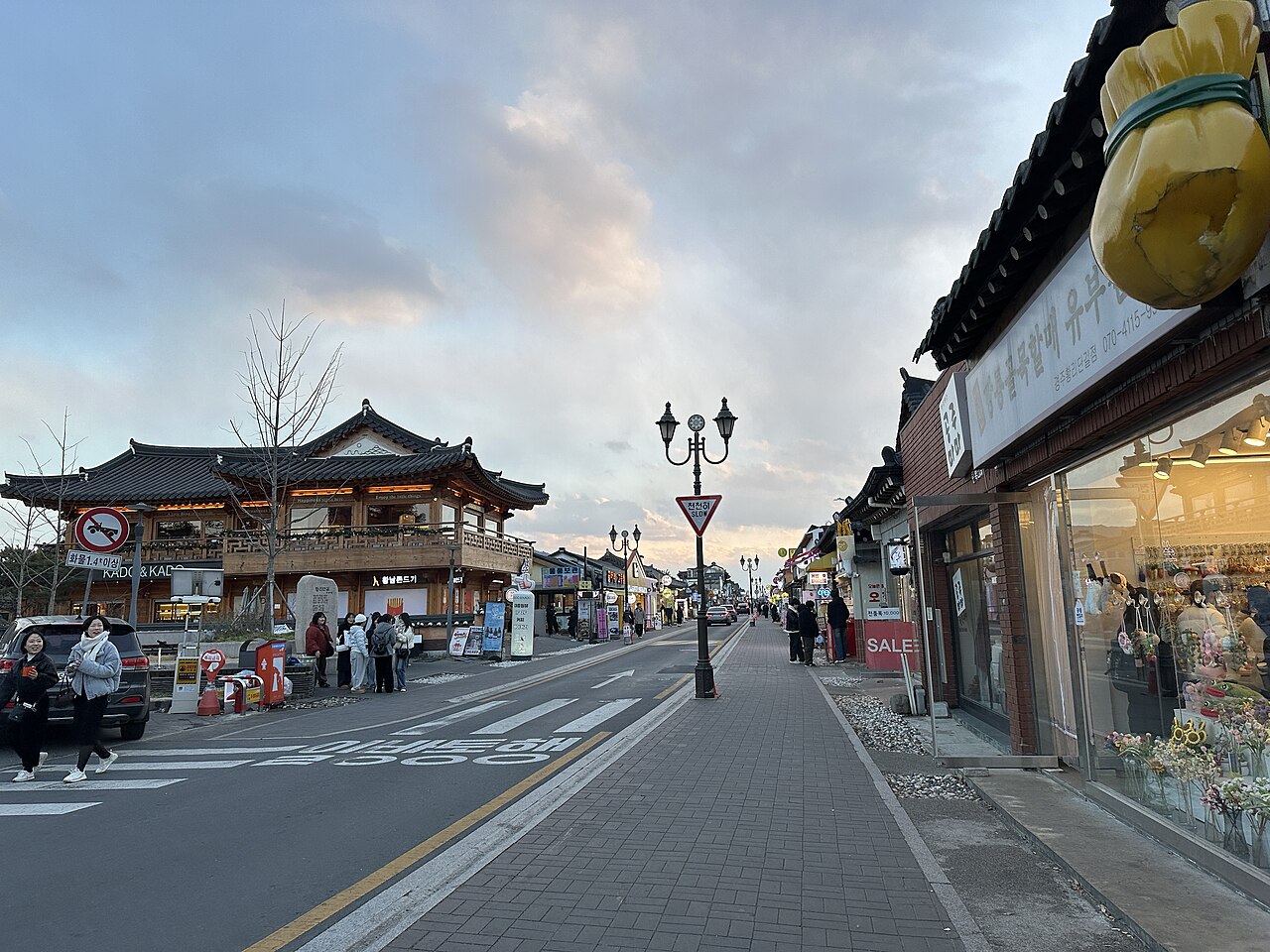
- Seokguram Grotto on the mountain above, then Daereungwon or Hwangnidan-gil in the afternoon.
- Time needed
- A half day with Seokguram, or two hours for the temple alone.
Good questions
Is Bulguksa worth visiting?+
Yes, it is one of the most important Buddhist sites in Korea and a UNESCO World Heritage Site. The stonework, the twin pagodas and the setting on Mount Toham make it the highlight of most Gyeongju trips.
How long do I need at Bulguksa?+
Plan on about ninety minutes to two hours inside the temple. Add travel time from the city and a visit to Seokguram Grotto if you want the full half day.
Is there an entrance fee?+
Yes, a modest fee is charged at the gate, and it is included if you join a tour that lists admission. Check the current price before you go, as fees can change.
When are the autumn colours at their best?+
Usually from late October into mid November, with the exact peak depending on the year's weather. Early morning on a weekday gives the calmest photographs.
How do I get from Bulguksa to Seokguram?+
Take a short bus or taxi ride up the mountain road from the temple car park area, or join a tour that links the two. Seokguram has earlier closing hours, so visit it before the temple if you are short of time.