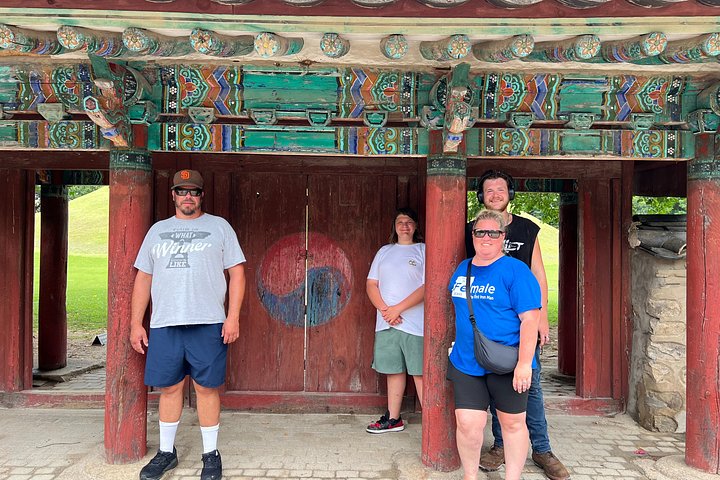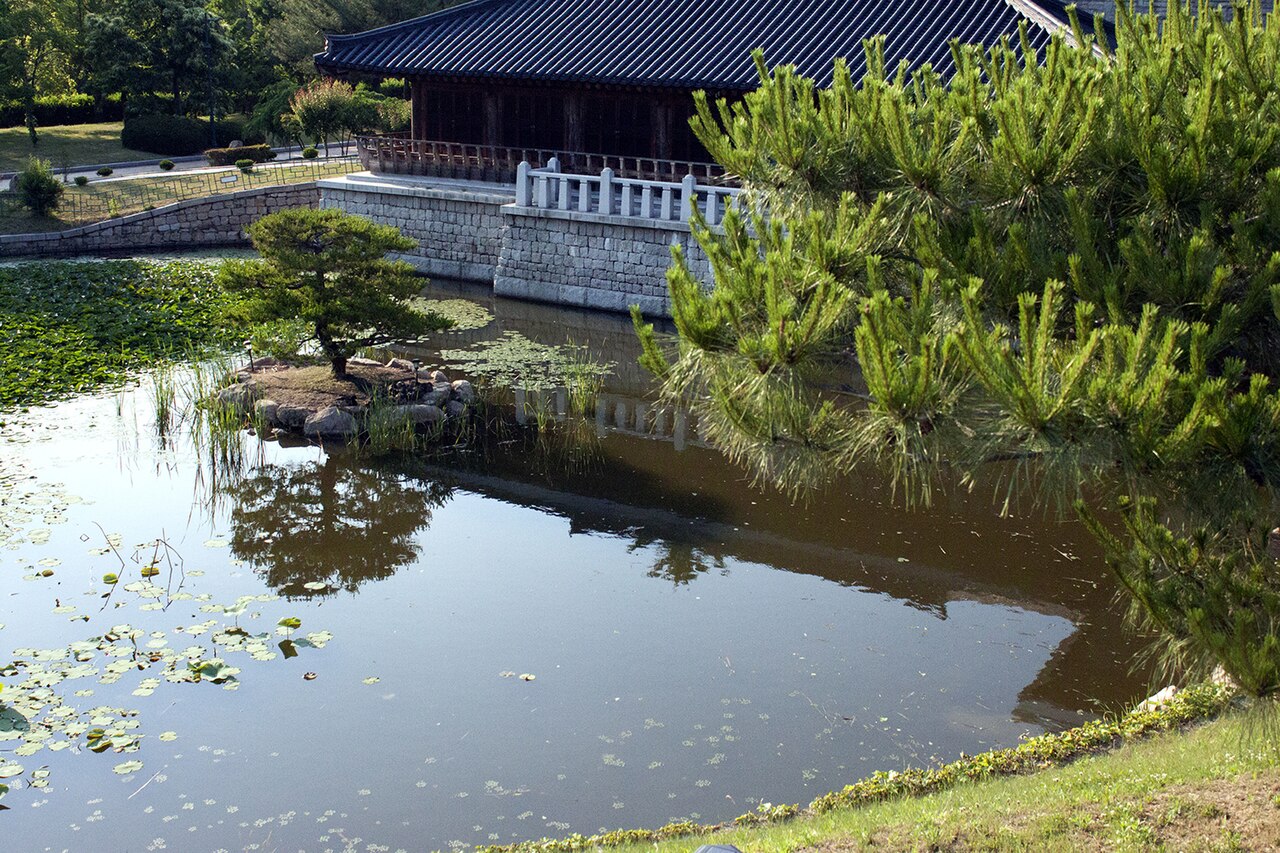
Gyeongju National Museum is the city's treasure house and the natural companion to the tombs and temples outside. Its collections trace the Silla kingdom and its predecessors, with a lively focus on the gold and glass objects excavated from royal burial mounds. The star exhibits are the delicate gold crowns, with their tree-and-antler shapes and dangling jade ornaments, and the Divine Bell of King Seongdeok, a huge bronze bell known as the Emille Bell, displayed in its own outdoor pavilion. Galleries also cover Buddhist sculpture, roof tiles with smiling faces, and finds from Wolji Pond, including lighthearted items that reveal courtly life. Permanent exhibitions are free to enter, so you can drop in without a plan, while special exhibitions may carry a fee. The grounds are spacious, with gardens, pagodas and a children's museum, and the museum sits a short walk from Wolji Pond and Cheomseongdae. Visit before the tombs for context, or afterward to see the real treasures.
Why it matters
Nearly everything you see in Gyeongju's open-air sites was once full of objects, and the museum is where those objects ended up. After seeing the empty mounds of Daereungwon, the crowns and belts here make sense. The gold crowns are the highlight, but give time to the quieter rooms of Buddhist statues and the Silla tiles, which show how people lived and believed. English information is available in the galleries, so you do not need a tour.
Make the most of the grounds. The Divine Bell stands outside near the entrance, and its pavilion is one of the museum's most photographed spots. The Silla Art Gallery, the Silla History Gallery and the Wolji Gallery each cover a theme, and visitors usually spend ninety minutes to two hours, longer with children who enjoy the hands-on children's museum. Autumn adds colour to the courtyard trees, and the benches are pleasant for a rest.
Planning tips
The museum is popular with school groups on weekday mornings, so late afternoon is quieter. Hours and closing days can change, and special exhibitions may have separate tickets, so check the museum's website on the day. Because the permanent halls are free, it works well as a rainy-day plan or as a first stop on a walking route that continues to Donggung Palace and Wolji Pond, Cheomseongdae and Hwangnidan-gil. Photography rules can vary by gallery, so follow the signs.
What to expect
The experience
A self-guided visit through the Silla galleries and the outdoor Divine Bell pavilion, with a children's museum on site.
Best time
Late afternoon for quieter halls, or any rainy day.
How long
Ninety minutes to two hours.
Tips
Permanent halls are free but special exhibitions may not be, so check the museum's website for hours and closing days.
Quick picks
- Best for
- History lovers and anyone who wants to see the crowns and treasures behind the tombs.
- Families
- The children's museum and open grounds make it easy with kids.
- Couples
- A relaxed indoor hour before an evening at Wolji Pond.
- Pair with
- Donggung Palace and Wolji Pond, Cheomseongdae and Daereungwon.
- Time needed
- Two hours including the grounds.
Good questions
Is Gyeongju National Museum free?+
The permanent exhibition halls are free to enter, although special exhibitions may charge a fee. Check the museum's website for current information.
What are the must-see objects?+
Look for the gold crowns, the jewelled belts and the Divine Bell of King Seongdeok, also called the Emille Bell. The Wolji Pond finds are a fun extra.
How long do I need?+
Plan on about ninety minutes to two hours. Add time if you visit the children's museum or linger in the grounds.
Is the museum good for children?+
Yes, there is a dedicated children's museum with hands-on displays, and the grounds are spacious. Younger children may prefer the outdoor bell and gardens.
How do I combine it with other sights?+
It is a short walk from Wolji Pond and Cheomseongdae, so a walking loop works well. Visit it before the tombs for context.