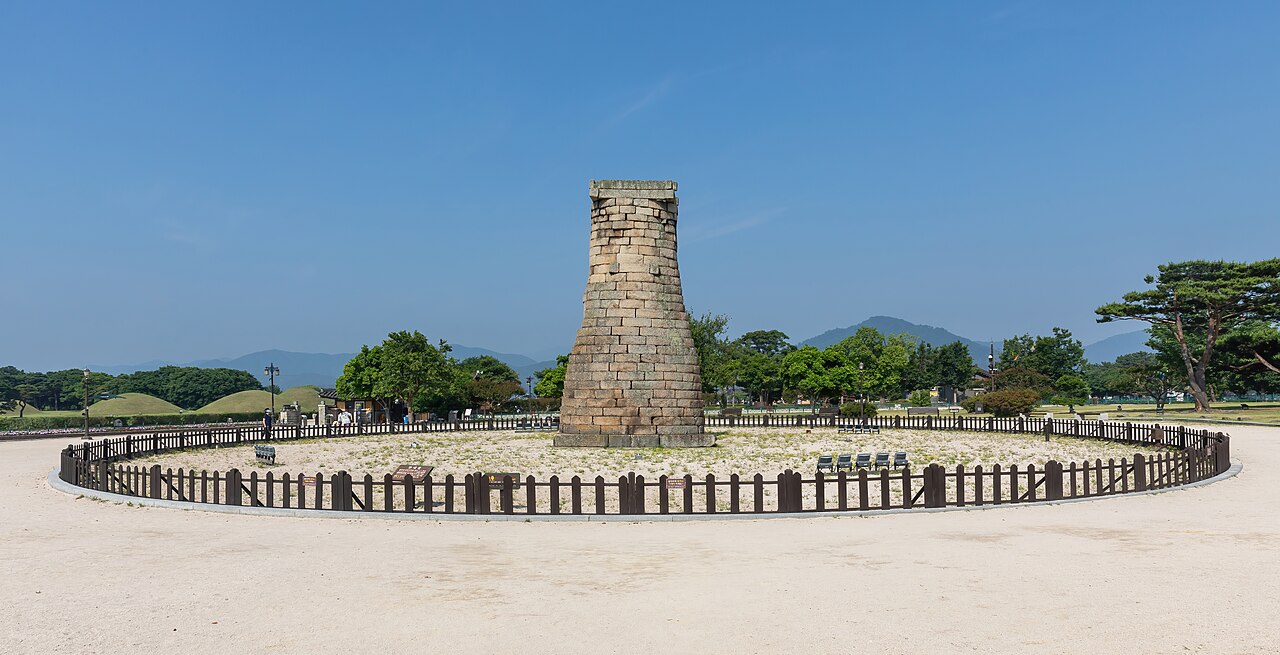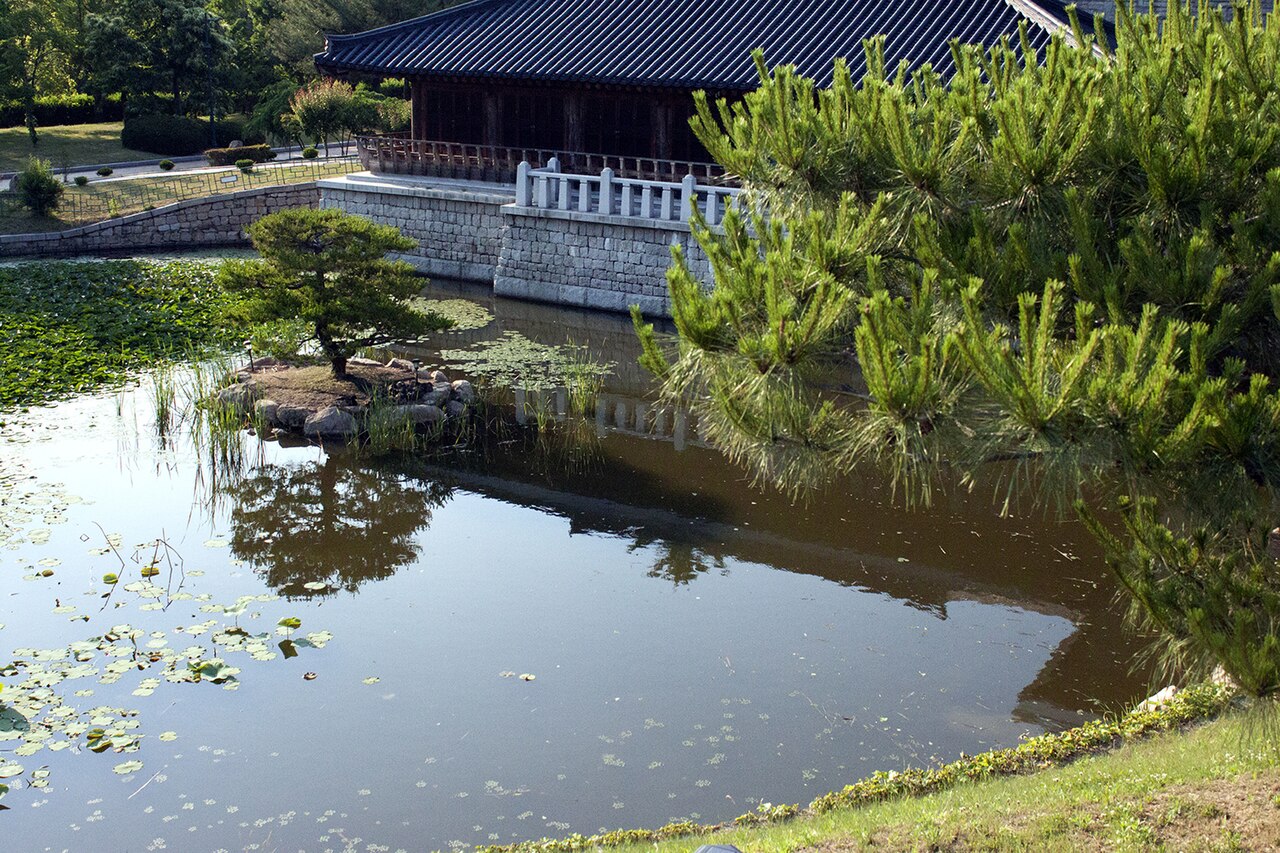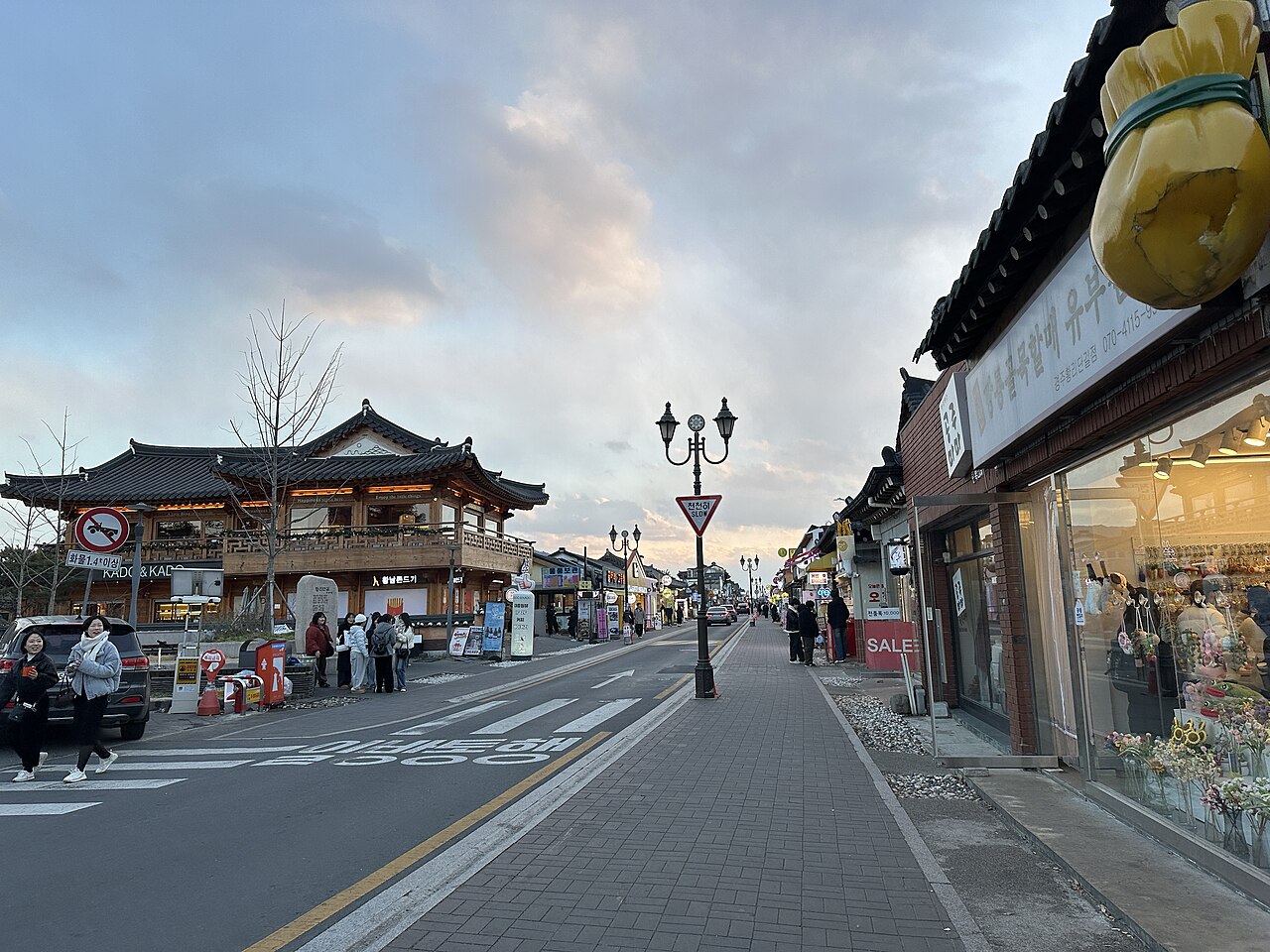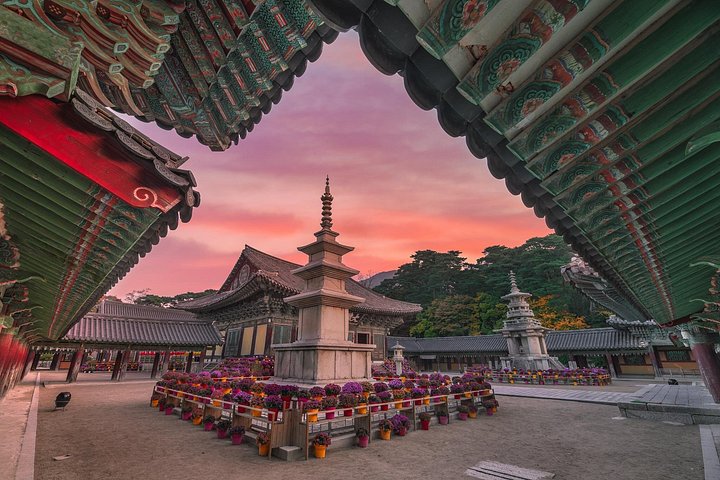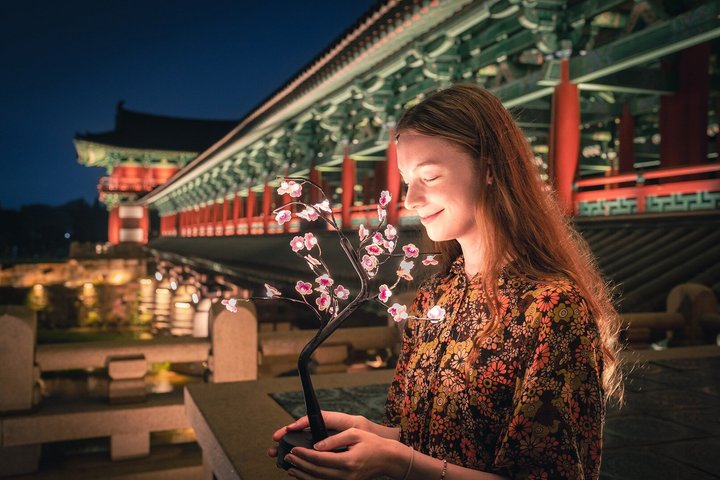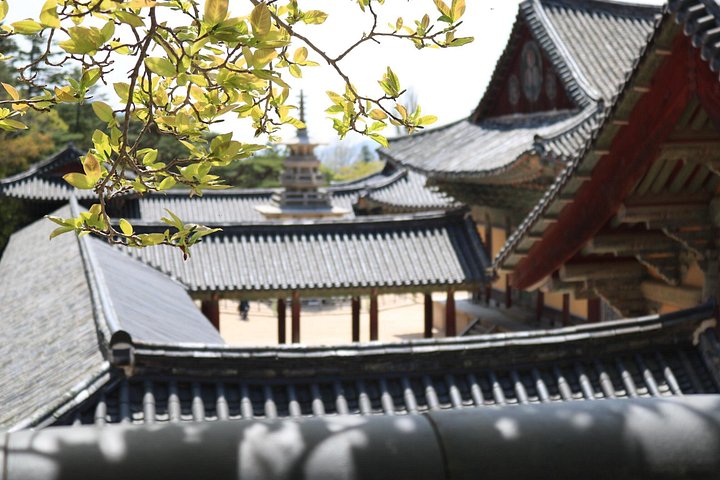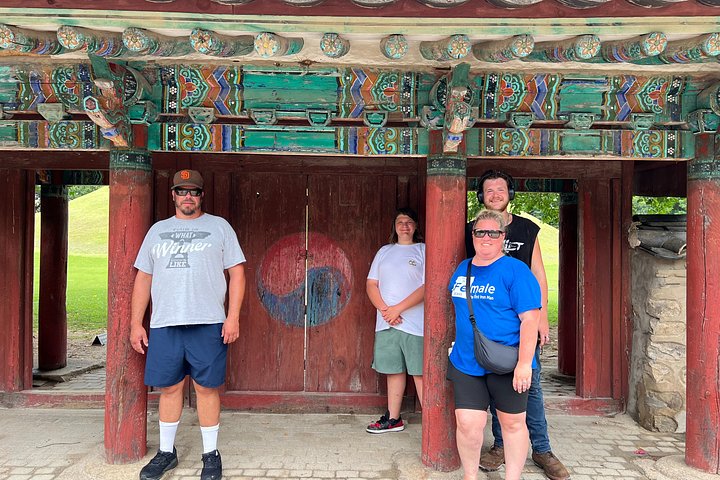
Donggung Palace and Wolji Pond is where Gyeongju goes after sunset. The site was the Silla crown prince's pleasure garden, built in the seventh century with an artificial pond, islands and pavilions for banquets and moon-watching. Today three reconstructed halls stand at the water's edge, and the pond, once called Anapji and later Wolji, holds their reflections like a mirror. During the day it is a pleasant, well-kept garden with willows and lotus beds, and the surrounding trees add autumn colour. After dark, the pavilions are lit and the water doubles the view, which is why photographers and couples arrive near dusk. A modest ticket covers entry, and the walk around the pond takes about forty minutes. Items recovered from the pond, including boats and a famous fourteen-sided dice, were taken to the national museum nearby. It is easy to combine with Cheomseongdae and Hwangnidan-gil for an evening on foot.
The name changes tell a story. Under Silla the site was called Anapji, and records say it was laid out in the 670s to celebrate the kingdom's unification. After the dynasty fell, the pond was neglected and renamed Wolji, the Moon Pond. Excavations in the 1970s revealed stone foundations, and the pavilions were rebuilt on the evidence. The current view is therefore a careful reconstruction, but the pond's layout, with its twisting shoreline and small islands, is original.
Visiting well means arriving before sunset. In early November the sun sets early, so plan to enter around late afternoon to see the garden in daylight, then stay as the lights come on. Spring and summer evenings stay light longer, but autumn is wonderful for reflected colour. The path around the pond is flat and paved, with a few viewing spots on the north side where the three pavilions line up for the classic photograph.
Bring a light jacket, since the water makes the air cool, and expect crowds at weekends. A tripod is permitted in most places, though you should keep paths clear.
Practicalities
Ticket sales stop before closing, so do not arrive in the final minutes. The site is close to Gyeongju National Museum and the Woljeonggyo Bridge, so a walking loop from Hwangnidan-gil takes about half an hour each way. Taxis are cheap for the return trip after dark. If you prefer a guided approach, several day tours from Gyeongju and Busan include Donggung and Wolji with admission, and some focus on the evening hours. For a quieter visit, go on a weekday and linger on the far shore.
What to expect
The experience
A flat walk around the pond with views of three reconstructed pavilions, by day or after dark, usually with a ticket bought at the gate.
Best time
Arrive in late afternoon to see the garden by day, then stay as the pavilions are lit.
How long
About an hour, or longer for photography.
Tips
Arrive well before closing, bring a light jacket, and go on a weekday for fewer crowds.
Quick picks
- Best for
- Couples and photographers, and anyone who wants Gyeongju's most atmospheric evening.
- Families
- Easy, flat and short, though evenings are cool and weekends are busy.
- Couples
- Sunset at the pond, then dinner on Hwangnidan-gil.
- Pair with
- Gyeongju National Museum, Cheomseongdae and Hwangnidan-gil.
- Time needed
- About an hour, plus the walk.
Good questions
When is the best time to see Wolji at night?+
Go around dusk, when the sky is dark blue and the pavilions are first lit. In autumn that means late afternoon, so plan to arrive earlier than you think.
How much does Donggung and Wolji cost?+
A modest entrance fee applies, and it is included on many day tours. Check the current price at the gate.
Is the pond worth visiting in the daytime?+
Yes, the gardens, willows and lotus beds are attractive, and the autumn colours are strong. Night is more dramatic, but the daytime visit is quieter.
How long does the walk around the pond take?+
About forty minutes at an easy pace, with stops for photographs. The path is flat and paved.
How do I get there from Hwangnidan-gil?+
It is roughly a thirty-minute walk or a short taxi ride. The route passes the museum and is pleasant by day.