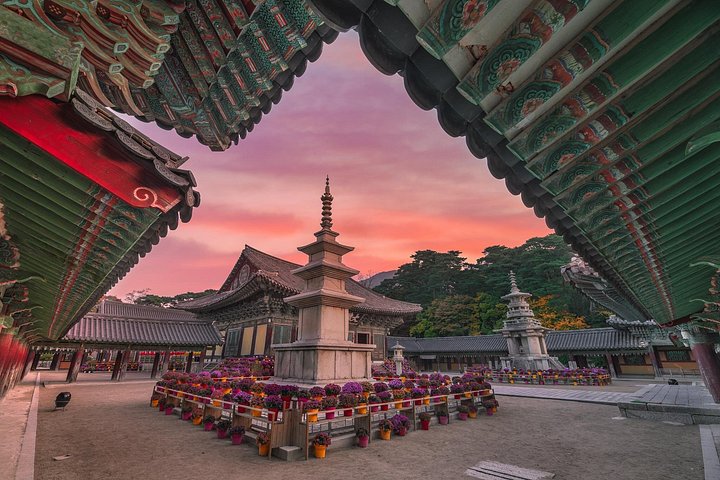
Seokguram is a hermitage grotto built into the ridge above Bulguksa, and its centrepiece is one of the finest Buddhist sculptures in Asia. A seated granite Buddha, more than three metres tall, faces east in a domed stone chamber, surrounded by carved guardians, bodhisattvas and disciples arranged with extraordinary geometric care. Construction began in the mid-eighth century at the same time as Bulguksa, and UNESCO lists the two together as a single World Heritage Site. Visitors walk up a forested path from the entrance gate to a small anteroom, where the sculpture is viewed through a glass screen that protects the stone from humidity and breath. Photography of the Buddha is not permitted, which helps the visit feel like what it is: a quiet encounter rather than a photo stop. The mountain setting adds to the effect, with long views toward the sea on clear days and cool air even in summer. Expect a modest entrance fee and a short but steady uphill walk from the car park.
The design is the real story. The chamber is a precisely proportioned rotunda with a ceiling of stone slabs that closes into a dome, and the Buddha faces east toward the sunrise. Historians have long admired the way the sculptors used mathematical ratios, and the figures on the walls, including ten disciples and the Eleven-Headed Avalokiteshvara, seem to breathe. The grotto was damaged and restored more than once, and the glass screen and climate controls are part of its modern conservation. Standing before it for a few minutes, in silence, is the point.
Practicalities matter because Seokguram runs to shorter hours than the city sights and is reached by a mountain road. Most visitors arrive by taxi, tour bus or a connecting bus from Bulguksa, then walk up through the trees. Wear comfortable shoes, dress modestly, and expect to remove nothing but your voice: the anteroom is small, so groups are asked to keep moving.
There are no food or drink vendors beyond the entrance area, so bring water. Mist can hide the sea view in the early morning, and in late autumn the cool air makes a jacket sensible.
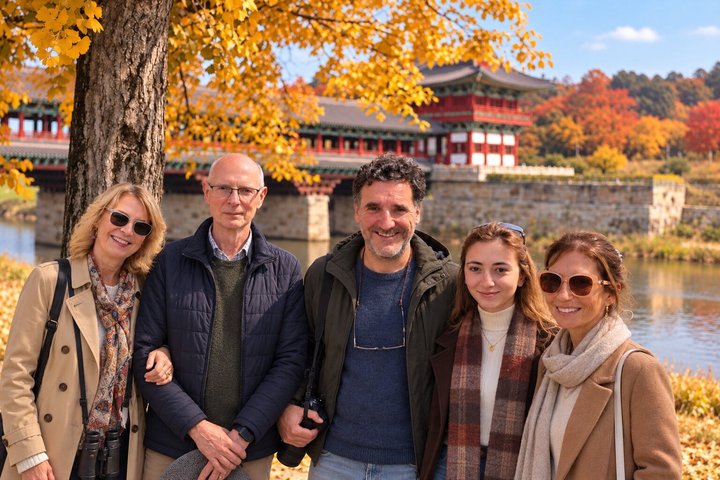
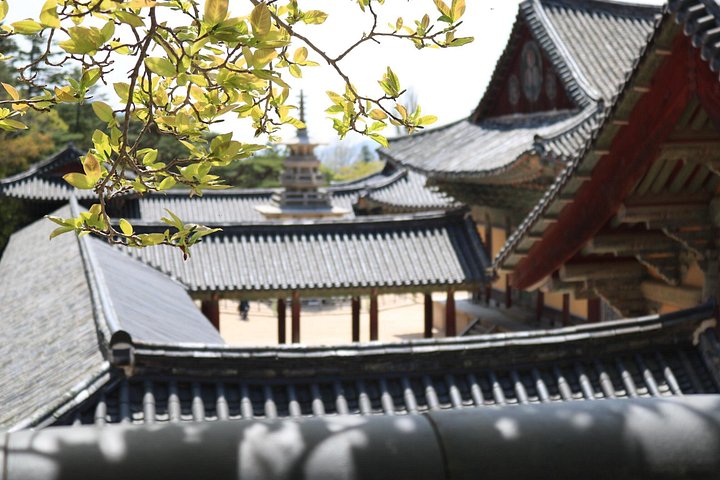
Timing the day well helps. Many travelers visit Seokguram first, in the calm of the morning, and then descend to Bulguksa for the temple courtyards, ending by early afternoon with lunch in the city. If you join a day tour, check that it includes both sites and that admission is covered. Autumn foliage on the mountain, usually strongest from late October into November, adds colour to the walk, but the grotto itself is the same in every season: still, ancient and worth the climb.
What to expect
The experience
A short walk up a wooded path to a small anteroom, where the Buddha is viewed through a glass screen, usually as part of a half-day trip with Bulguksa.
Best time
Morning, when the light is soft and the crowds are light, with clear days offering sea views from the ridge.
How long
About an hour at the grotto, plus the bus or taxi ride up from Bulguksa.
Tips
Photography of the Buddha is not allowed. Dress modestly, bring water, wear comfortable shoes and check closing time before you go.
Quick picks
- Best for
- Travelers who enjoy art, quiet and a sense of age, and anyone doing the full Bulguksa and Seokguram pairing.
- Families
- Fine for school-age children, but the uphill path and the quiet rule suit older kids best.
- Couples
- A calm, atmospheric morning that pairs well with lunch in town afterward.
- Pair with
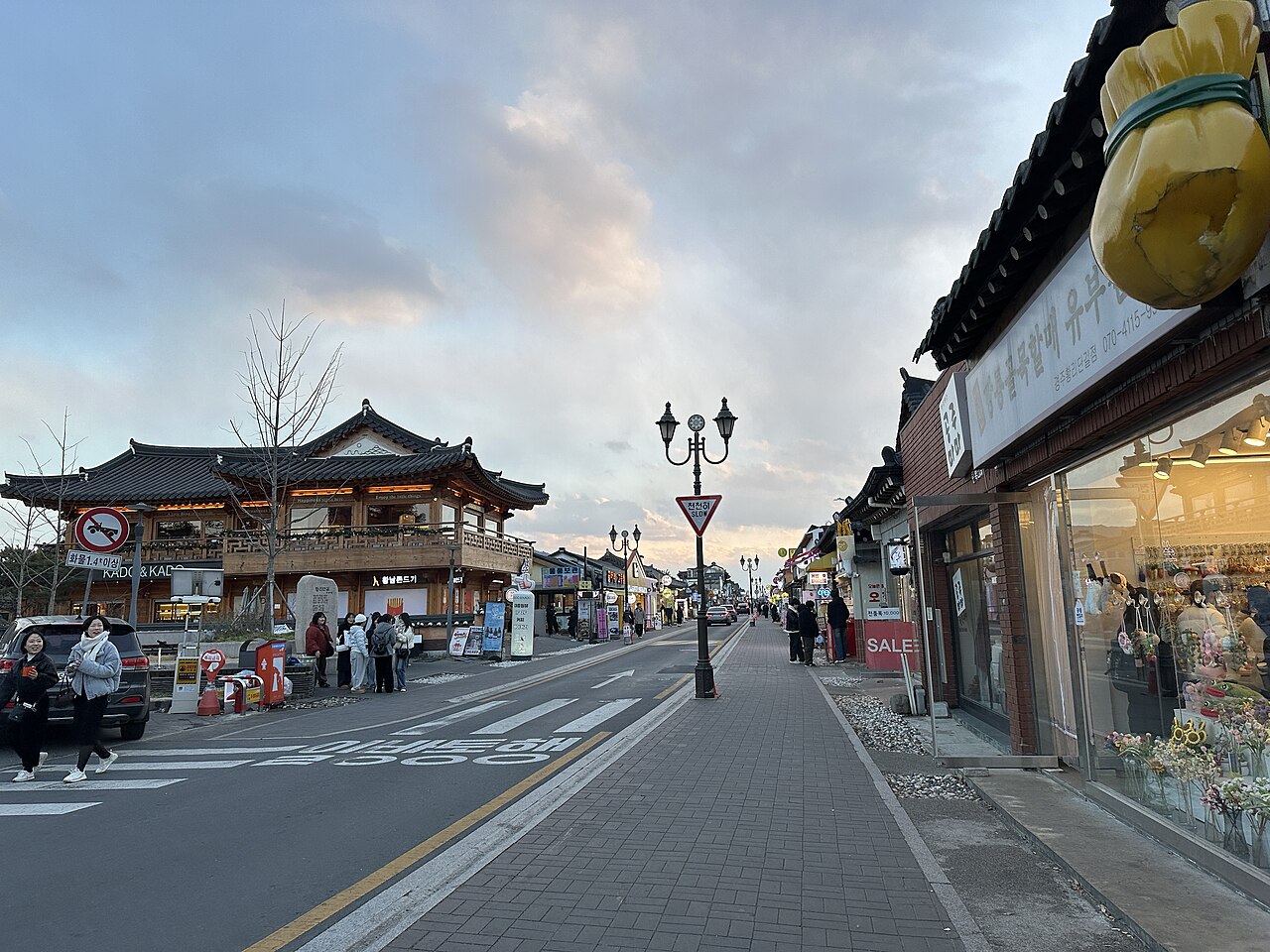
- Bulguksa Temple below, then Daereungwon or Hwangnidan-gil in the afternoon.
- Time needed
- One to one and a half hours at the grotto, within a half-day trip.
Good questions
Can I take photos inside Seokguram?+
No, photography of the Buddha is not permitted, and the sculpture is viewed through a glass screen. You can photograph the grounds and the views outside.
How do I get to Seokguram Grotto?+
It sits on the mountain above Bulguksa, reached by taxi, tour bus or a connecting bus from the temple area. Independent travelers should confirm the current bus times in town.
Is Seokguram open in autumn?+
Yes, it is open year-round, with shorter daylight hours in late autumn and winter. Check the closing time before you set off, since it is earlier than most city sights.
Is the walk to the grotto difficult?+
It is a short but steady uphill path from the car park. Most visitors manage it in comfortable shoes, but it can tire small children and anyone with mobility issues.
Should I visit Seokguram before or after Bulguksa?+
Either works, but many travelers go to the grotto first for quiet and then descend to the temple. Leave time so you reach the grotto before it closes.