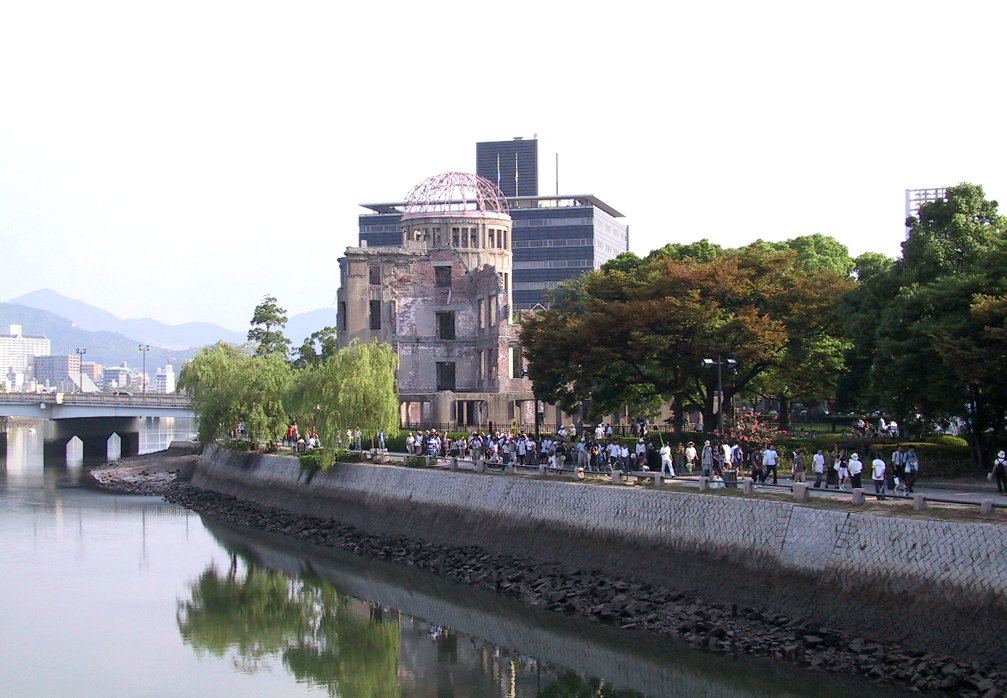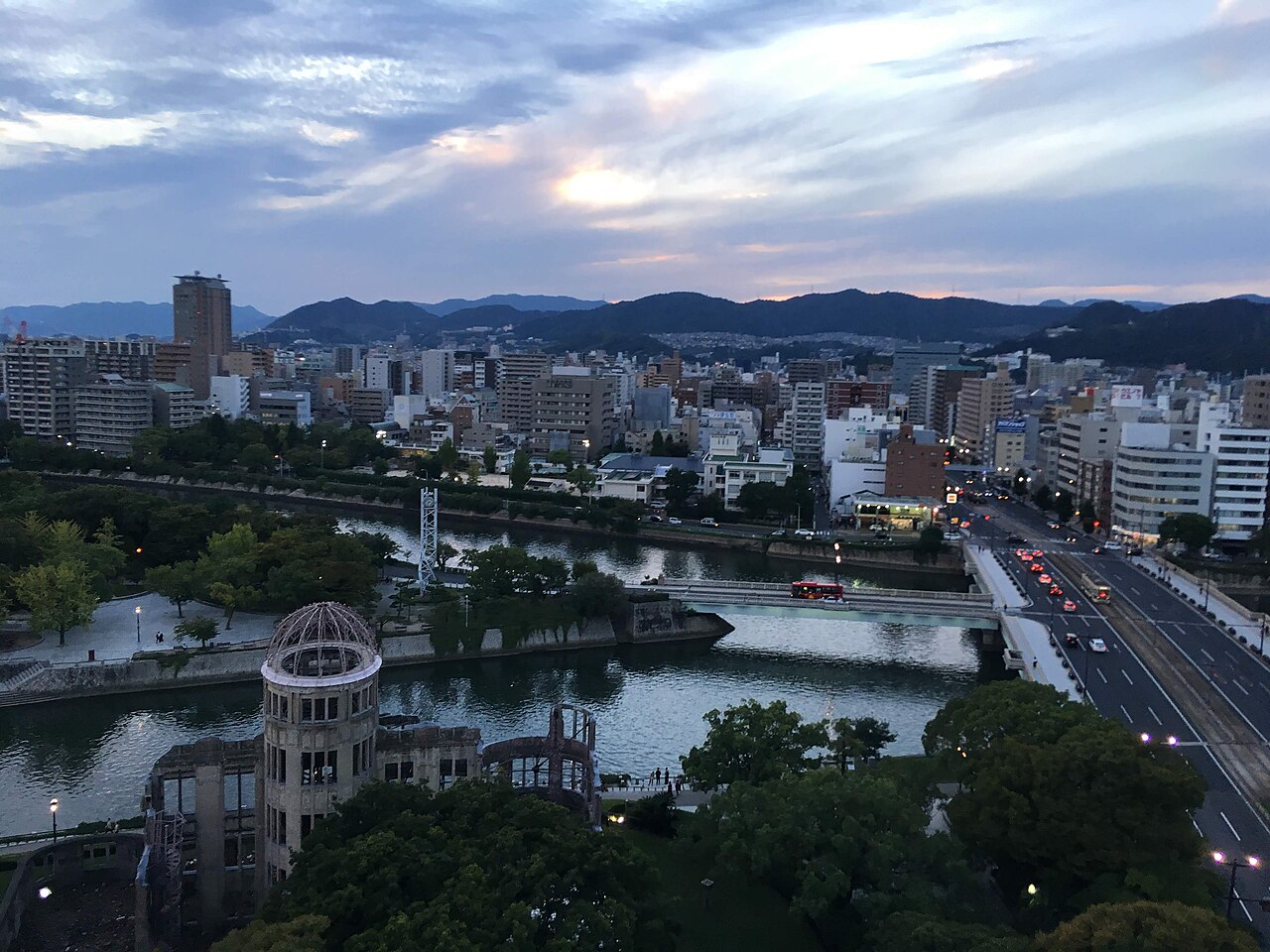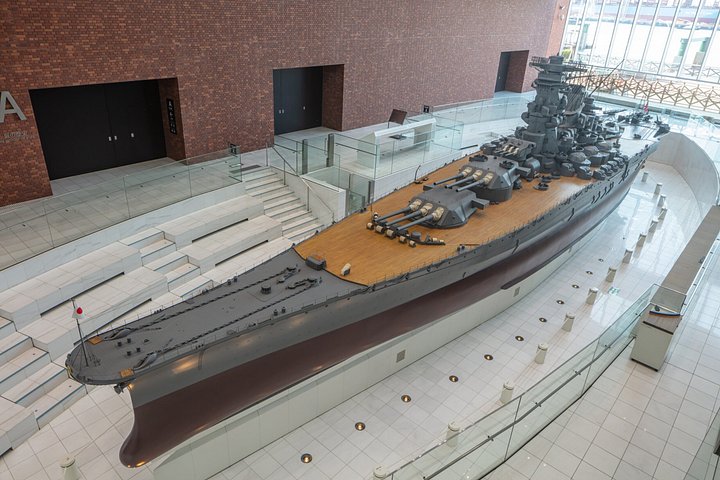
Kure sits on the coast southeast of Hiroshima, and for decades it was home to one of the great naval shipyards of Japan. The Yamato Museum, formally the Kure Maritime Museum, tells that story and is the reason most visitors make the train trip. Its centerpiece is a huge one-tenth scale model of the battleship Yamato, built in Kure and the largest battleship of the Second World War, which fills a hall at the front of the museum and reads very differently once you stand beside it. Around the model are galleries on how Kure became a shipbuilding city, how ships were designed and launched, and what the war meant for the men who crewed them. Displays include a restored fighter aircraft and midget submarine material, along with personal letters and belongings that keep the exhibition from becoming a purely technical show. The museum is also frank about the human cost of the war. Seen after a morning at the Peace Memorial Museum in Hiroshima, it adds a second perspective on the same history. Not everyone will want both on one trip, but visitors with an interest in ships, engineering or twentieth-century history usually find it one of the most absorbing stops in the region.
The model is the main event, so start there and give it time. Walk the full length, then look at it from the upper level, where the scale becomes clearer. The museum then moves into the postwar chapter, showing how the same skills in steel and precision engineering went into tankers and the shipbuilding boom that rebuilt Japan.
That second half is easy to rush, but it explains why Kure still feels like a working port. Labels carry English alongside Japanese, and an audio guide is a good addition if you are not familiar with the wartime background.
Getting there is straightforward. Kure is a short trip on the JR Kure Line from Hiroshima Station, typically a little over half an hour on the faster services, and the museum is a walk from Kure Station along a waterfront promenade. Across the road a retired submarine is displayed at the navy museum next door, a pairing many visitors enjoy, and the harbor has plenty of lunch options, including the local naval-style curry.
The museum keeps a regular weekly closing day, usually Tuesday, plus a short break around the new year, so check its calendar before you plan the trip and avoid Tuesday if possible.
The ticket is inexpensive, which makes this one of the best-value tickets in Hiroshima Prefecture. Allow two to three hours for the museum on its own, or a full half-day with the harbor walk and lunch. It suits older children and teenagers more than small ones, since much of the exhibition is text and artifacts. Weather is rarely a problem because almost everything is indoors, which makes Kure a sound rainy-day plan when the garden and island sights are better left for another day.
What to expect
The experience
A self-guided walk through the exhibition galleries around the large Yamato model, with English labels and an optional audio guide.
Best time
Weekday mornings are quietest. Avoid the regular weekly closing day and check the calendar before you travel.
How long
Two to three hours in the museum, or a half-day including Kure harbor and lunch.
Tips
Start at the model before the crowds build, use the upper level for a wider view and allow time for the postwar shipbuilding gallery.
Quick picks
- Best for
- Visitors interested in ships, engineering and twentieth-century history who want a second view alongside Hiroshima.
- Families
- Best with older children and teens; the model impresses everyone but most galleries are text and artifacts.
- Couples
- A quiet, absorbing half-day with a harbor walk and lunch in Kure afterward.
- Pair with
- The Peace Memorial Museum on a separate day, or the Okunoshima rabbit island on a day trip in the same direction.
- Time needed
- Half a day including the train from Hiroshima.
Good questions
How do I get to the Yamato Museum from Hiroshima?+
Take the JR Kure Line from Hiroshima Station to Kure, a little over half an hour on the faster trains, then walk along the waterfront to the museum.
How long do I need?+
Allow two to three hours. Add time for the harbor promenade and lunch if you want a relaxed half-day.
Is it open every day?+
No. The museum keeps a regular weekly closing day, usually Tuesday, and closes briefly around the new year. Check its calendar before you go.
Is the museum suitable for children?+
Older children and teenagers usually enjoy the model and the hands-on engineering ideas. Younger children may find the text-heavy galleries long.
Does it deal with the war honestly?+
Yes. Alongside the technology it shows the personal side of the war and the cost to those who served, which makes it a useful companion to the Peace Memorial Museum.