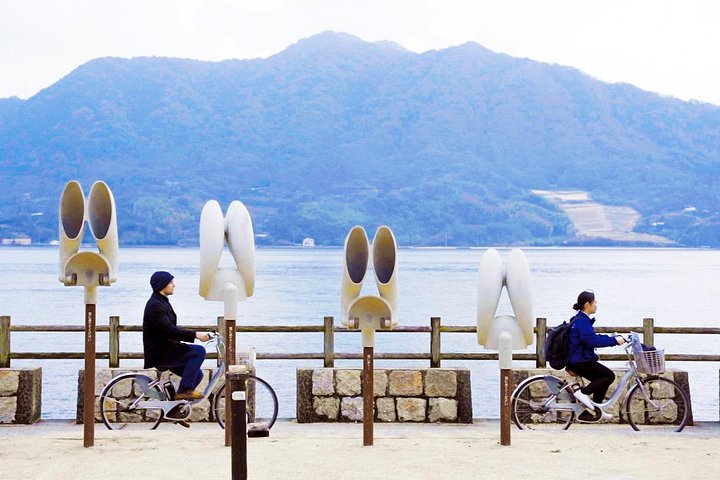
Okunoshima is best known as Rabbit Island, and the nickname is accurate. A few hundred rabbits live free across the island, and they approach visitors confidently, hopping up to the ferry landing and following anyone who looks like they might have food. The island is small, roughly a four-kilometer loop of paved path and shoreline, and there are no cars, which makes walking and cycling pleasant. Its history is darker than its reputation. For part of the twentieth century the island was used to produce chemical weapons, kept secret and left off maps, and the small Poison Gas Museum documents what was made here, who worked in the factory and how the story was uncovered after the war. Some ruined industrial buildings still stand in the trees. The combination surprises people, and the museum is worth the short visit if you want to understand the setting rather than only photograph the rabbits. A guided history tour adds the context that signs only hint at, and it suits visitors who want the whole picture of the island.
Getting here takes planning. From Hiroshima, you ride a JR line toward the coast to Tadanoumi, then take a short ferry of around fifteen minutes to the island, with ferries running through the day and more sailings at weekends. Count on the better part of a day for the round trip from Hiroshima. Another ferry route runs from Omishima, which suits cyclists coming along the Shimanami Kaido. Check ferry times at Tadanoumi before you leave Hiroshima, because a missed boat is the main thing that spoils the day.
Rabbit manners matter. The animals are wild-descended and used to people, but they should not be picked up, chased or fed anything unsuitable. Many visitors buy proper rabbit food on the mainland or follow the island rules posted at the landing, and children should be reminded to be gentle. Bring water and sun protection, since shade is patchy, and take your rubbish back with you. There is a modest hotel, restaurant and campsite on the island, which suits people who want the quiet after the day-trippers leave.
The guided history option is the better choice if you care more about the story than the rabbits, as the guide explains the sites, the museum and the way the island moved from secrecy to a visitor destination. Spring and autumn are the most comfortable seasons, while summer can be hot and winter is quieter, with the rabbits often at their most eager. It is an easy add-on to a Kure and Takehara route, and one of the best family activities in the region for children who love animals.
What to expect
The experience
A train and short ferry ride to a small island, then a walk among free-roaming rabbits and a visit to the Poison Gas Museum, with an optional guided history tour.
Best time
Spring and autumn for comfortable weather; go early to avoid the busiest ferries on weekends.
How long
Four to six hours from Hiroshima, depending on connections and how long you stay on the island.
Tips
Check the return ferry times, bring suitable rabbit food and water, wear sun protection and keep handling gentle.
Quick picks
- Best for
- Animal lovers and travelers who want a quiet island with a serious history lesson attached.
- Families
- A highlight for children who love animals; remind them to be gentle and not to chase the rabbits.
- Couples
- A relaxed day out with a walk, a seaside lunch and a thoughtful museum visit.
- Pair with
- The Yamato Museum in Kure, or the Shimanami Kaido by bike if you are coming from Omishima.
- Time needed
- A full day from Hiroshima, or a half day if you are already in the Takehara area.
Good questions
How do I get to Okunoshima from Hiroshima?+
Take a JR line to Tadanoumi, then a short ferry to the island. Check ferry times before leaving, since a missed return boat is the main risk.
Can I feed the rabbits?+
Visitors do, but follow the island rules, use suitable food and avoid picking the animals up. Gentle handling keeps them confident around people.
What is the Poison Gas Museum?+
A small museum about the chemical weapons produced on the island during the twentieth century, with accounts from the people who worked there. It is sobering and worth a visit.
Are there cars on the island?+
No. The loop path is for walkers and cyclists, which keeps the island calm for the rabbits and for visitors.
When is the best time to go?+
Spring and autumn are the most comfortable. Summer is hot with limited shade, and winter is quiet but can be cold on the ferry.