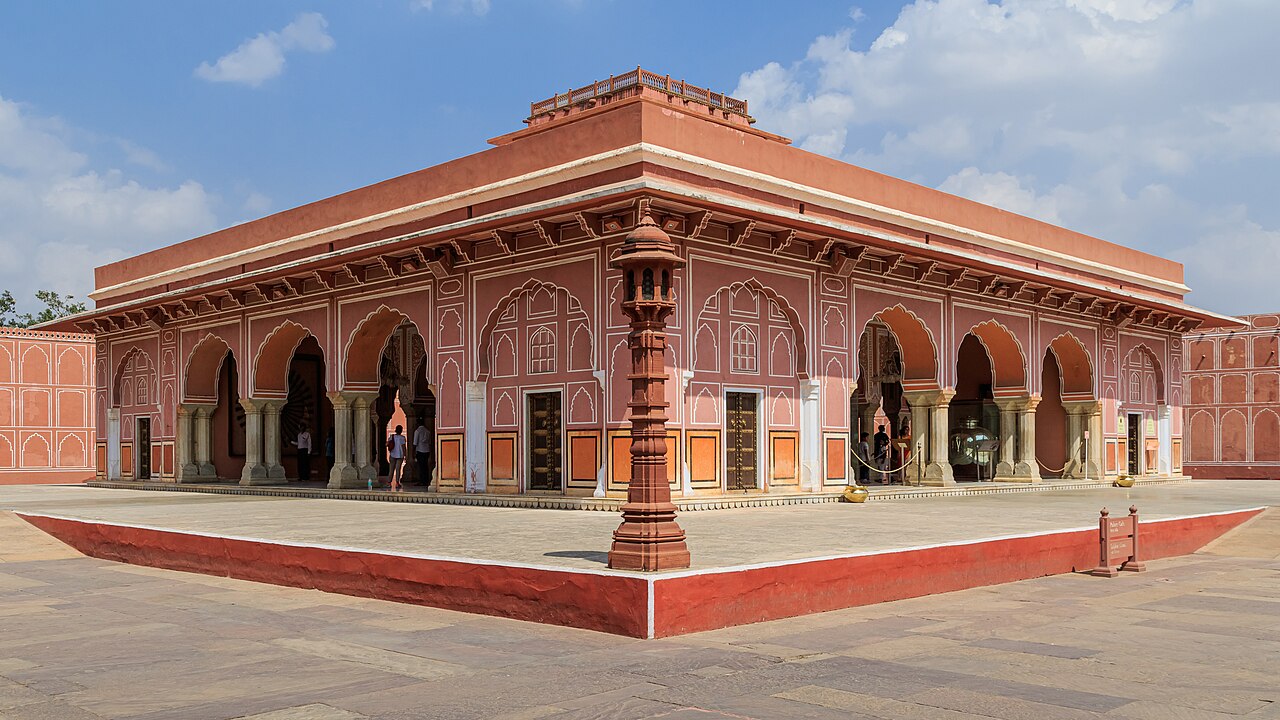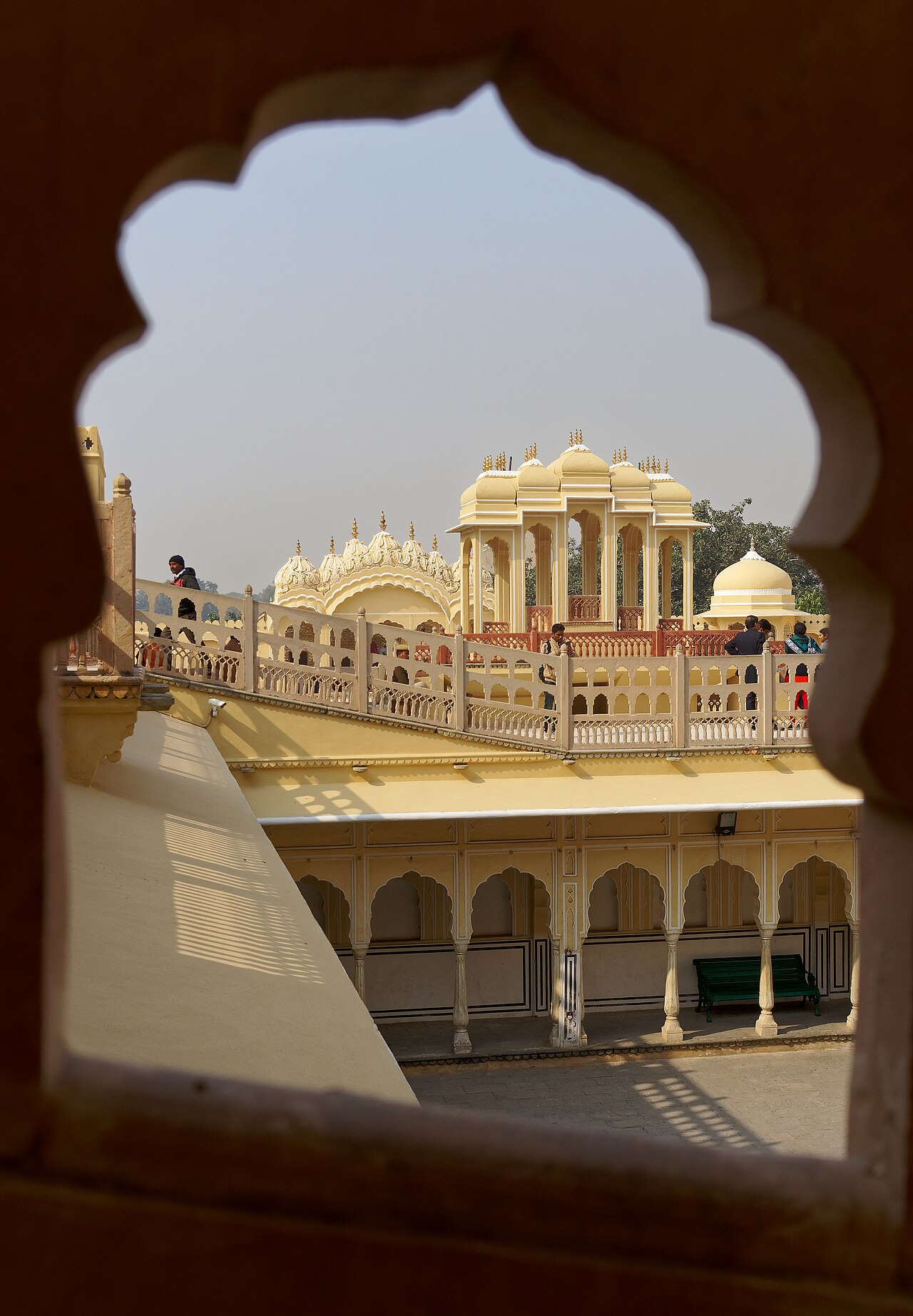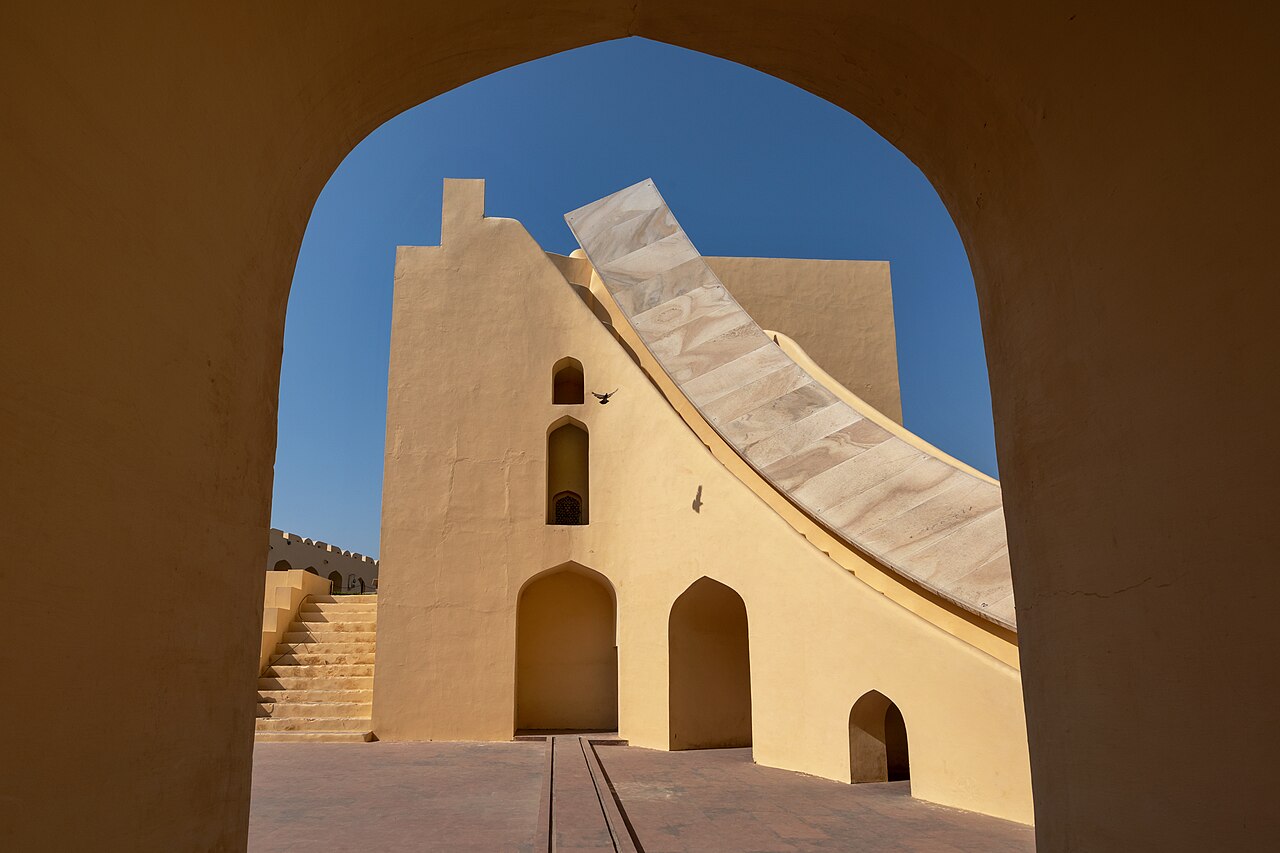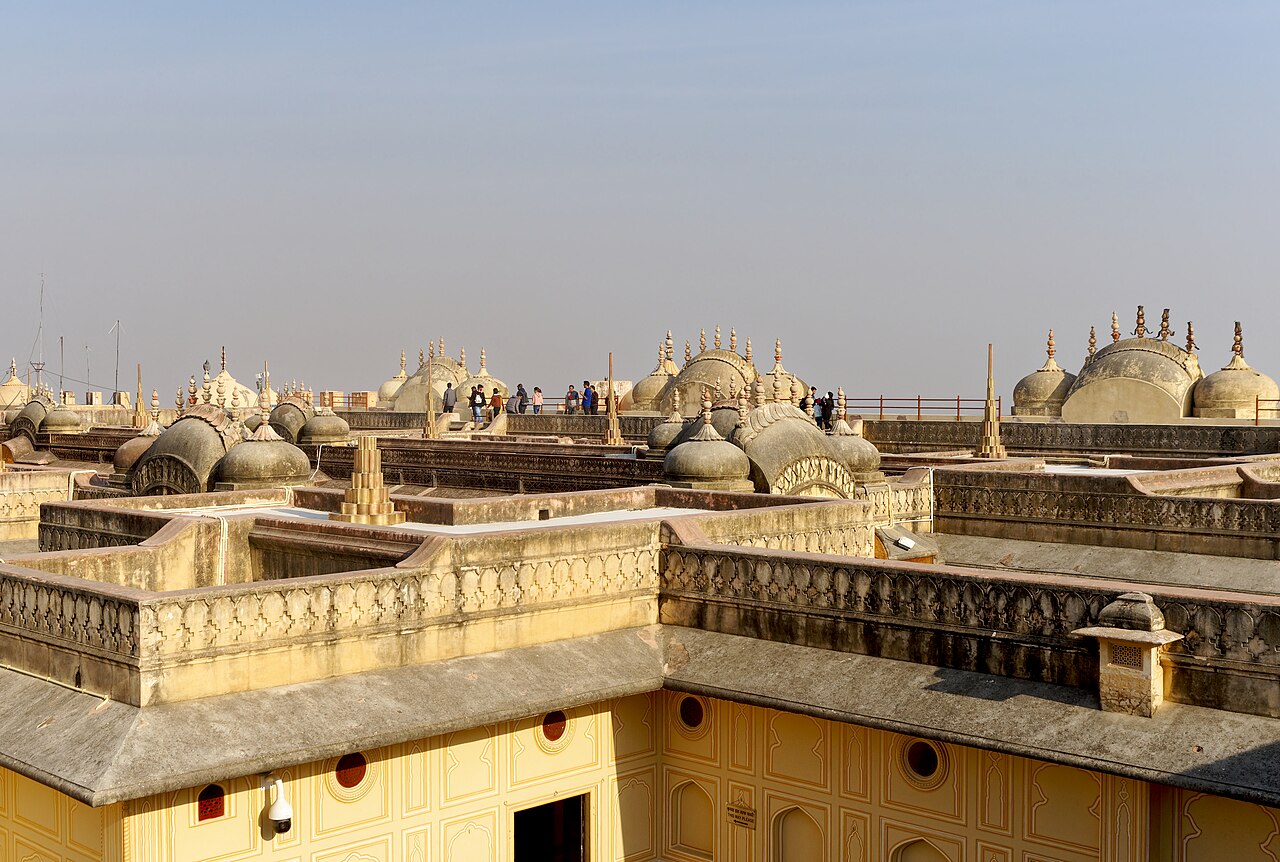
Govind Dev Ji Temple is the spiritual heart of the old city and one of the best-loved temples in Rajasthan. It stands inside the royal gardens beside City Palace, in line with the former residence of the Jaipur rulers, and its position was no accident: the royal family regarded Govind Dev Ji, a form of Krishna, as the true ruler of the city and themselves as his stewards. The deity is said to have been brought from Vrindavan in the early eighteenth century for safekeeping, and Jai Singh II installed it here. The temple is known for its broad, open pillared hall, one of the largest of its kind in the region, where worshippers gather to watch the aarti ceremonies several times a day. Women in bright saris, families, priests and tourists share the space, and the sound of bells, conch shells and devotional singing fills the hall. The atmosphere is warm and lively rather than hushed. The deity is dressed and decorated afresh for each ceremony, and the colours of the garments change with the festival calendar. The temple is a living place of worship, so it offers a different view of Jaipur from the museums and fortresses.
Visiting well
The temple is free to enter, though bags and cameras may be restricted, and you will be asked to remove your shoes at the entrance, so wear footwear that is easy to slip off. Dress modestly with covered shoulders and knees. The temple opens for a series of darshan sessions through the day, with breaks between them, and the schedule shifts with the seasons, so confirm timings before you go.
The early morning aarti draws devout locals, while evening sessions are very crowded, particularly on festival days and Sundays. If you do not like crowds, aim for a weekday morning.
What to expect
The main ceremony is not a performance but an act of devotion, so stay at the back or along the sides, avoid pointing your camera at worshippers and follow the lead of the people around you. You can stand and observe, or sit on the floor with the crowd.
Prasad, the blessed food offering, may be handed out, and you are welcome to accept it with your right hand. Festivals such as Janmashtami bring huge crowds and extra decoration, and visitors who enjoy atmosphere will find the temple at its most vivid then, though it is also at its busiest.
Fitting it in
The temple sits within the City Palace complex area, so it combines naturally with City Palace, Jantar Mantar and Hawa Mahal on a single walk through the old city. A short visit takes thirty to forty-five minutes, and an evening visit works nicely before dinner in the bazaars. Keep your belongings secure, because the crowd can be dense, and leave valuables at the hotel.
If you want to understand what you are seeing, a local guide on a city walking tour can explain the rituals and the legends. For travellers who like to see how people actually live their faith, it is one of the most rewarding stops in the city, and it costs nothing apart from a little time and a respectful attitude.
What to expect
The experience
A visit to an active Krishna temple, standing in the open pillared hall to watch the aarti with local worshippers.
Best time
A weekday morning for a calmer visit, or an evening aarti for the liveliest atmosphere.
How long
Thirty to forty-five minutes, depending on the ceremony and the crowd.
Tips
Dress modestly, wear easy-to-remove shoes, expect restrictions on bags and cameras and confirm the darshan timings before you go.
Quick picks
- Best for
- Travellers who want to see a living religious tradition alongside the palaces.
- Families
- A colourful and lively experience for older children, though the crowds can be dense.
- Couples
- An evening aarti followed by dinner in the bazaars makes a memorable end to a day in the old city.
- Pair with
- City Palace, Jantar Mantar and Hawa Mahal on an old-city walk.
- Time needed
- About forty-five minutes.
Good questions
Is there an entry fee?+
Entry is free. Bags and cameras may be restricted, so travel light.
What should I wear?+
Dress modestly with covered shoulders and knees, and wear shoes that are easy to remove at the entrance.
When is the best time to visit?+
A weekday morning is quieter, while evening aarti sessions are the busiest and the most atmospheric.
Can non-Hindus visit?+
Visitors are welcome to observe respectfully. Follow the lead of worshippers and avoid photographing people during the ceremony.
Where is it?+
It stands in the royal gardens beside City Palace, so it is easy to combine with the palace, Jantar Mantar and Hawa Mahal.