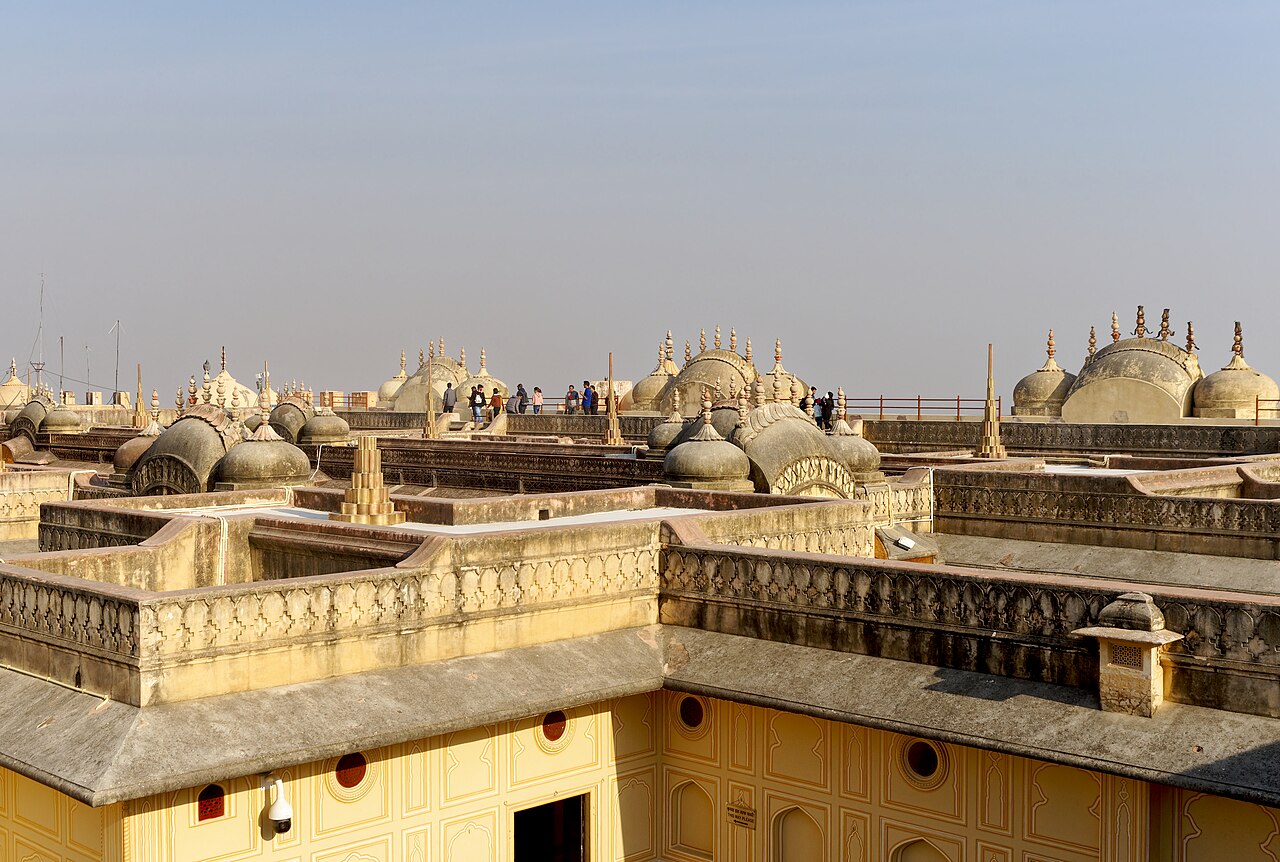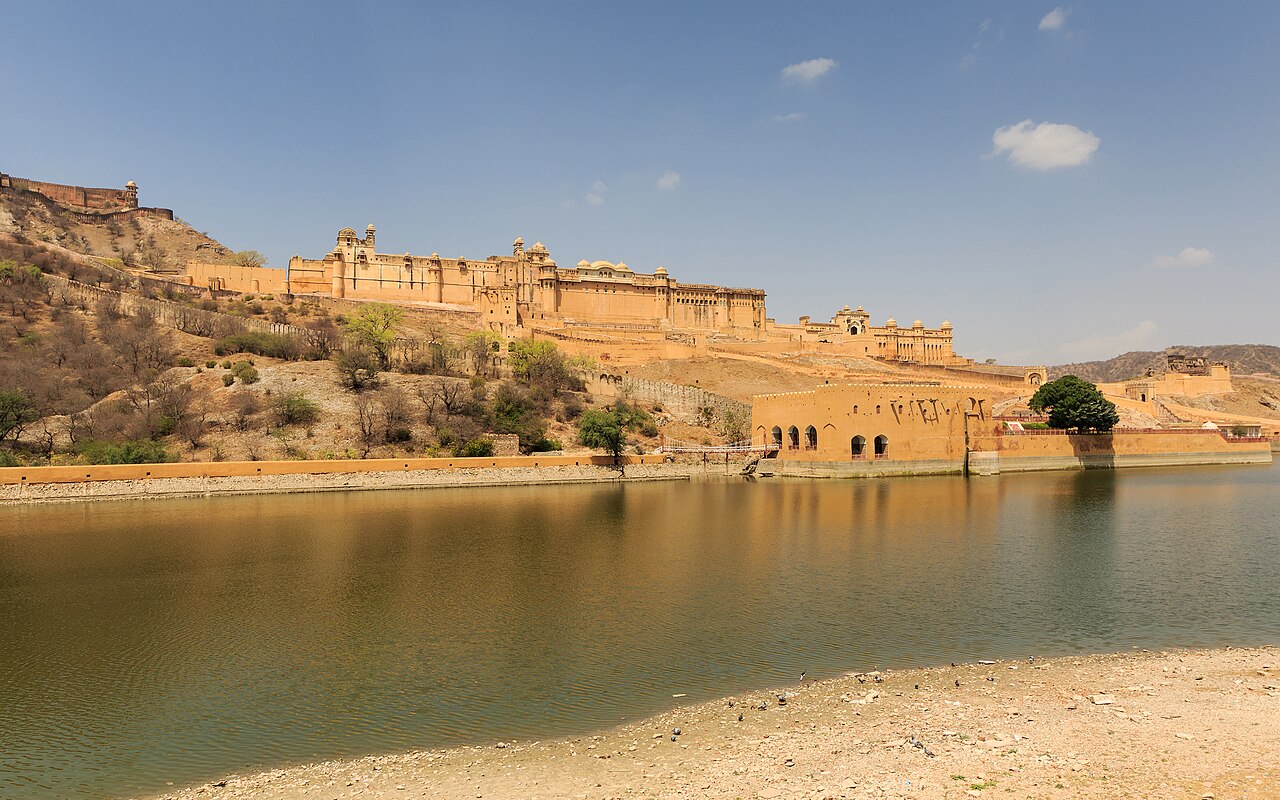
Jaigarh Fort crowns the Cheel ka Teela, the Hill of Eagles, a ridge that rises directly above Amber Palace. Where Amber was built for ceremony and court life, Jaigarh was built for defence and storage. Sawai Jai Singh II strengthened it in the early eighteenth century, and its thick sandstone walls, watchtowers and gateways still look ready for a siege. The fort is linked to Amber by a fortified passage, which means the two were designed to work as a single system, with the palace below and a stronghold above. Visitors come for three things. The first is the scale: long ramparts run along the ridge with sweeping views of Amber, Maota Lake and the plains toward Jaipur. The second is engineering, because the fort has a remarkable network of rainwater channels and huge underground tanks that fed the garrison through dry years. The third is the Jaivana cannon, often described as one of the largest cannons on wheels in the world, which was cast in the fort's own foundry. Smaller courtyards, a ruined palace complex and a modest museum of weapons and royal artefacts fill out the visit, and it is usually far quieter than Amber itself.
Getting there
The fort sits about fifteen minutes uphill from the Amber car park by road, and most visitors arrive by taxi, auto-rickshaw or a pre-arranged driver rather than on foot. Walking up the old fortified path is possible for fit visitors in cool weather, but it is steep and exposed, so most people save their energy for the ramparts. Tickets are sold separately from Amber, and a camera fee may apply, so check the current arrangements at the gate. Foreign visitors pay more than Indian visitors, and it is worth carrying small change.
Making it worthwhile
Jaigarh rewards a slow loop with a guide or a good map. The best sequence is to enter, walk the long rampart toward the Awani gate area for the lake views, look down into the courtyards, then visit the cannon foundry and the Jaivana cannon before the museum.
The water system is easier to appreciate with a guide, because the channels run along the hillsides and look like ordinary stone gutters until someone explains how they fed the tanks. Wear sturdy shoes, because the stone is uneven, and carry water, since there is little shade and the ridge catches the sun and wind.
Timing
Late afternoon is the favourite time for photographers, because the light turns golden over Amber and the lake, but the fort closes at a fixed hour, so confirm closing time before you plan a sunset visit. Winter days from October to March are comfortable, while summer afternoons can be punishing. A half-day tour that takes in Amber and Jaigarh together is a sensible way to see both without negotiating transport twice. If you only have time for one, choose Amber for architecture and the mirror hall, and Jaigarh for views, military history and quiet.
Many visitors finish the day with sunset at Nahargarh, which sits on the next ridge along. Allow time for the small museum, where weapons, maps and royal portraits give context to the fort's role, and for a pause at the viewpoints, where the whole sequence of ridges, lake and palace comes together. Visitors with limited mobility should note that there are ramps and steps throughout, and that distances inside the fort are longer than they look on arrival.
What to expect
The experience
A walk along the ramparts, courtyards and cannon foundry of a ridge-top fort, with a small museum and long views over Amber and Maota Lake.
Best time
Late afternoon in the cooler months for golden light, or first thing in the morning to avoid tour groups.
How long
Allow one and a half to two hours, or more if you walk the full length of the ramparts.
Tips
Confirm the closing time, wear sturdy shoes, carry water and take a guide or a half-day tour that combines Amber and Jaigarh.
Quick picks
- Best for
- Fort lovers, photographers and anyone who wants a quieter alternative to Amber.
- Families
- Plenty of space to roam and a giant cannon to impress children, though the ramparts have drops, so keep a close eye on young ones.
- Couples
- Time your visit for the late afternoon and watch the light change over the lake, then continue to Nahargarh for sunset.
- Pair with
- Amber Fort directly below, then Nahargarh Fort for sunset.
- Time needed
- Around two hours at the fort, or a half-day with Amber.
Good questions
What is Jaigarh Fort known for?+
It is known for its huge water-storage tanks, its cannon foundry and the Jaivana cannon, often described as one of the largest cannons on wheels in the world. The ramparts also give some of the best views in Jaipur.
How is Jaigarh different from Amber Fort?+
Amber is a palace built for royal court life, with mirrored halls and painted gates. Jaigarh is a defensive stronghold above it, with ramparts, tanks, a foundry and a weapons museum.
Can I walk between Amber and Jaigarh?+
The two forts are linked by a fortified passage and an old path, but the climb is steep and exposed. Most visitors go by road and keep their energy for the ramparts.
Do I need a separate ticket?+
Jaigarh is ticketed separately from Amber, so plan for a second entry fee and check current arrangements at the gate.
When is the best time to go?+
Late afternoon in the cooler season is popular for photography, but check the closing time first. Mornings are quieter and cooler outside winter.