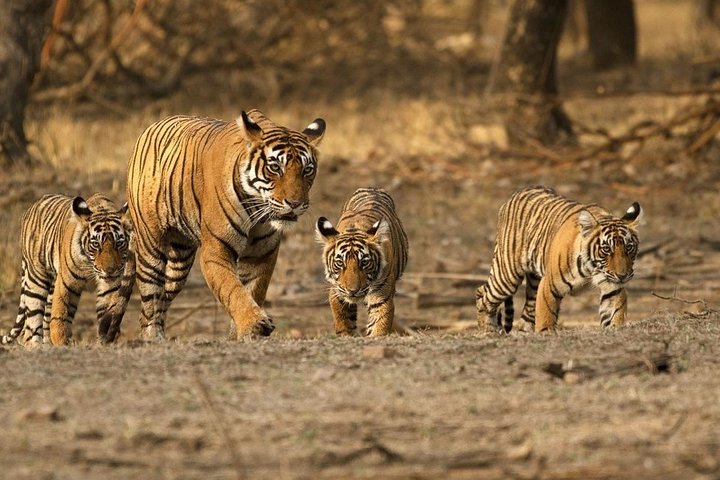
Jhalana Leopard Reserve is one of the most unusual wildlife experiences in India, a patch of dry Aravalli forest on the edge of Jaipur where leopards live within a short drive of the city centre. The reserve covers a modest area of scrub woodland, rocky ridges and grassland, and its leopards are well known for being unusually visible by Indian standards. Safaris run in open jeeps along dirt tracks, usually in the early morning and late afternoon when the big cats are most active, and a naturalist or guide accompanies each vehicle. Sightings are never guaranteed, but the reserve has a reputation for giving visitors a reasonable chance of seeing leopards, and even when they stay hidden, the landscape is attractive and there is plenty of other wildlife to spot. Peacocks, blue bulls, hyenas, jackals, mongooses and many birds live here, and the sunrise over the rocky hills is memorable in its own right. The adjoining Amagarh area and the ruined hunting lodges add a historical flavour to a drive that feels far removed from the busy bazaars.
How it works
Most visitors book a jeep safari that includes hotel pickup, transfers, a permit and a naturalist or driver, with morning and late-afternoon slots. The trip takes about three hours including transfers, and the reserve is close enough that a safari can fit into a day that also includes a fort or a museum.
Because entry is controlled and the number of vehicles is limited, it is wise to book a day or two ahead in the busy winter season. Some operators run private jeeps and others share, so ask what you are booking and how many people share a vehicle.
Setting expectations
Leopards are shy and well camouflaged against the rocks, so patience counts for more than luck. Guides are skilled at spotting pugmarks, alarm calls and shapes in the shade, and the best advice is to stay quiet, keep your hands inside the jeep and follow instructions. Early morning in winter can be cold in an open vehicle, so bring a jacket, a scarf and a hat, while summer afternoons are hot and dusty.
Binoculars and a camera with a zoom lens help, but do not let the camera replace your eyes. The safari season runs through the cooler months, and the reserve may close for part of the monsoon, so confirm availability before you plan around it.
Who it suits
Wildlife lovers, photographers, families with older children and travellers who want something different after several days of palaces. It is also a lighter alternative to a full day trip to Ranthambore for those who cannot spare the time, though it is a different kind of experience, with leopards rather than tigers and a shorter, more urban setting. Respect the rules, avoid loud talk and do not feed or approach animals. Dress in muted colours rather than bright ones, wear closed shoes and carry water.
A visit here makes a good start to a day, with breakfast afterward and the forts in the afternoon. Because the reserve is so close to the city, it also suits a shorter itinerary: a morning safari, a late breakfast, and an afternoon at City Palace or the bazaars is entirely realistic. Ask your operator about group size and vehicle type, and consider a private jeep if you want more flexibility to wait quietly at a promising spot.
What to expect
The experience
A jeep safari along dirt tracks in a forest reserve at the edge of the city, with a guide who looks for leopards and other wildlife.
Best time
Early morning or late afternoon in the cooler months, when leopards are most active.
How long
About three hours including transfers, with roughly two hours in the reserve.
Tips
Book ahead in winter, dress in muted layers, stay quiet in the jeep and do not count on a sighting.
Quick picks
- Best for
- Wildlife lovers and photographers who want something beyond palaces and forts.
- Families
- Exciting for older children who can sit quietly in an open jeep; very young children may find the early start and the stillness hard.
- Couples
- A shared adventure at sunrise, with a coffee or breakfast afterward.
- Pair with
- A fort in the afternoon, or a bazaar walk after a morning safari.
- Time needed
- About three hours.
Good questions
Will I see a leopard?+
Sightings are never guaranteed, but the reserve is known for giving visitors a reasonable chance. Patience, quiet and a good guide improve the odds.
When do safaris run?+
Safaris usually run in the early morning and late afternoon, when the animals are most active. Check the schedule when you book.
Is it close to the city?+
Yes, the reserve is on the edge of Jaipur, so transfers are short and the safari fits into a day with other sights.
What should I wear?+
Wear muted colours, closed shoes and warm layers for early mornings, along with a hat and sunscreen for the afternoon.
Is it open all year?+
The reserve may close for part of the monsoon, and the best season is the cooler months. Check availability before you plan.