Jaipur has been a craft city since its founding in 1727, when Jai Singh II invited artisans from across India to settle in the new capital. Almost three centuries later, whole neighbourhoods are still organised around trades: gem cutters and jewellers, block printers, blue potters, marble carvers, lac bangle makers and painters of miniatures. That makes the city one of the best places in India to learn how things are made, and to buy them with confidence. This guide explains the main crafts, how to try them and how to shop well.
Block printing
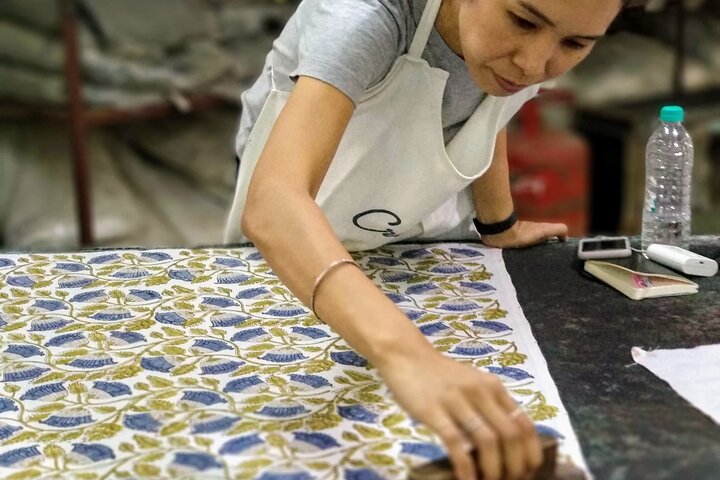
Hand block printing is the craft most visitors associate with Jaipur. Carved teak blocks are dipped in dye and stamped onto cotton in repeating patterns. Two villages near the city lead the way. Sanganer is known for finer, lighter prints and handmade paper, while Bagru is known for earthy natural dyes, especially indigo and a rich red. A workshop in the city or a village visit lets you see the process and print a piece yourself, which gives you the knowledge to judge quality in the shops. Look at the edges of a print, where a hand-stamped pattern shows small variations that a machine would not, and ask about natural versus synthetic dyes.
Blue pottery
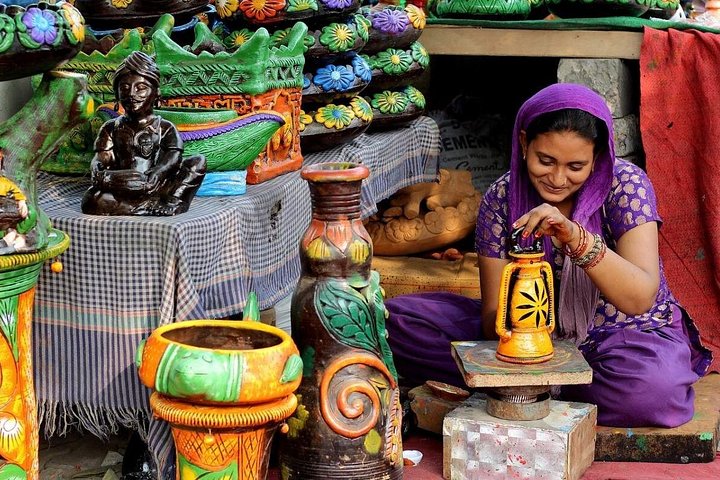
Despite the name, Jaipur blue pottery contains no clay. It is made from ground quartz, powdered glass and gum, moulded, painted in cobalt blue and turquoise and fired at a low temperature. The result is a glassy, slightly rough ceramic that comes in tiles, plates, vases and tableware. A hands-on workshop teaches you how to tell the real thing from mass-produced imitations, which often have a smoother body and printed rather than painted designs. Blue pottery is fragile, so ask for secure packing and consider shipping larger pieces.
Gems and jewellery
Jaipur is one of the world's great gem-cutting centres, and the jewellery bazaars sell silver, kundan, meenakari enamel and coloured stones in every price range. This is the area where it pays most to be careful. Ask where a stone is from and whether it has been treated, request a written description, and for anything valuable, ask for an independent laboratory certificate. Compare more than one shop, and treat unsolicited advice from people on the street with caution. A short workshop with a reputable studio is a good way to learn the basics before you buy.
Miniature painting, lac and more
Rajasthani miniature painting uses mineral pigments and very fine brushes, and a class lets you try a small piece under an artist's guidance. Lac bangles, made from a resin that is shaped and decorated with stones and mirror work, are sold in the bazaars near Johari and Tripolia, and leather jootis, marble figures, puppets and rugs are widely available. In each case, the rule is the same: ask who made it, how long it took and what it is made of, and be wary of prices that seem too good to be true.
Where to shop
Johari Bazaar is the traditional jewellery street, Bapu Bazaar is known for textiles, jootis and souvenirs, and Tripolia Bazaar for lac, brassware and household items. Chandpole and the lanes around City Palace have a mix of crafts and everyday goods. Bazaars are lively and crowded, so go in the morning for calmer browsing or the early evening for atmosphere. Many shops close one day a week, so ask locally. Fixed-price shops and government-run emporia offer a lower-pressure way to see quality pieces and gauge prices before you bargain elsewhere.
How to bargain
Bargaining is normal in the bazaars, but it works best when done with good humour. Look at several shops, decide what you would be happy to pay and start well below that, then settle when you reach a figure that feels fair. Walking away politely is often the most effective step. In fixed-price shops, the price tag is the price, though it is fine to ask about discounts for multiple items. Pay attention to what is included, particularly for shipping, packing and any taxes.
Tours and shopping stops
Many guided tours include shopping stops at workshops or showrooms, and some guides receive a commission. You are free to decline, and a good tour operator will make that clear. If your goal is to buy, a dedicated craft or shopping tour with an independent guide can be the best way to meet makers and compare prices without pressure. If your goal is sightseeing, say so at the start, and keep the day focused on the forts and palaces.
Shipping and customs
For large purchases, ask the shop to arrange shipping, and keep receipts and any certificates. Check your home country's rules on importing gems, textiles, wooden items and anything made of animal products, and avoid buying anything that appears to involve protected species. Pack fragile items in your hand luggage where possible, and wrap block-printed fabric separately for its first wash.
Planning a craft day
A good craft day might begin with a block-printing workshop in the morning, move to a gem or blue pottery session after lunch and finish with an evening walk through the jewellery bazaar. Pair it with a visit to the Albert Hall Museum, which displays historic examples of the same crafts, and you will have seen how a tradition travels from the workshop to the museum and the shop. Whatever you buy, you will return home with more than an object: you will have met the people who made it.