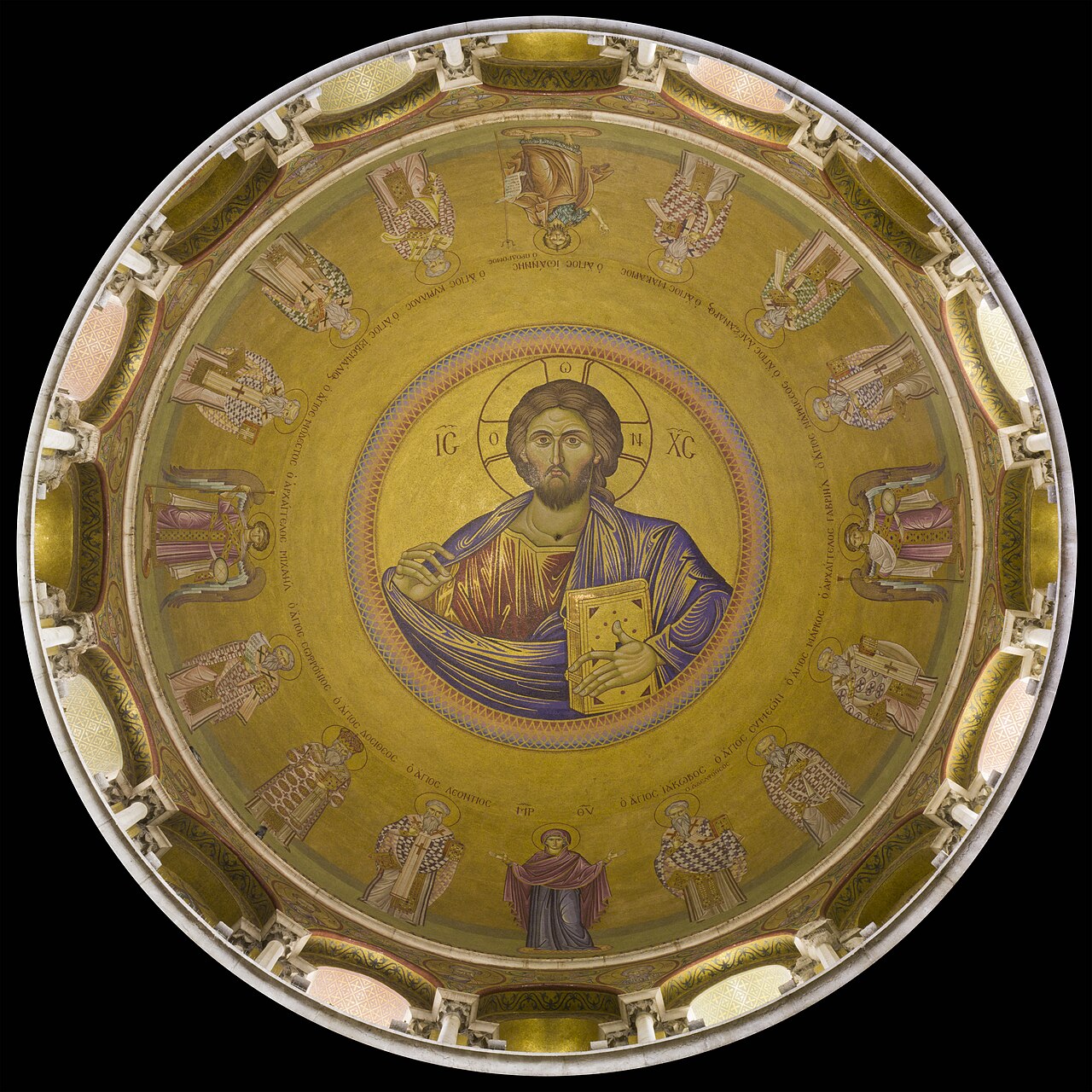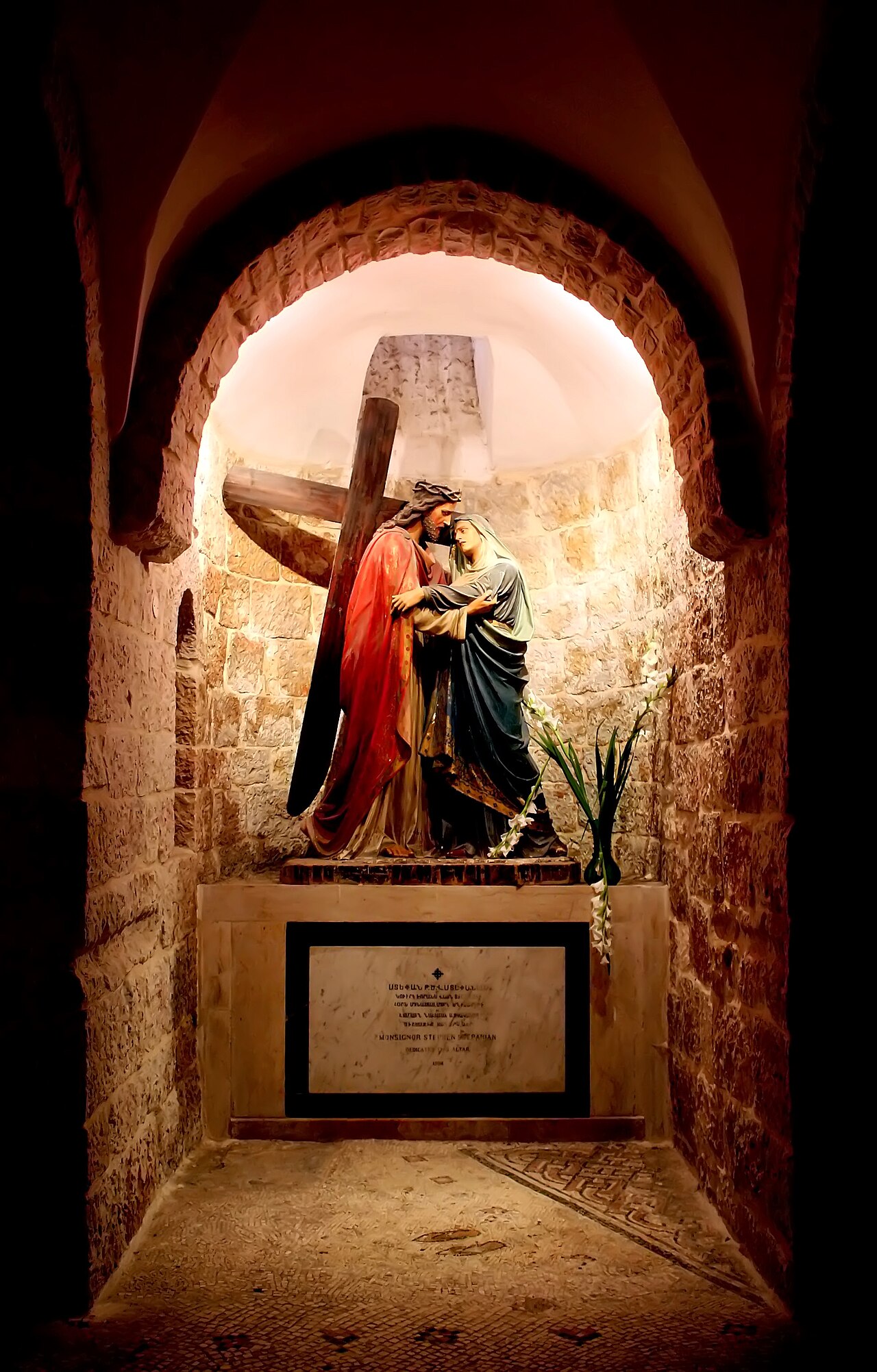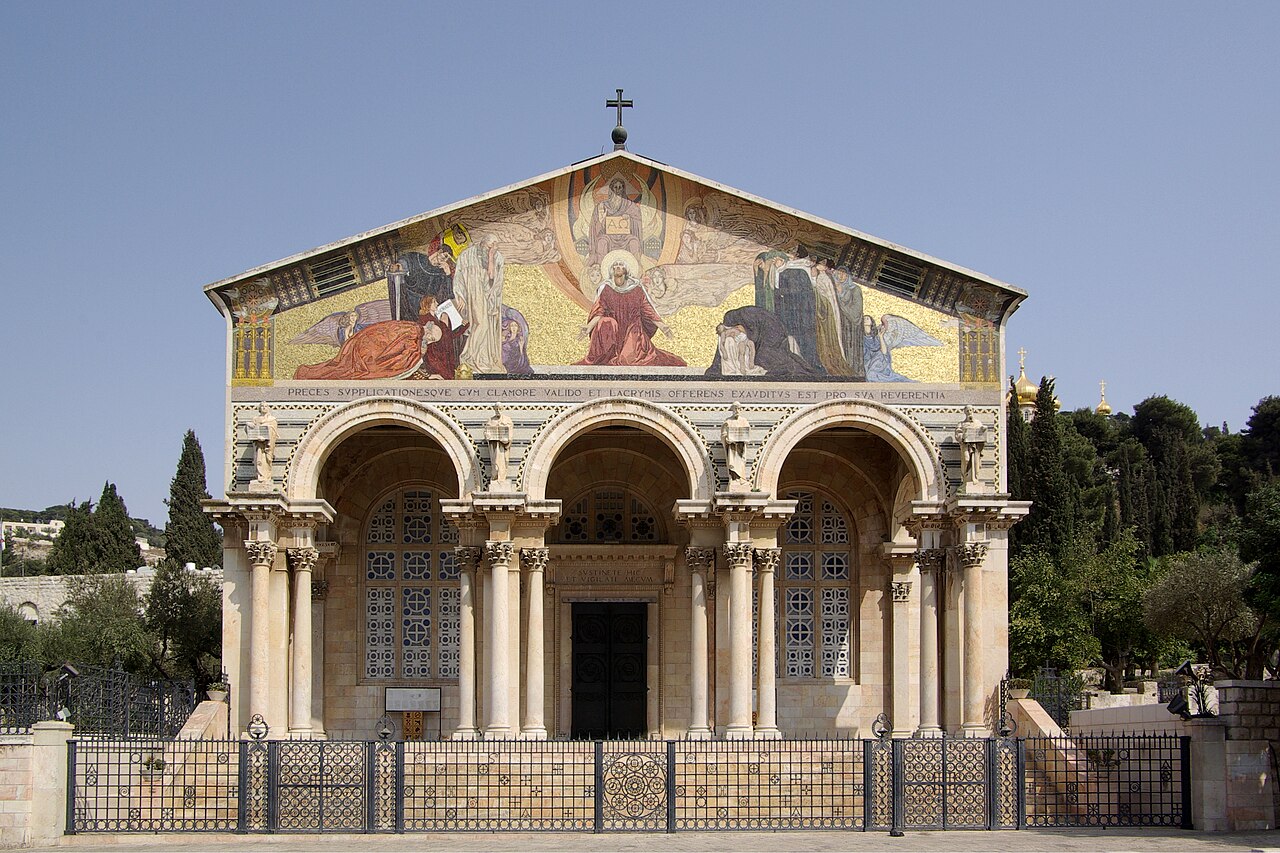
The Church of All Nations, also called the Basilica of the Agony, stands at the foot of the Mount of Olives beside the garden of Gethsemane, where by Christian tradition Jesus prayed before his arrest. The present church was designed by the architect Antonio Barluzzi and completed in 1924, and its name recalls the many countries whose donations paid for it. The interior is deliberately dim, with a low ceiling, twelve small domes and a purple-blue atmosphere, and at the center is a bare outcrop of rock enclosed by an iron crown of thorns and olive branches. Mosaics depict the betrayal and the arrest, and sections of the floor reveal remains of a fifth-century Byzantine basilica and a later Crusader church built on the same spot. Outside, a fenced garden holds ancient olive trees that visitors can see from the path.
Why it matters
Gethsemane is one of the places that gives the Christian story of Holy Week its physical setting, and many pilgrims regard it as an essential stop between the Mount of Olives and the Old City. Even for visitors who are not religious, the church is one of the most atmospheric interiors in Jerusalem, and the layers of Byzantine, Crusader and twentieth-century building tell their own story in a small space.
How to visit
Entry to the church is free, and it is often visited as part of a walk down from the top of the Mount of Olives, which is much easier than climbing up. The path down is steep in places, so wear sturdy shoes. Dress modestly with shoulders and knees covered, keep your voice low and expect worship and group visits to affect the mood at busy times, particularly in spring and around Easter.
Opening hours vary by season and the church may close for part of the day, so check before you set out. Photography rules can differ inside, so follow the signs and ask staff if unsure.
Pair it with
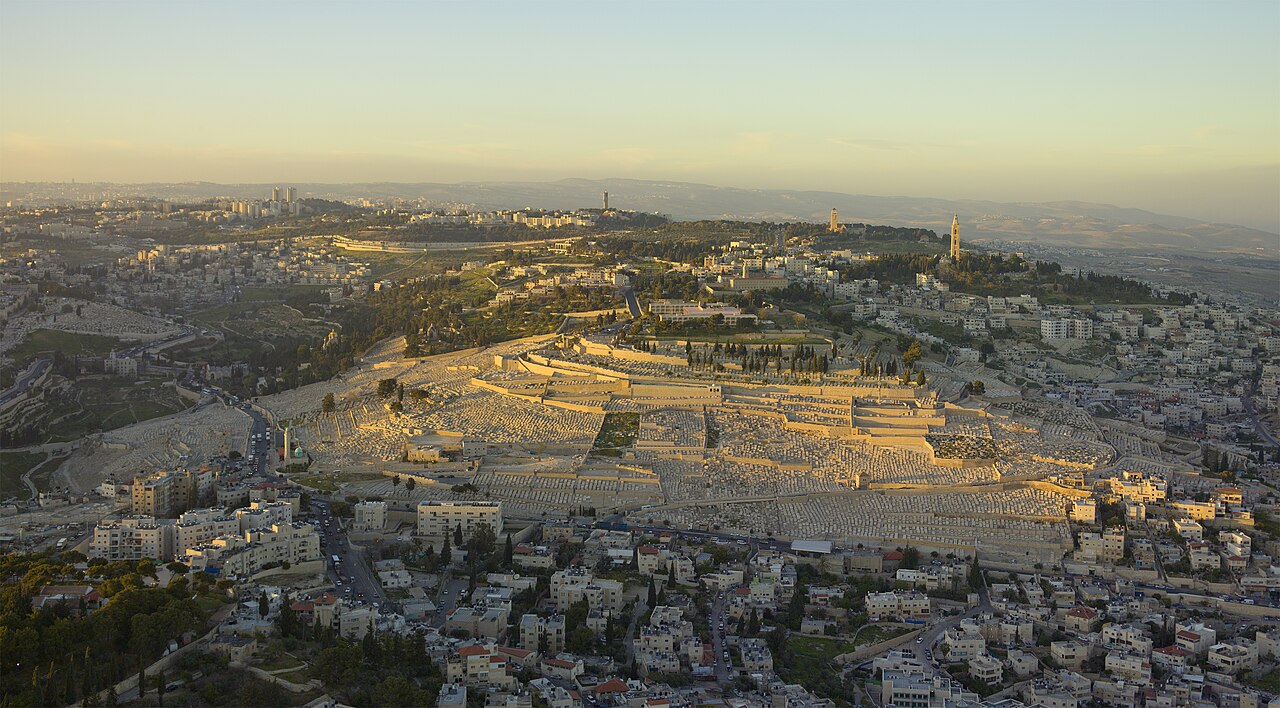
The Mount of Olives panorama, which sits above, and the walk across the Kidron Valley toward the Lions Gate and the Via Dolorosa. Many travelers do the Mount of Olives first by taxi, then walk down through Gethsemane and into the Old City. A late-afternoon visit gives soft light on the stone and a calmer atmosphere once the tour groups have thinned.
What to expect
The experience
A free visit to a dimly lit basilica built around a rock of prayer, with an olive garden outside.
Best time
Late afternoon, or as the end of a downhill walk from the Mount of Olives.
How long
About 45 minutes, including the garden and a pause inside.
Tips
Dress modestly, keep your voice low, wear sturdy shoes for the steep path and check seasonal opening hours.
Quick picks
- Best for
- Visitors following the Holy Week story or looking for a quiet, atmospheric church.
- Families
- Short and free, but the interior is quiet and the path outside is steep.
- Couples
- The dim blue interior and the old olive trees are memorable shared moments.
- Pair with
- The Mount of Olives and the walk toward the Via Dolorosa.
- Time needed
- Allow 45 minutes to an hour.
Good questions
Is the Church of All Nations free?+
Yes, entry is free. Check the opening hours before you go, as they vary by season and the church can close for part of the day.
What is the rock inside the church?+
It is a bare outcrop at the center of the church, surrounded by an iron crown of thorns, that tradition links with Jesus praying in Gethsemane.
Are the olive trees really ancient?+
Eight old olive trees stand in a fenced area of the churchyard. They are very old, and visitors view them from outside the fence.
Is there a dress code?+
Yes, shoulders and knees should be covered, as in other religious sites in Jerusalem.
How do I combine it with the Mount of Olives?+
Take a taxi to the top for the view, then walk down the hillside through the churches to Gethsemane and on toward the Old City.