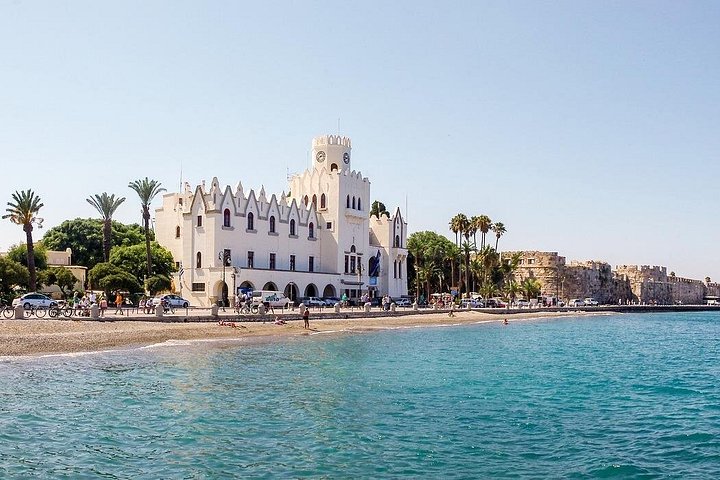
An island of ancient healing and easy holidays
Kos is a long, narrow island in the Dodecanese, a short ferry ride from the Turkish coast, and it blends two things that do not always sit together: serious history and a simple beach holiday. It is the birthplace of Hippocrates, the physician later called the father of medicine, and the ruins of the healing sanctuary he is linked to are a short drive from the main town. At the same time, the island has long sandy beaches, warm shallow water, a gentle landscape of fields and pine hills and a tourism industry that has been welcoming visitors for decades. Most people come for the sea and discover the history as a bonus.
The shape of the island
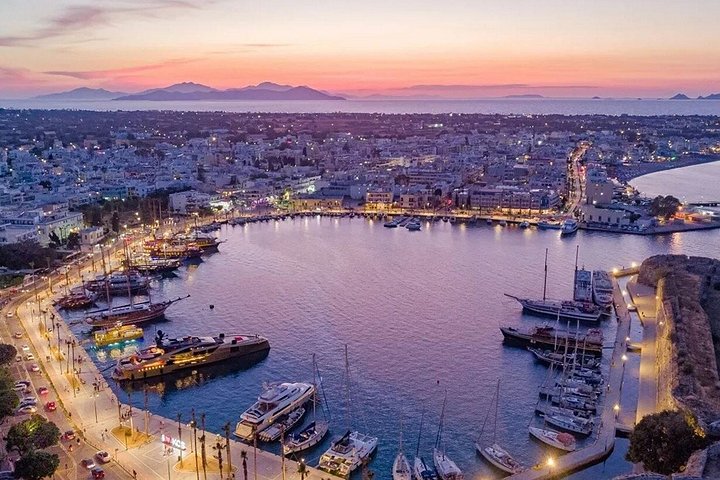
Kos is roughly forty kilometres from end to end. The main town, Kos Town, sits on the north-east coast with the port, the castle and most of the shops and restaurants. To the east lie the Psalidi resorts and the thermal coast, to the west the flat farmland and long beaches around Tigaki, Marmari and Mastichari, and further along the south coast you find Kardamena, a lively resort, and Kefalos, a quiet village at the far end. The mountain spine of Dikeos rises behind the south, holding villages such as Zia. Because distances are modest, you can base yourself in one place and reach most of the island in half an hour to an hour.
Getting around
Kos is famous for bicycles. The ground around the town is flat, there are dedicated lanes and rental shops are everywhere, so cycling is the natural way to explore Kos Town and the seafront. For longer distances, public buses link the main towns, taxis are plentiful but not cheap, and many visitors rent a car or scooter for a day or two. Roads are generally good, but mountain bends and summer traffic call for care, and scooters are a common source of holiday injuries, so ride sensibly. Organised tours remove the driving entirely and are a good option for the island interior.
The sights you should not miss
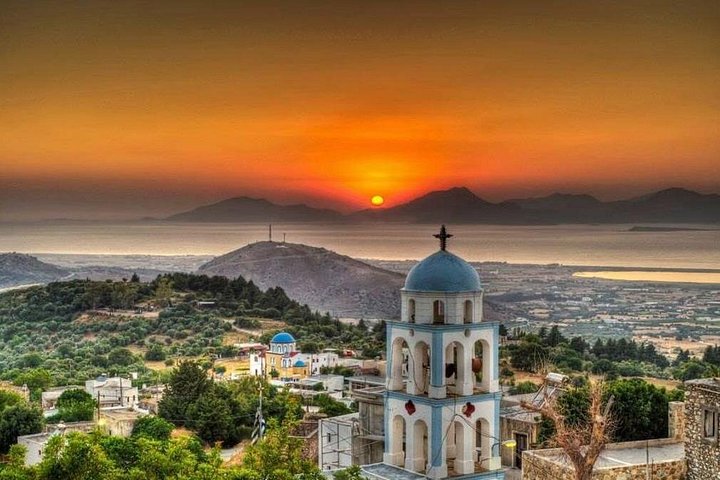
Put the Asklepieion at the top of the list, with its three terraces overlooking the sea, and pair it with a walk through Kos Town to see the castle of the Knights of St John, the Ancient Agora and the plane tree linked to Hippocrates. Add a sunset in Zia, a village on the slopes of Mount Dikeos with wide views and tavernas. For something unusual, take a boat to Nisyros, a small volcanic island where you can walk into a crater. Our guides to the old town, the island tours and the villages explain what each involves.
Beaches and boat days
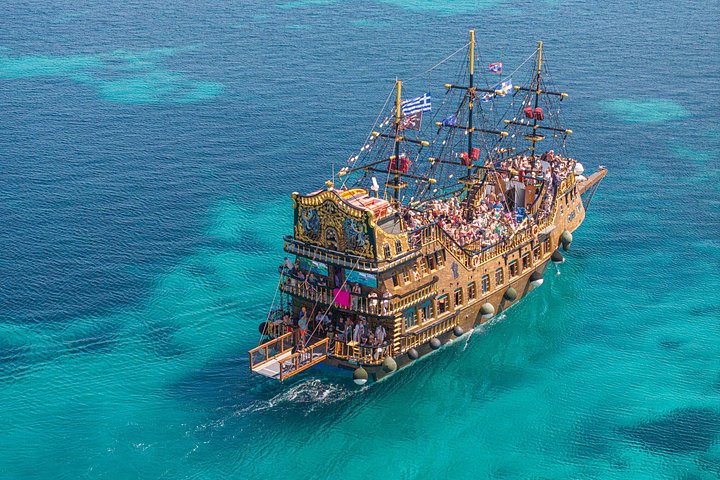
Kos has beaches for most tastes. The north coast offers long, shallow, sandy stretches that suit families, the east is more rocky and sheltered, and the south-west near Kefalos is wilder and quieter. A boat day is a highlight for many travellers. The classic three-island cruise visits small islands such as Pserimos and Kalymnos, with swim stops, lunch and a relaxed pace. Smaller catamaran and sailing trips offer a quieter version, and a glass-bottom boat is a good option for young children.
When to go
The main season runs from late spring to early autumn. July and August are the hottest and busiest months, and the meltemi wind can blow strongly, which cools the heat but roughens the sea. May, June and September are often the sweet spot, with warm water and fewer crowds. Many resorts and some restaurants close from late autumn to spring, so check opening dates if you travel out of season. Our seasonal guide goes into detail.
Where to stay
Kos Town suits sightseers and couples who want to walk to dinner, the Lambi coast just north gives beach access with town close by, Psalidi has big resorts, the north-west coast has the sandiest beaches and the south-west is quiet and rural. Think about whether you want to be able to walk to restaurants at night, since resort areas can feel remote after dark.
Practical points
Greece uses the euro, and cards are widely accepted, though cash helps in villages and small boats. Tap water is usually fine for washing, and many visitors prefer bottled water for drinking. Sun protection is essential, and shade is limited at many ancient sites. Pharmacies are easy to find. Opening hours for museums and archaeological sites change by season and often include a weekly closing day, so check locally. Tipping is modest, usually rounding up or leaving a few euros at a meal.
A sample week
Give yourself a town day, a beach day, a boat day and an inland day, and leave space for rest. Spend the first morning on a walking tour of Kos Town, the afternoon at the Asklepieion and the evening at the harbour. Follow with a beach day, then a cruise, then a sunset in Zia or a 4x4 trip into the hills. If you have a spare day, visit Nisyros or take a spa treatment. Kos rewards an unhurried pace, and the best moments often come from a long lunch rather than a long list of sights.