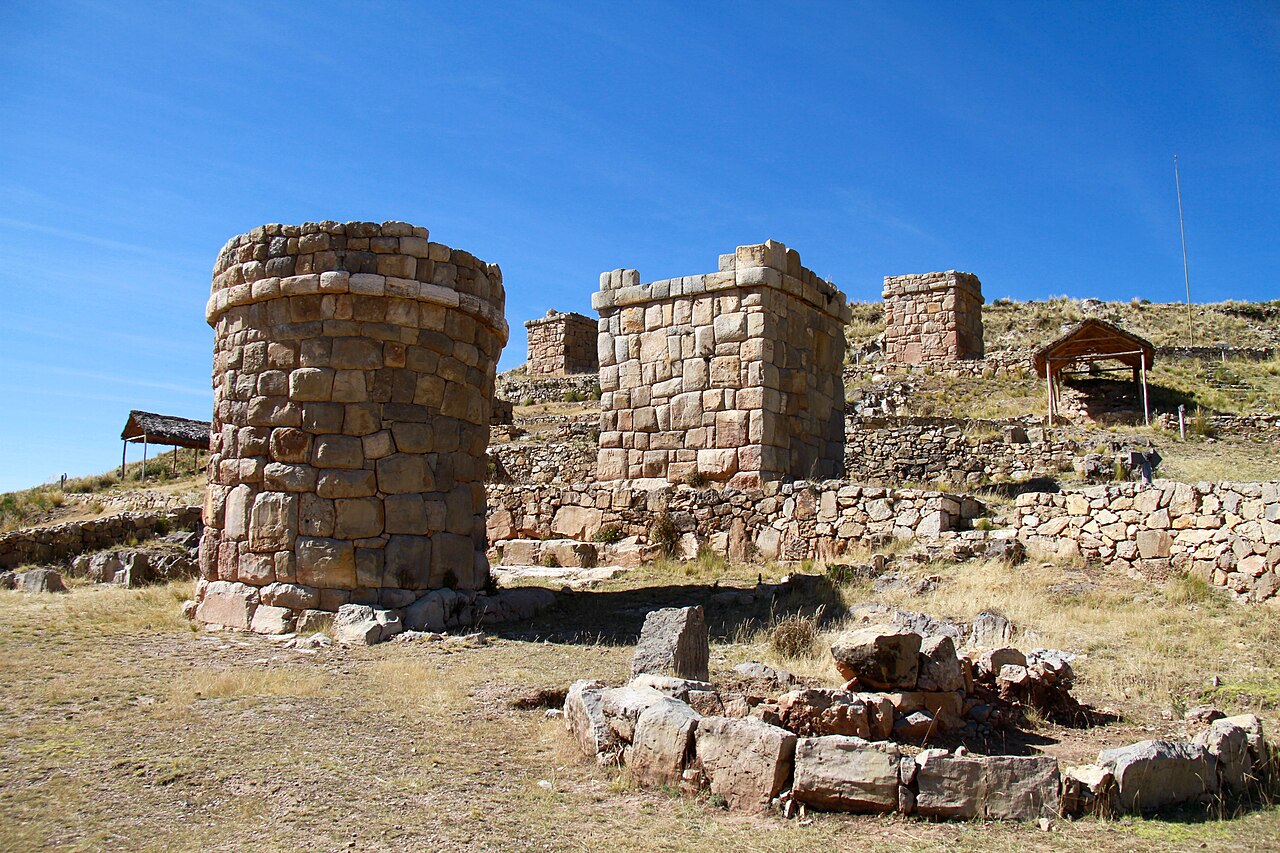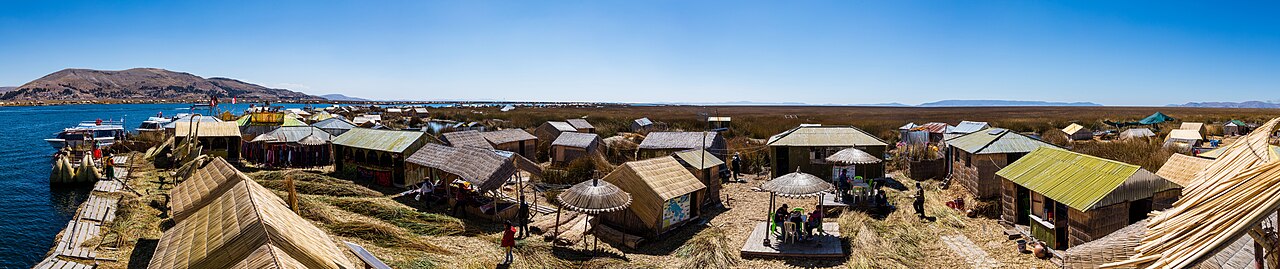
The Aymara Route follows the lake road southeast of Puno toward the Bolivian border, linking villages where Aymara-speaking communities have lived for centuries. Day tours typically stop at Chucuito, a small town with a colonial church and a famous pre-Inca fertility site, at Juli, a town with a remarkable group of colonial churches that once earned it the nickname of the little Rome of the Andes, and at points along the way with lake views and agricultural landscapes. Some itineraries add Pomata, known for its hilltop church, and the carved stone portal of Aramu Muru. The day offers a very different picture of Titicaca from the islands, with churches, markets, ceremonial sites and open farmland running down to the water.
What you see
Chucuito, about twenty minutes from Puno, is a tidy lakeside town with a plaza, colonial churches and a walled enclosure that locals call the Inca Uyo, a field of carved stone phalluses linked with fertility rites. Juli, farther along, has several colonial churches built by Dominican and Jesuit orders in the sixteenth and seventeenth centuries, with fine stonework, murals and bell towers.
Visits focus on the best preserved of them. Pomata, if included, is famed for a church of pink stone on a hill with views across the lake. Between stops, guides often point out waru waru, raised planting beds that pre-Inca farmers used to protect crops from frost.
Culture and daily life
The Aymara people are one of the oldest cultures of the high plateau, and the route reveals their language, textiles, music and farming traditions. In small towns you may see market stalls selling potatoes, chuño and cheese, and women in layered skirts and bowler hats going about daily errands.
Most guides are Aymara or Quechua speakers and add insight about festivals, agricultural cycles and religious customs, blending Catholic and Andean beliefs. Because the route runs by road, you cover a lot of ground without long walks, which suits travelers who prefer a gentle pace.
Practical details
Most tours depart in the morning and return in the late afternoon, with lunch at a local restaurant. The route can be done as a shared tour or privately. Wear comfortable shoes and layers, and carry small soles for church entry fees, snacks and handicrafts. Churches may close for services, so itineraries vary.
This day trip pairs well with a morning at the Uros Islands the day before, since the two cover water and land in contrast. If you plan to continue to Copacabana in Bolivia, the same road leads to the border at Kasani, and you can see some of the route on the way.
Plan your day with some flexibility. Church opening hours vary, and a lunch stop can run long, so do not schedule tight connections the same evening. Ask your guide about the waru waru raised fields, which are being revived in some communities as a way to protect crops from frost, and about the textile and music traditions that keep the Aymara language alive.
If you enjoy photography, the soft morning light on the lake and the stone churches is especially good, and the lake road gives plenty of places to stop for a view, so bring a camera and a windproof jacket.
What to expect
The experience
A guided full-day road trip along the lake to Chucuito, Juli and other Aymara villages, with church visits, a fertility site, viewpoints and a local lunch.
Best time
Dry-season days from May to October, with clear views over the lake.
How long
A full day, usually 7 to 9 hours.
Tips
Wear comfortable shoes and layers, carry small soles for church fees, and check opening days with your operator.
Quick picks
- Best for
- History and culture lovers who want to see the mainland side of Titicaca.
- Families
- Suitable for most children, with plenty of car time and a few short walks.
- Couples
- A relaxed way to see the shoreline and quiet churches.
- Pair with
- The Uros Islands, Aramu Muru and Sillustani on other days.
- Time needed
- A full day.
Good questions
What is the Aymara Route?+
A road route along the southern shore of Lake Titicaca through Chucuito, Juli, Pomata and other Aymara towns, with colonial churches and archaeological stops.
What is the Inca Uyo?+
A walled site in Chucuito with carved stone phallic shapes, linked to fertility rites.
Why is Juli called the little Rome of the Andes?+
It has several colonial churches built in the sixteenth and seventeenth centuries.
Is the day tiring?+
It is mostly by road with short walks, so it is easier than island trips, though the altitude still matters.
Can I combine it with Aramu Muru?+
Yes. Many itineraries include the carved portal near Juli.