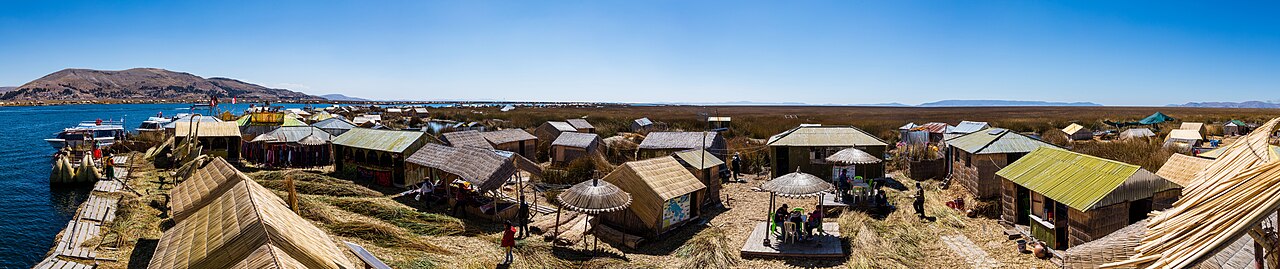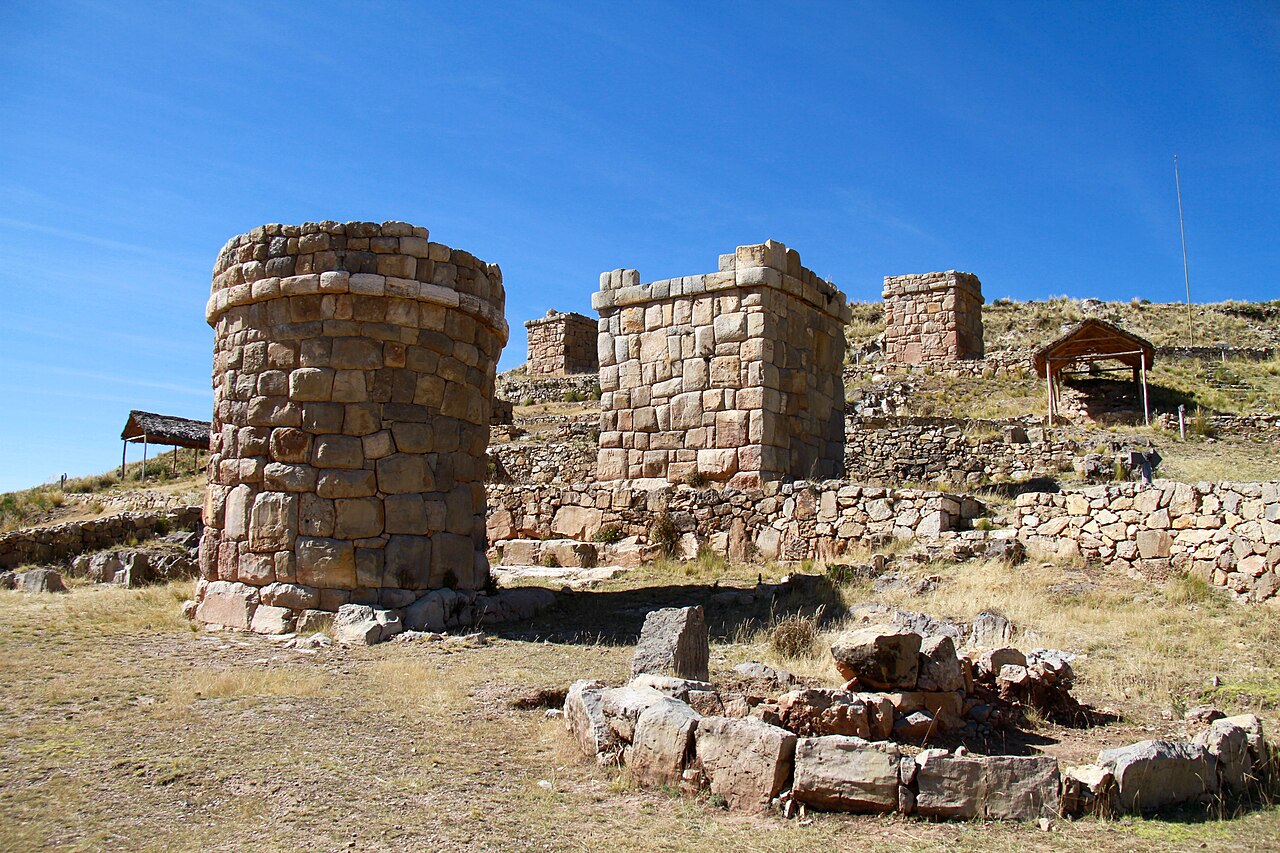
Sillustani is the best-known archaeological site near Puno, a collection of stone burial towers called chullpas standing on a peninsula in Lake Umayo, about forty minutes from the city by road. The towers were built by the Colla people, an Aymara-speaking kingdom that held the high plateau before the Inca conquered it, and later Inca builders added their own work. The tallest rise to roughly twelve meters, built of carefully fitted stone blocks, some curving gently outward toward the top. They held the remains of nobles and their families, with small openings facing the rising sun. On a clear day the combination of sculpted stone, grass, wind and deep blue water makes Sillustani one of the most photogenic places in southern Peru.
What you see
From the parking area, a path climbs gently up the hill past a small museum and a lake viewpoint to the towers, which stand in scattered clusters. Guides point out different building styles, from simpler, rougher towers to the finer Inca-influenced ones, and show the carved lizard stone, a famous detail on one of the towers.
You can walk among the chullpas, peer at the openings, and learn how the towers were built from cut blocks fitted without mortar. The Colla buried their dead in a fetal position, with food and belongings for the next world, and the towers were sealed with stone. Most of the contents were removed long ago, but the architecture remains impressive.
The lake and the landscape
Lake Umayo is a smaller, quieter lake than Titicaca and surrounded by grassland where alpacas and llamas often graze. A short boat or walking route can reach a small island, and a community stop on the way back often shows traditional bread-making or weaving, with a chance to buy handicrafts.
The light is best in the afternoon, when the stone glows warm and the shadows sharpen, which is why most half-day tours leave Puno at about two or three o'clock and return around dusk. Mornings suit photographers who prefer a quieter site.
Practical tips
The site sits high and exposed, so expect strong sun and a stiff wind. Wear a windbreaker, a hat and sturdy shoes, and bring water. The entry fee is often separate from the tour price, so check what is included and carry small soles. A half-day tour is enough to see the site properly, while a longer day tour combines Sillustani with the Uros Islands or with Lampa and Pukara.
Sillustani works well as an afternoon add-on after a morning at the Uros, which together cover the main highlights of the Puno area in a single day.
To make the visit richer, ask your guide about the difference between Colla and Inca stonework, which is visible in the way the blocks are cut and fitted. Notice how the largest towers narrow toward the base and flare toward the top, a design that has intrigued builders for centuries. A short walk along the shore of Lake Umayo gives a calm contrast to the stone, and the site is a good place for birdwatching, with ducks and other waterbirds often visible on the lake.
If you are traveling with children, let them hunt for the lizard carving and count the towers, which turns the visit into a game.
What to expect
The experience
A half-day guided trip by road from Puno to the burial towers on Lake Umayo, with a walking route among the chullpas and a short community stop.
Best time
Afternoons for warm light, or early morning for fewer visitors, in the dry season.
How long
About three to four hours including the drive.
Tips
Carry a windproof layer, a hat, water and small soles for the entry fee, and ask your guide about the lizard stone.
Quick picks
- Best for
- History and photography lovers who want a classic, easy half-day trip from Puno.
- Families
- Children enjoy climbing and spotting llamas, though the site is exposed and windy.
- Couples
- Go in the late afternoon for golden light on the towers.
- Pair with
- A morning at the Uros Islands, or the Lampa and Pukara day route for a fuller day.
- Time needed
- A half day.
Good questions
Who built the Sillustani towers?+
The towers were built by the pre-Inca Colla people as tombs for nobles, with later Inca additions.
How far is Sillustani from Puno?+
It is about forty minutes by road, around 30 kilometers, so most trips are half-day tours.
When is the best time to visit?+
Late afternoon gives the warmest light on the stone, while mornings are quieter.
Is the entry fee included?+
Check your tour. The site entry fee is often separate, so carry small soles.
Is it a hard walk?+
No. The paths are short and gentle, but the altitude and wind can make it tiring, so go slowly.