There is no bad time to see Lofoten, but there are very different trips depending on the month, and some of the best-known activities exist in only one season. The islands lie well above the Arctic Circle, so the light changes more than almost anywhere else in Europe: the sun does not set for weeks in summer and does not rise for about a month in midwinter. This guide states the seasons plainly so you can choose the one that matches what you want to do.
Summer: late May to August
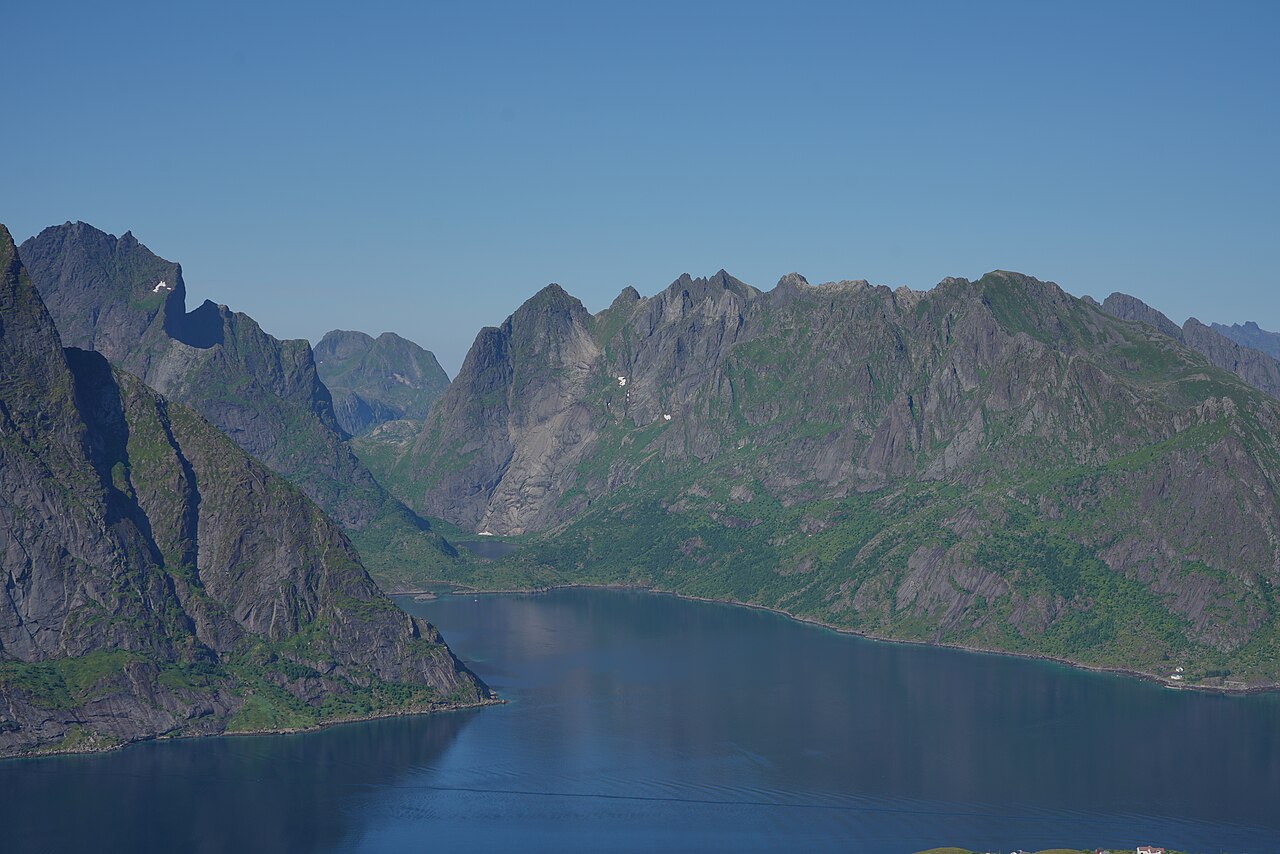
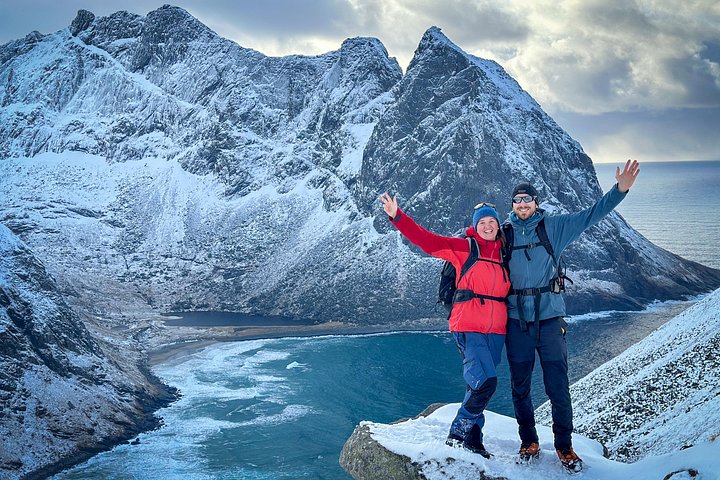
This is the hiking season and the midnight sun season. From late May to around mid-July the sun stays above the horizon in much of Lofoten, and even outside those weeks evenings are long and bright. The mountain trails are open: Reinebringen, a staircase of roughly two thousand steps above Reine, runs from May to September, as does Mannen above Haukland beach and the walk to Kvalvika. Kayaking and stand-up paddling run in the sheltered fjords, with midnight-sun paddles offered by local operators, and surfers head to Unstad. The cost is crowds and prices. Hamnøy, Reine and the beaches are at their busiest, accommodation books out well ahead, and parking needs patience. Start early and book early.
Autumn: September and October
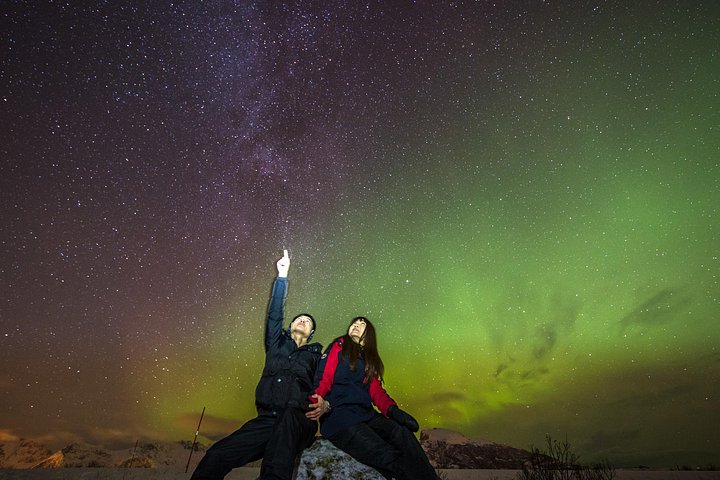
Many visitors consider this the sweet spot. The summer crowds thin, the mountains turn red and gold, and the nights are dark enough for the northern lights to start. The hiking season fades, though the lower walks and the beaches stay pleasant on dry days. Weather becomes less predictable, with more wind and rain, and some seasonal businesses begin to cut hours. A good autumn trip combines the E10 villages in daylight with an aurora tour in the evening.
Winter: November to March
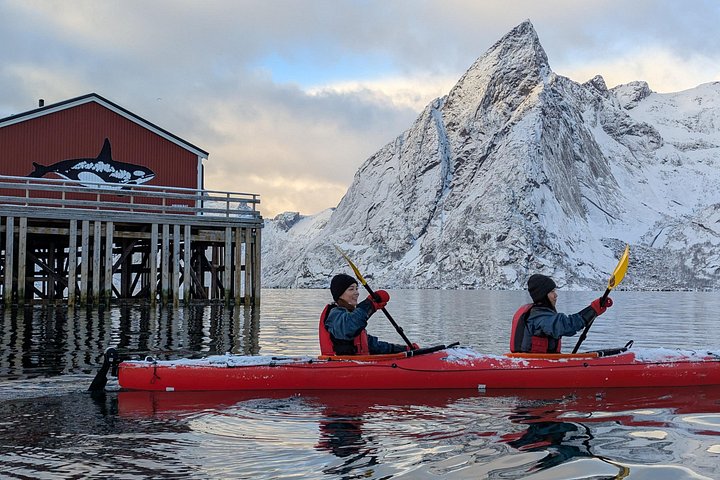
Winter is a different place. The days shorten quickly, and for about a month around midwinter the sun stays below the horizon, giving blue and pink twilight in the middle of the day instead of daylight. The northern lights season runs from September to April, and midwinter nights give the longest chances of a clear sky, though cloud decides everything and a single night is a gamble, so plan several. Snow covers the peaks, roads can be icy and the wind strong, and Reinebringen is out of season and dangerous. In its place you can try guided snowshoe walks, winter kayaking in Reinefjorden, and the Trollfjord boat when weather allows. Surf is best in autumn and winter for those willing to pay in cold. Many cafes, museums and cabin businesses run reduced winter hours, so check before you drive.
Late winter and spring: February to May
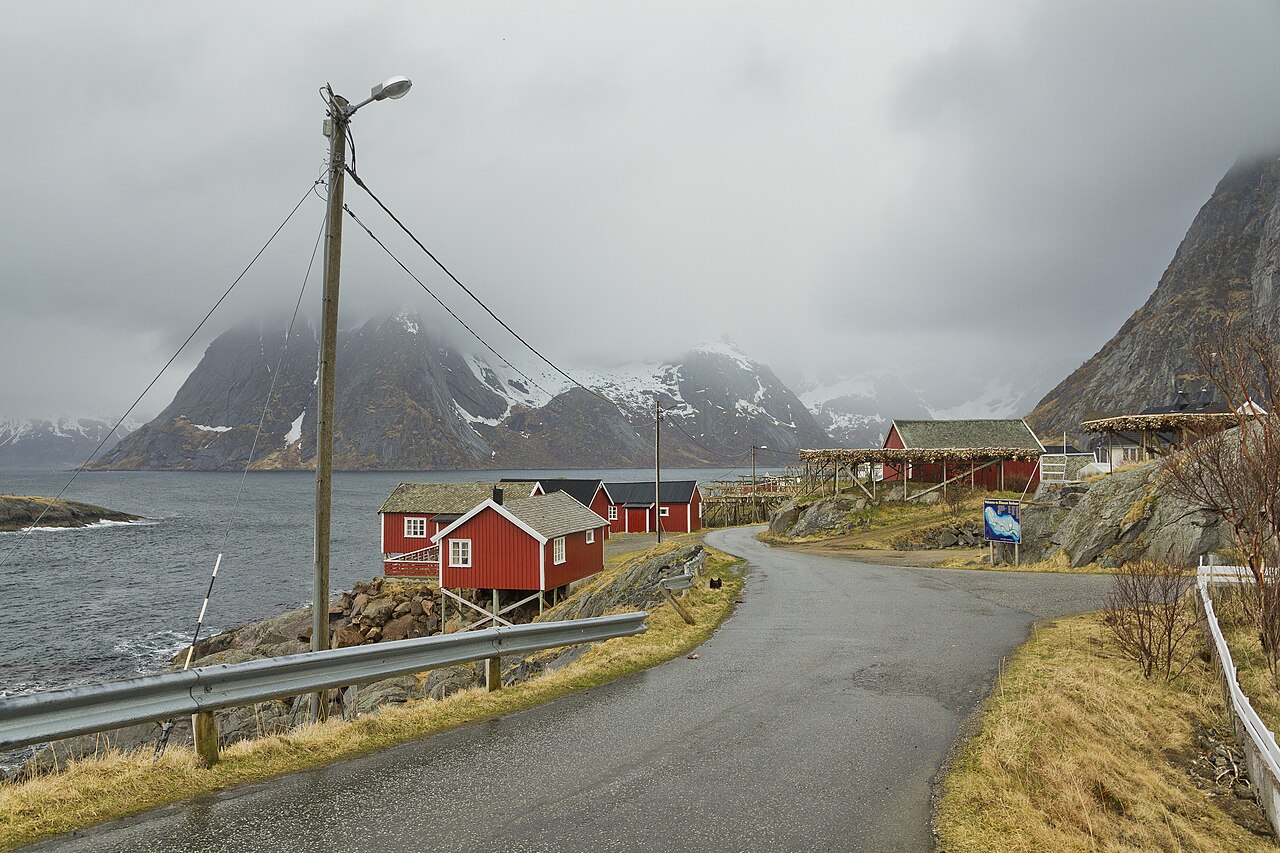
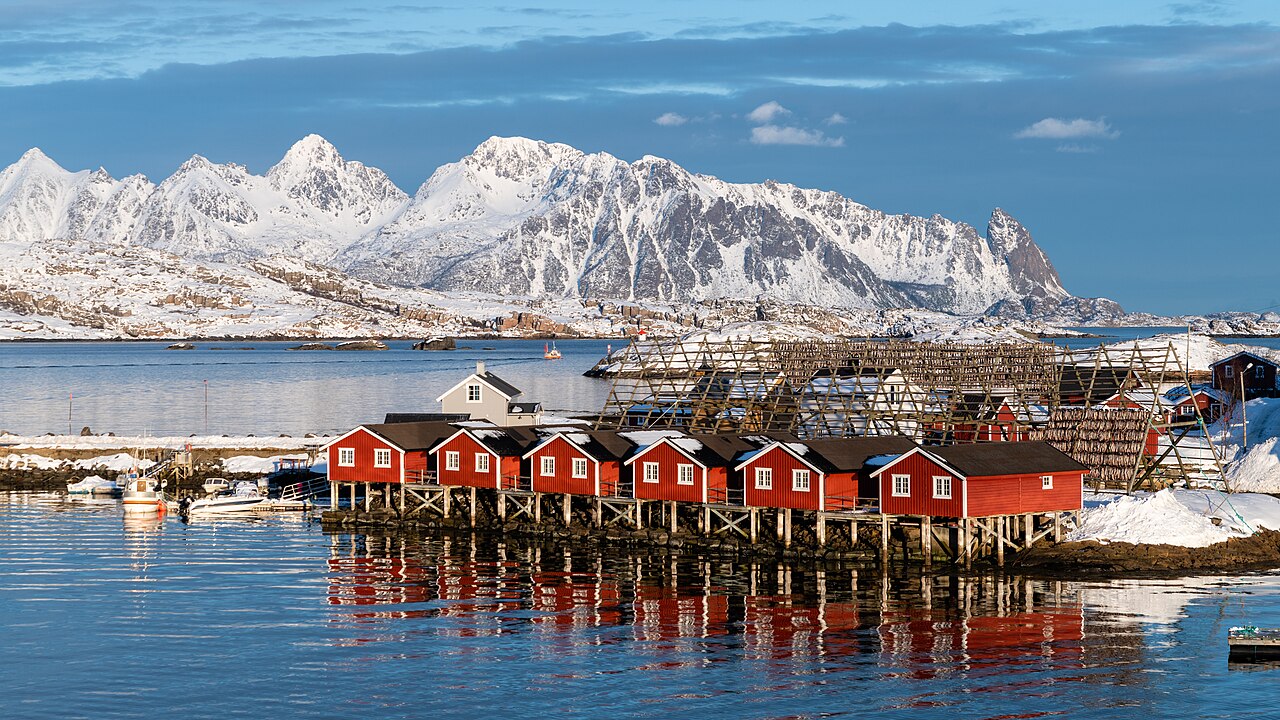
From February the light returns quickly, adding several minutes each day, and by March there is a comfortable window of daylight and still a chance of northern lights. This is the season of the cod: the Lofoten fishery runs in winter and early spring, and the wooden racks around the harbours are hung with drying fish. It is also a good time for snowshoeing and ski touring with a guide, and the villages are quiet. Roads can still be icy, and some trails stay closed to non-winter walkers until the snow clears, usually by May.
Which month for which goal
For hiking and the midnight sun, choose June to August, and book months ahead. For the northern lights with some daylight, choose September, October, March or early April. For deep winter atmosphere, choose December to February, and accept very short days and weather risk. For fewer people and a good mix, choose late May, early June or September. For photography of the red cabins under peaks, any clear day works, but low winter light is kinder than flat summer noon.
Daylight and planning
In deep winter, put your outdoor stops in the few hours of light and keep evenings for the sky. In summer, use the long evenings and start early to beat the crowds. In either season, build a spare day into every outing, because wind cancels boats, ice slows roads and cloud hides the aurora. Avoid assuming that a single booked evening will deliver the lights, and avoid planning a winter trip around a mountain view that is only safe in summer.
Practical tips
Whatever the month, carry waterproofs and layers, since the weather turns fast on the coast. Book rooms and cabins early for summer and the aurora months, ask about winter opening and heating, and fill the tank in the larger towns. Check museum opening days, since many run a reduced weekly schedule outside summer. Buses along the E10 thin out in winter, so a car or a guided day is more reliable. Allow extra time for every drive when roads are icy, and never stop on a road or a bridge for a photograph.