Lofoten looks small on a map and drives long, because everything hangs off one road, the E10, and the road is slow. Three days is enough to see the headline places if you stop trying to cover everything and instead give each part of the islands its own day: the east around Svolvær, the centre around Leknes, and the far west around Reine. The plan below follows that logic, assumes you have a car or a guide, and gives weather and season swaps so a closed trail or a storm does not ruin a day.
Day one: Svolvær and the east
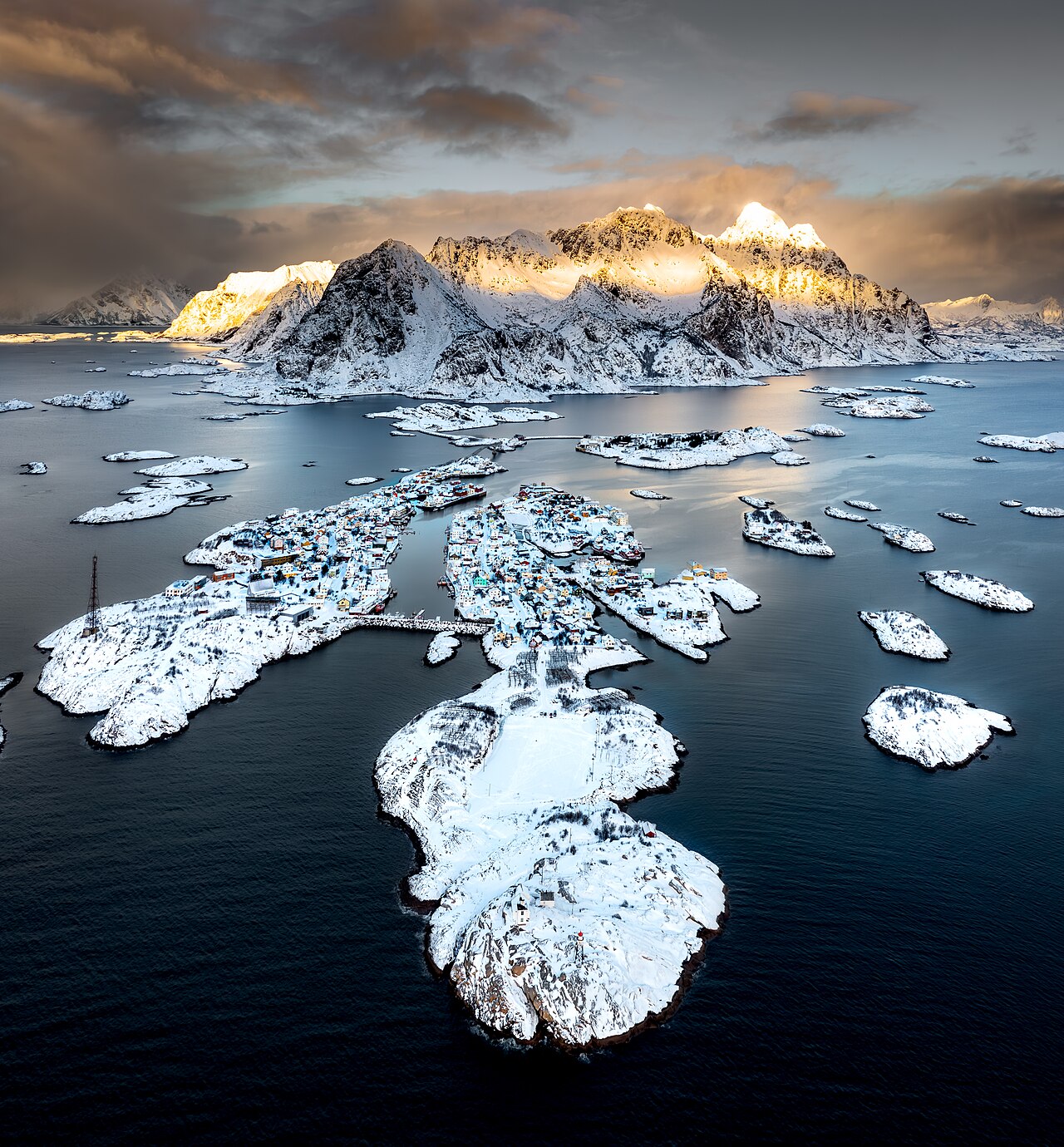
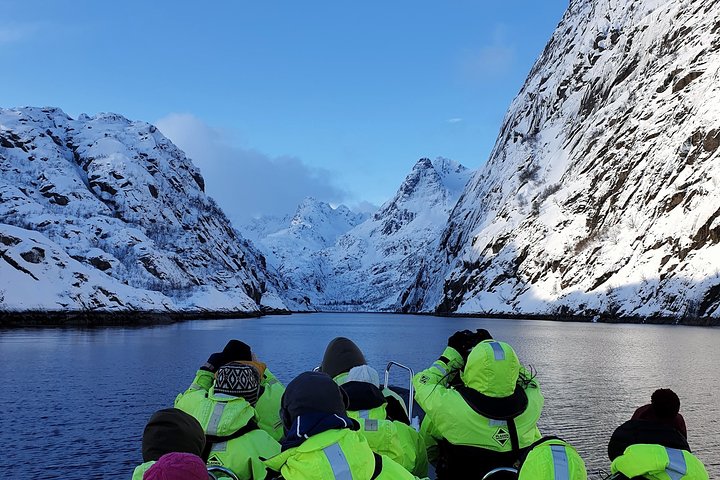
Start in Svolvær with a walk around the harbour and across to the old cabins on Svinøya, and look up at the twin horns of the Svolværgeita above town. If you want a museum, the Lofoten Museum near Kabelvåg tells the story of the fishing trade from the merchant's side, with a manor house, boathouses and wooden boats, and it keeps a reduced weekly schedule outside summer, so check the days. The big outing of the east is the boat trip into the Trollfjord, a narrow fjord with steep walls, usually combined with a search for sea eagles. Boats run when weather and sea state allow, so keep a spare day. In the afternoon, drive on to Henningsvær, the harbour village of galleries, cafes and a famous football pitch built on a rock. Stay here or return to Svolvær.
Day two: the centre
Drive west along the E10 and use the middle of the islands as your slower day. The Lofotr Viking Museum at Borg has a reconstructed chieftain's longhouse and is a good family stop, with reduced hours in winter. Haukland and Uttakleiv are the white-sand beaches of Vestvågøy, free to visit, with a cafe at Haukland and a short walk between the two. In season, add the Mannen hike, an out-and-back climb of about two kilometres each way from the Haukland car park with a view over both beaches, from May to September. Nusfjord, a protected fishing village in a tight bay, is a short detour south and is best seen in the quieter hours. If you want the surf coast, Unstad lies to the north-west and offers lessons in cold water, a memorable if committing experience.
Day three: the far west
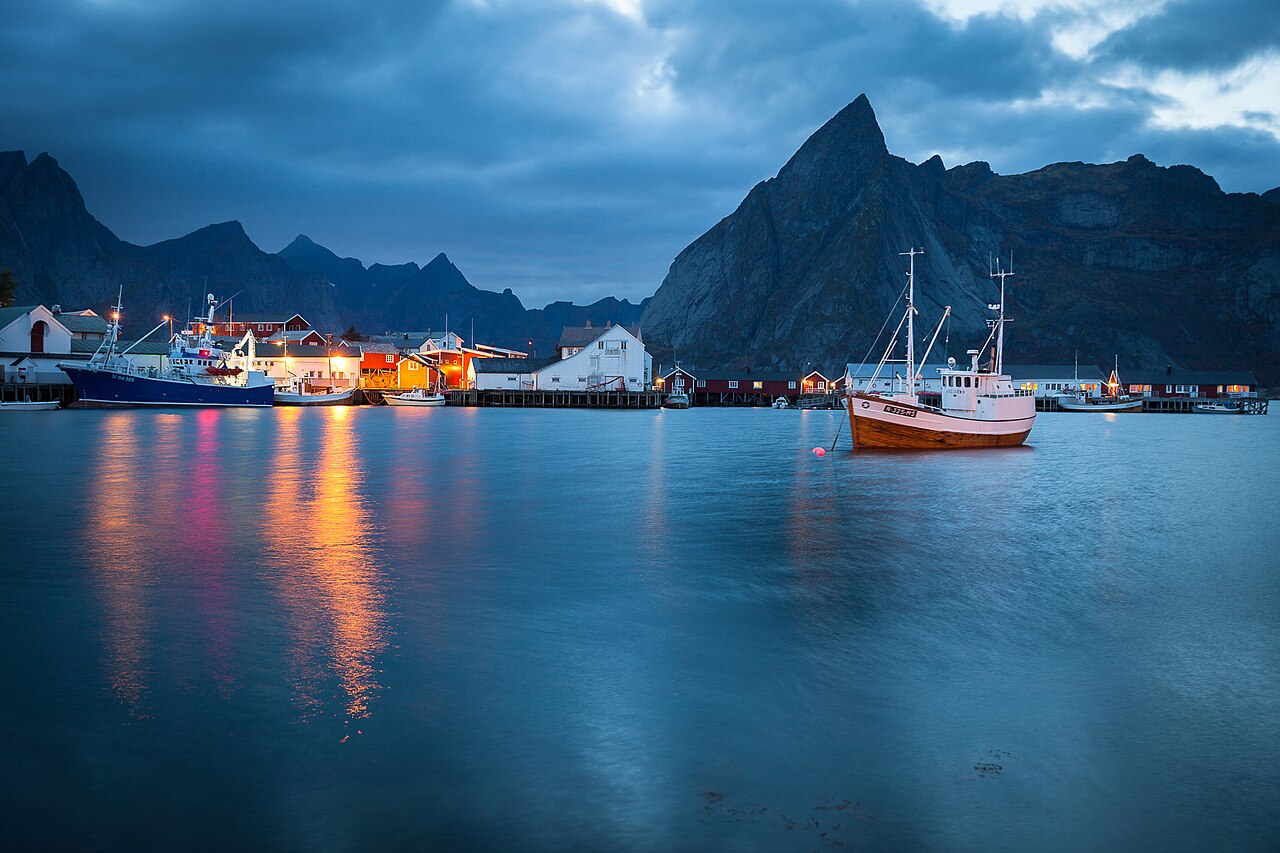
Finish with the scenery that made the islands famous. Begin at the Hamnøy bridge, where the red cabins sit below the peaks, then continue to Sakrisøy, with its yellow and red cabins on the road, and to Reine, spread across several small islands. In summer, climb Reinebringen early, a staircase of roughly two thousand steps to the best view in the islands, and do not attempt it in winter, when snow and ice make it dangerous. In winter, swap it for a guided snowshoe walk or a winter kayak on Reinefjorden. End the day at Å, where the Norwegian Fishing Village Museum preserves a whole settlement and the bakery bakes in an 1878 stone oven in summer. It is the end of the E10, so the journey back to Svolvær takes about two hours.
If you only have two days
Combine the east and the centre into one day and keep the west for the second. Skip Nusfjord and the Viking museum, and use the saved time for Reine and Hamnøy at the best light. Or base yourself in the west and take a guided day to the Trollfjord from Svolvær.
Weather and daylight
The islands are well above the Arctic Circle, so the daylight window changes enormously through the year. In winter, the days are short, with the sun below the horizon for about a month around midwinter, and the plan works best if you do the outdoor stops in the middle of the day and keep evenings free for the northern lights. In summer, the midnight sun means you can stack more into a day, but road traffic and crowds at Hamnøy and Reinebringen also rise, so start early. Wind can cancel boats and make roads uncomfortable in any season, so keep one flexible half day.
Where to sleep
Splitting your stay saves a lot of driving. Two nights in Svolvær or Henningsvær for the east and centre, then one or two in Hamnøy, Reine or Nusfjord, means you wake up at the right end of the road. Svolvær suits tours and services, while the western cabins suit scenery and dark skies. If you are chasing the aurora, choose a place with few lights and plan more than one night there, since cloud decides everything.
Practical tips
Fill the tank in the bigger towns, because stations are few in the west. Use signed parking only, never stop on the road or on a bridge for photographs, and respect private jetties and cabins. Check the opening days of any museum before you commit, since many cut hours outside summer. Buses run along the E10 but with thin winter timetables, so a car or a guided day is more reliable. Bring layers, waterproofs and a head torch whatever the season, and keep a few groceries in the car, because food stops are fewer than you expect.
Making it your own
Treat the three days as a menu, not a march. If the weather is clear, spend it outside and save the museums for rain. If it is wild, swap in the ice bar, the Lofoten Museum or a long lunch, and try the outdoor stops again the next day. The islands reward flexibility more than a perfect schedule.