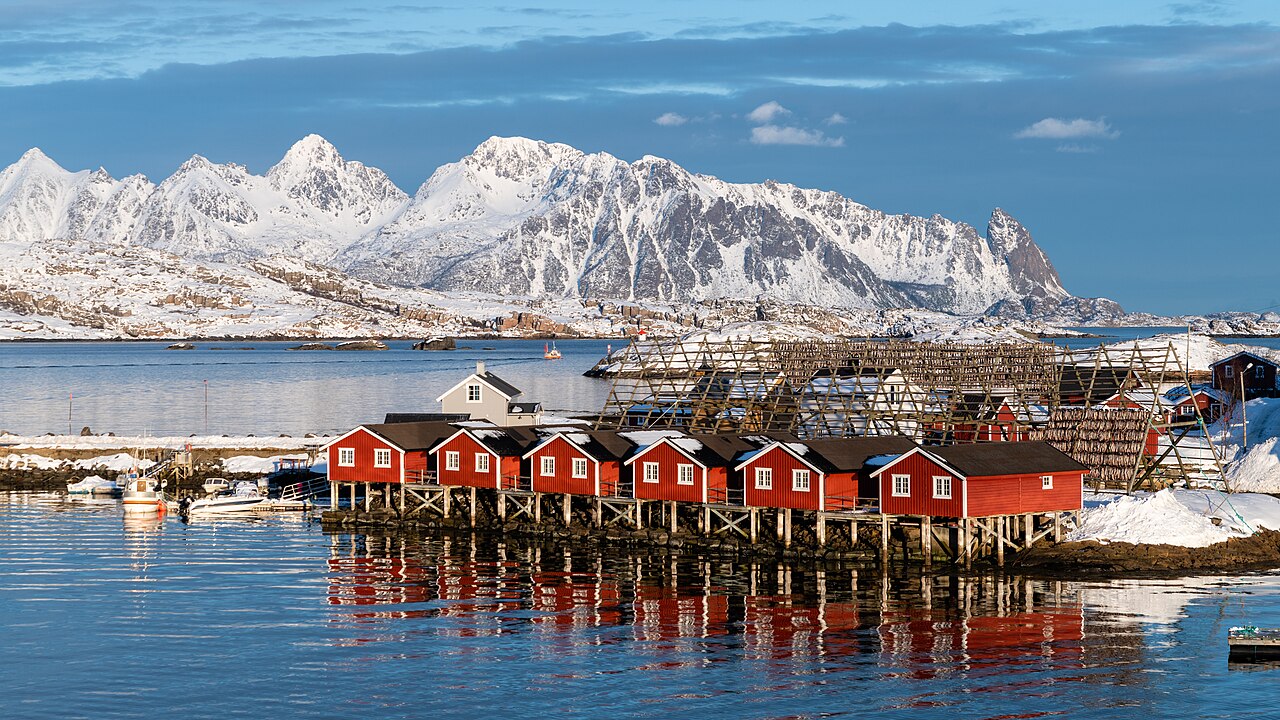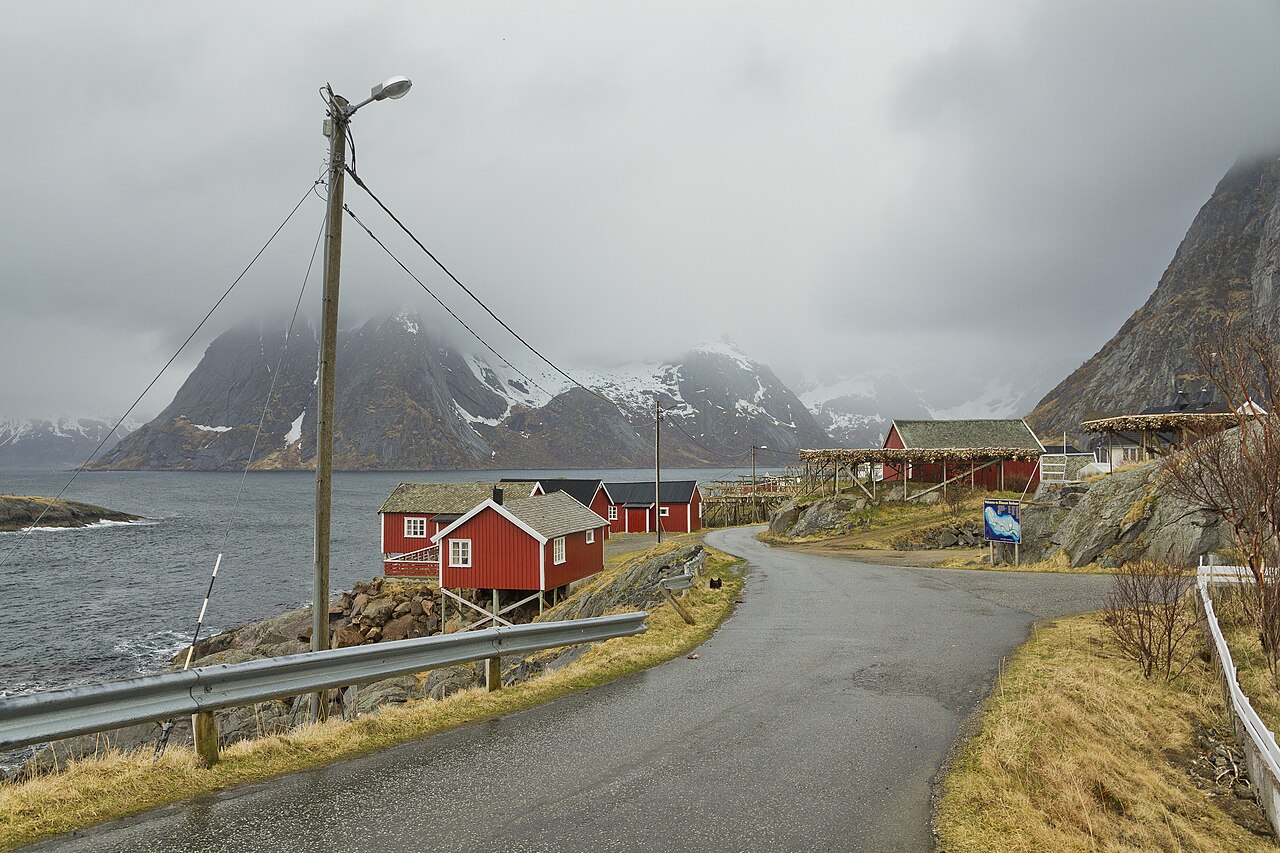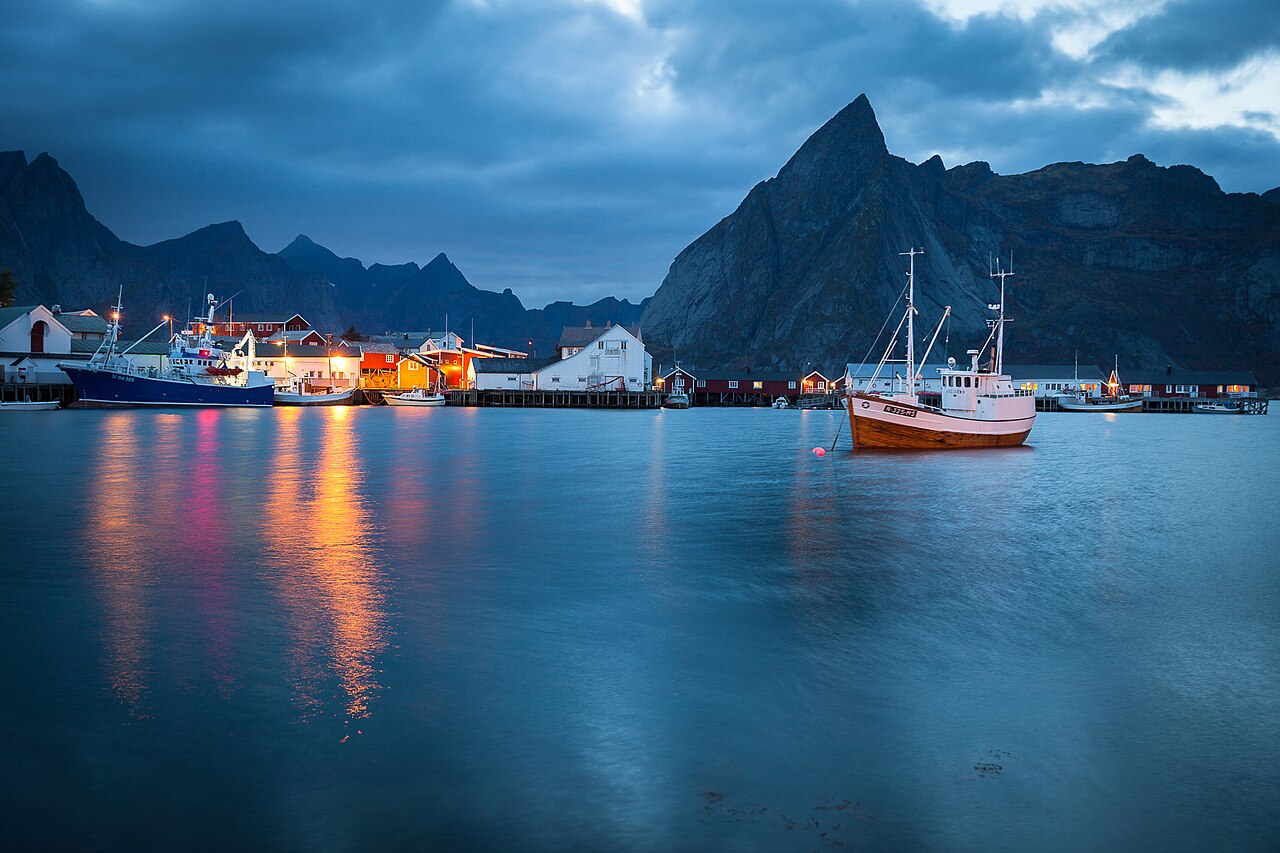
Lofoten is a long chain of mountainous islands above the Arctic Circle, strung along one main road, the E10. Most visitors base themselves in a few places and make day trips along it. The single most important planning choice is the season: summer brings the midnight sun and hiking, while the dark season from September to April brings northern lights, snow and a very different mood. In late autumn and winter daylight shrinks toward the polar night, with only a few hours of usable light and the sun staying below the horizon for about a month around midwinter. Plan accordingly.
Know the season
From May to September you can hike Reinebringen, walk to Kvalvika, kayak under the midnight sun and drive in daylight until late evening. From October to April, expect snow, ice, wind and short days, with the northern lights season running from September to April. Reinebringen is out of season in November and the tourist board advises strongly against climbing it in winter. Kvalvika is possible on a calm, dry day with an early start and a head torch, but go cautiously. Some museums and cafes cut their hours in winter, so check before you drive.
What to book ahead
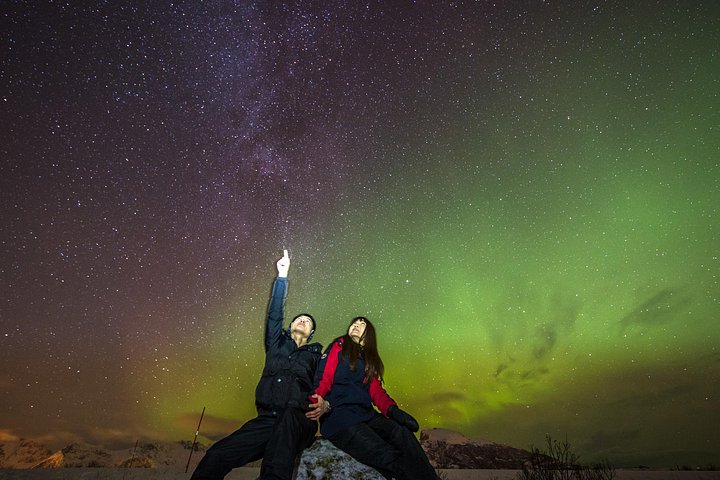
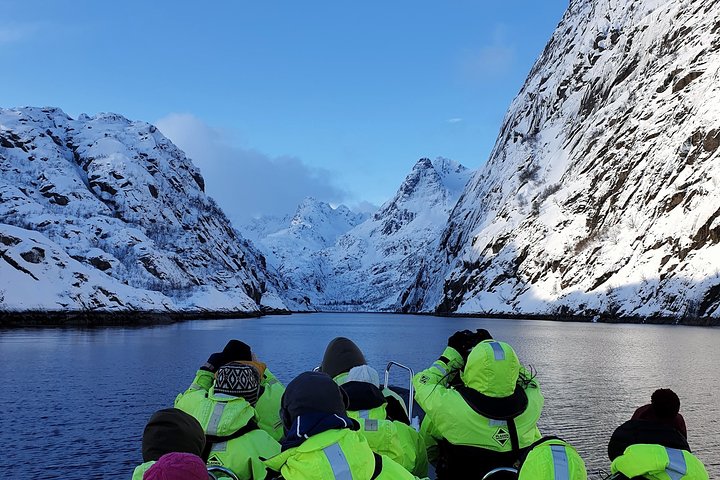
In winter, book three things: your accommodation, a northern lights tour and the Trollfjord sea eagle safari. Aurora tours can be cancelled for cloud, so book more than one night. The Trollfjord boat runs when weather allows, so keep a spare day. If you want to surf at Unstad or kayak in Reine, those are also small-group trips that need advance booking. The Lofotr Viking Museum has reduced winter hours, so look at its website for your day.
How to get around
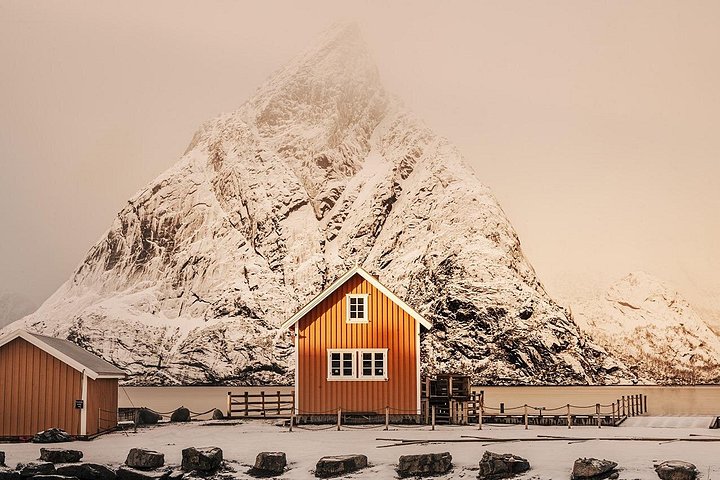
A car is the most flexible choice, and rental cars in Norway are fitted for winter, but driving the E10 in the dark on ice is not for everyone. If you prefer not to drive, base yourself in Svolvær and take guided day tours, such as the photo tour along the E10 to Reine, Hamnøy and Sakrisøy, or one of the tours that include Nusfjord or Henningsvær. Regional buses run along the main road, but winter timetables are sparse, so plan carefully. Never stop on the road for photographs, and use signed parking only.
How many days
Three days is the minimum: one for the E10 to Reine and Hamnøy, one for the east with Svolvær, Henningsvær and the Trollfjord, and one flexible day for weather and the aurora. Five days lets you add Nusfjord, Unstad and the Viking museum without rushing, and gives you more chances at clear skies. Make sure your nights fall in dark, clear weather, since the aurora is the main reason many people come in winter.
Where the headline sights fit
In the far west, Reine and Hamnøy are the postcard villages, with Reinebringen above them in summer and winter kayaking in Reinefjorden. Nusfjord, the protected fishing village, and Kvalvika beach sit in the middle-west, and Unstad is the surf beach on the north-west coast. The Lofotr Viking Museum is at Borg near Leknes, in the central part, while Henningsvær and the Trollfjord are in the east near Svolvær. A rough rule is that the east suits boats and towns, the centre suits history and surf, and the west suits villages and views.
Practical tips
Bring layers, waterproofs, a head torch and good boots. Expect to pay high Norwegian prices for food and lodging, and book rooms and cabins early, particularly for the aurora months. Bring some groceries if you stay in a cabin, because shops are few and hours are short in the west. Watch the weather forecast daily and change your plan if a storm is coming, since flexibility matters more than anything else on Lofoten.