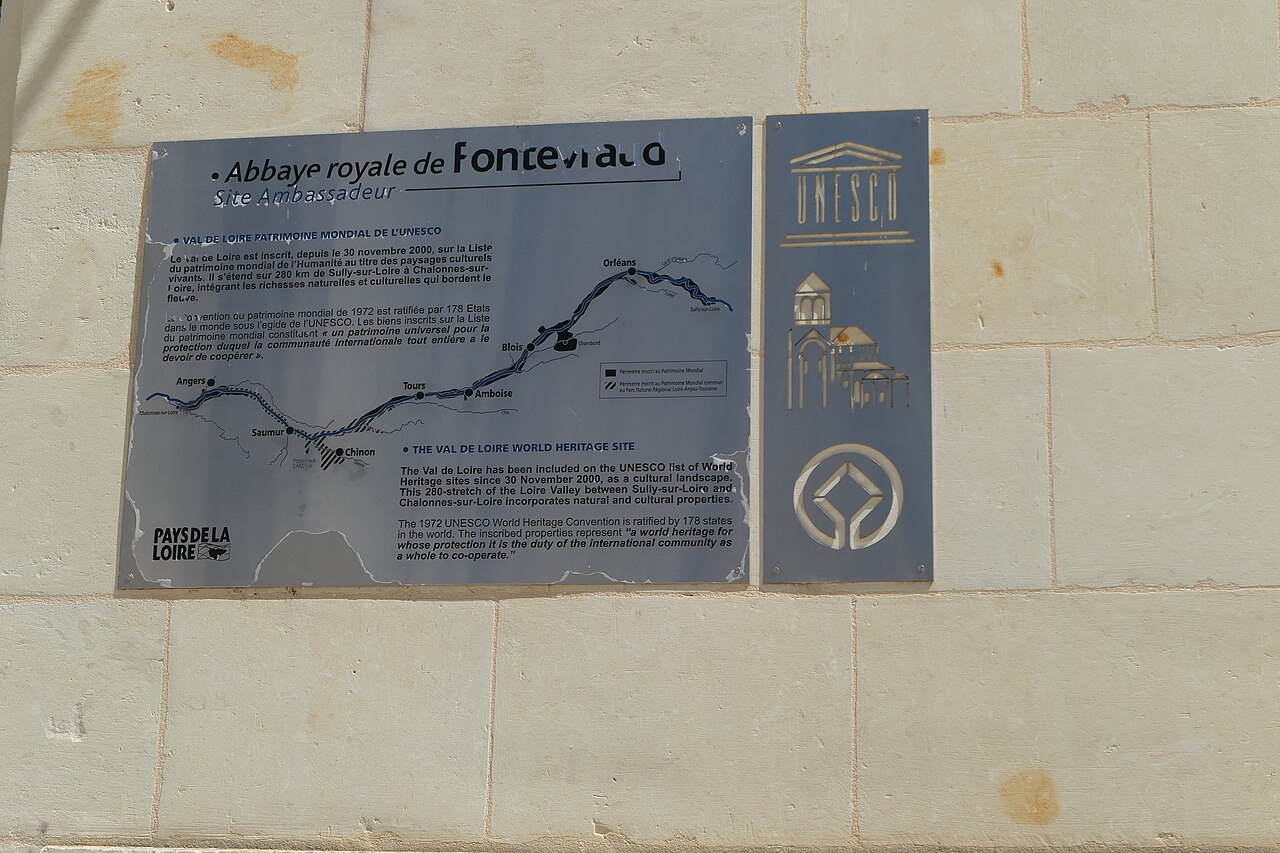
The Royal Abbey of Fontevraud is a vast monastic city founded in 1101 by Robert d'Arbrissel, and it is one of the most moving places in the Loire Valley. It was a double monastery, with men and women living in separate quarters under the authority of an abbess, a remarkable arrangement for its time that lasted for centuries. The abbey became a favoured burial place of the Plantagenet dynasty, and in the abbey church you can see the effigies of Henry II of England, his wife Eleanor of Aquitaine, their son Richard the Lionheart and Isabella of Angoulême, wife of King John. The tombs are carved in painted stone and sit in a lofty Romanesque nave covered by a row of domes. The site has a darker later chapter too: after the French Revolution, Napoleon turned the abbey into a prison, and it remained one until the 1960s. Careful restoration has since returned the cloisters, the chapter house and the monastic buildings to public view, and contemporary art and design now sit beside the old stone. Look out for the octagonal Evraud kitchen with its cluster of chimneys, an unusual medieval building that is among the abbey's most photographed sights. Fontevraud lies just beyond the border of Touraine, in Anjou, about an hour from Tours and close to Chinon, so it pairs naturally with the fortress.
Start in the abbey church. The scale of the nave and the white stone give it an austere beauty, and the royal tombs lie close to the entrance, with the carved figures laid out as if in repose. The story behind them is a gift for anyone who enjoys medieval history: Eleanor of Aquitaine, one of the most powerful women of her age, retired to Fontevraud and died there in 1204, and her husband and son lie beside her.
Read the interpretation panels, which place the family in the long contest between the English and French crowns.
From the church you move through the cloisters, the chapter house and the refectory, and the ranges of buildings around them show the layout of a monastic city that once held hundreds of nuns and monks. The painted chapter house and the cloister galleries are some of the most photogenic spaces, and the sense of calm is strong even when other visitors are about. Do not miss the Evraud kitchen, the octagonal Romanesque building whose stacked stone chimneys look like a miniature fortress, and the gardens and orchard beyond, which feel like a country retreat.
Allow half a day, which gives time for the church, the cloisters and a coffee in the grounds. Exhibitions and contemporary installations change from year to year, so the abbey feels fresh on a return visit. If you want to stay, a hotel and restaurant operate in the grounds, while Saumur and Chinon are close for lunch and wine. The abbey is best reached by car from Tours or Chinon, and a combined day with the fortress at Chinon works well.
Tickets can be bought in advance, and winter hours are shorter, so check the calendar before you set out. If you are travelling with children, tell them the story of Eleanor and her sons before you go, because the tombs mean far more with a little of the history in mind, and keep some time for the grounds, where the quiet is part of the appeal.
What to expect
The experience
A self-guided visit through the abbey church, the cloisters, the chapter house, the Evraud kitchen and the grounds, with changing art exhibitions.
Best time
Morning or early afternoon on a weekday, when the nave is quiet and the light is good in the cloisters.
How long
Two to three hours, longer if you add a meal in the grounds.
Tips
Dress warmly outside summer because the stone buildings are cool, and check opening hours for your date, as winter hours are shorter.
Quick picks
- Best for
- History lovers and anyone drawn to the Plantagenets, Eleanor of Aquitaine and medieval architecture.
- Families
- Older children who like history will enjoy the tombs and the kitchen; the site is large and quiet, so younger ones may tire.
- Couples
- A calm, atmospheric visit followed by lunch in the grounds or in nearby Chinon.
- Pair with
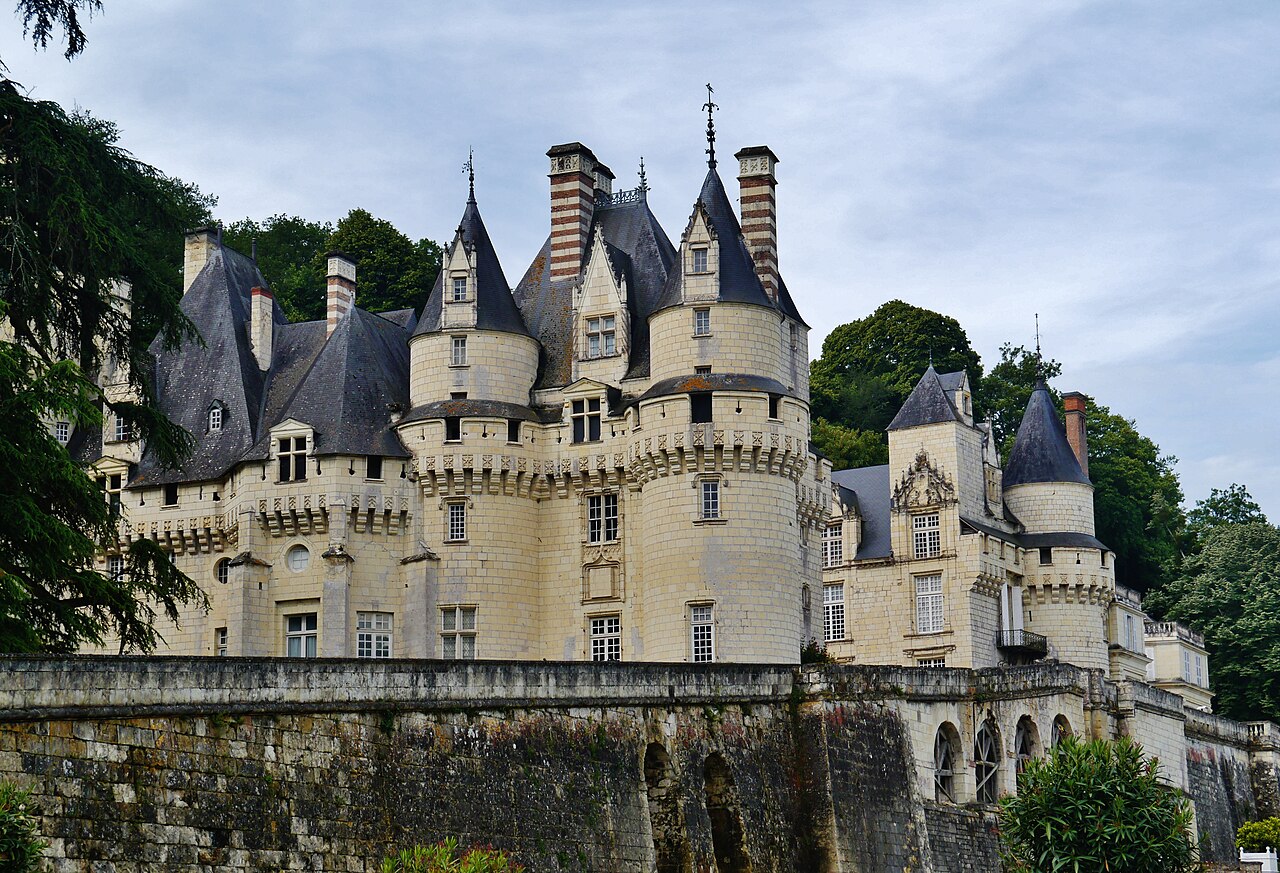
- The Royal Fortress of Chinon or Ussé on the same day.
- Time needed
- Half a day.
Good questions
Who is buried at Fontevraud?+
The abbey church holds the effigies of Henry II of England, Eleanor of Aquitaine, Richard the Lionheart and Isabella of Angoulême.
Was Fontevraud ever a prison?+
Yes. After the Revolution Napoleon turned it into a prison, and it kept that role until the 1960s before restoration began.
What is the Evraud kitchen?+
It is an octagonal Romanesque building with a cluster of chimneys, the abbey's former kitchen and one of its best-known sights.
How far is Fontevraud from Tours?+
About an hour by car. It is close to Chinon and Saumur, so it combines well with either.
How long should I allow?+
Two to three hours for the main buildings, more if you stay for a meal or an exhibition.