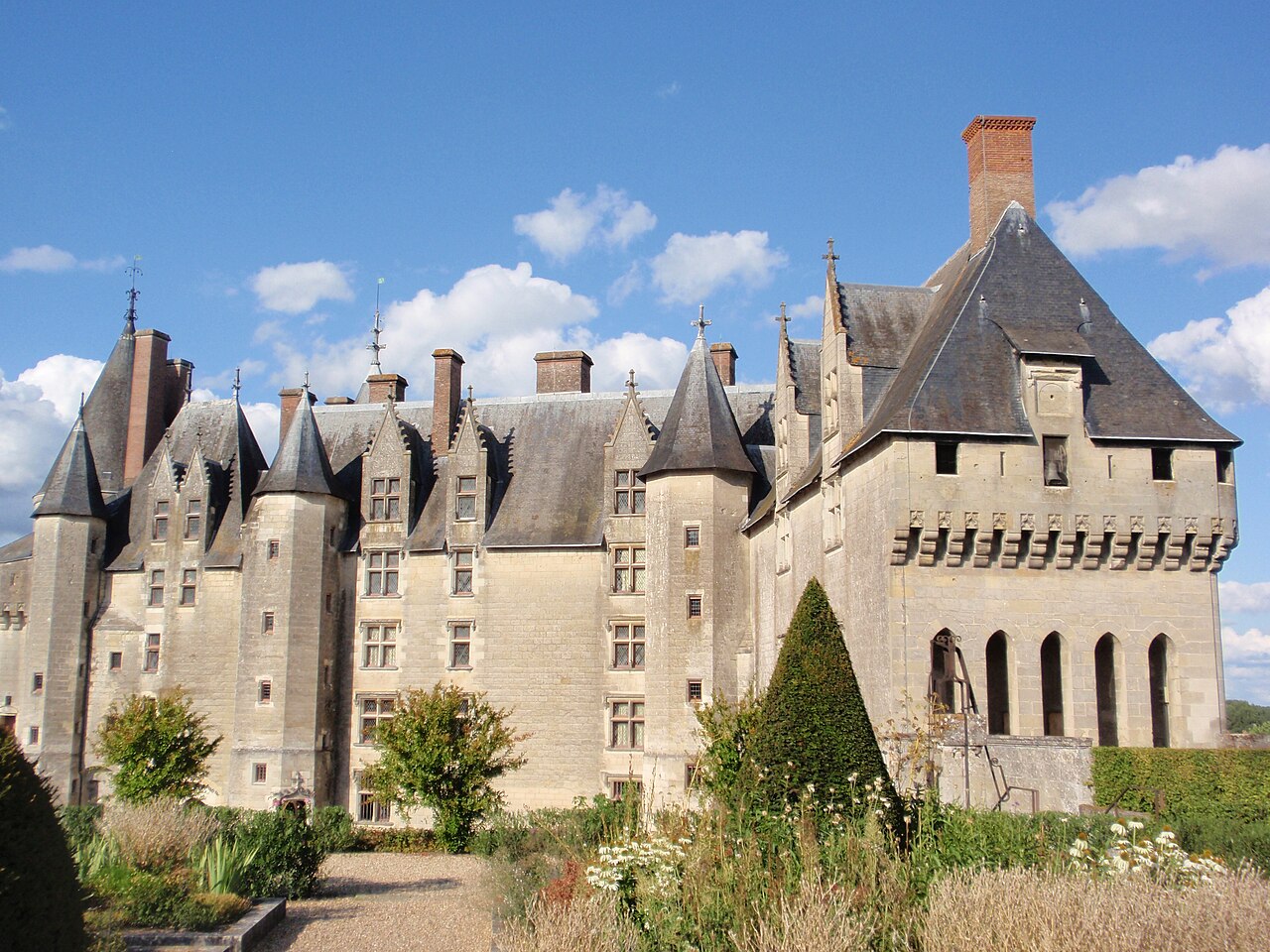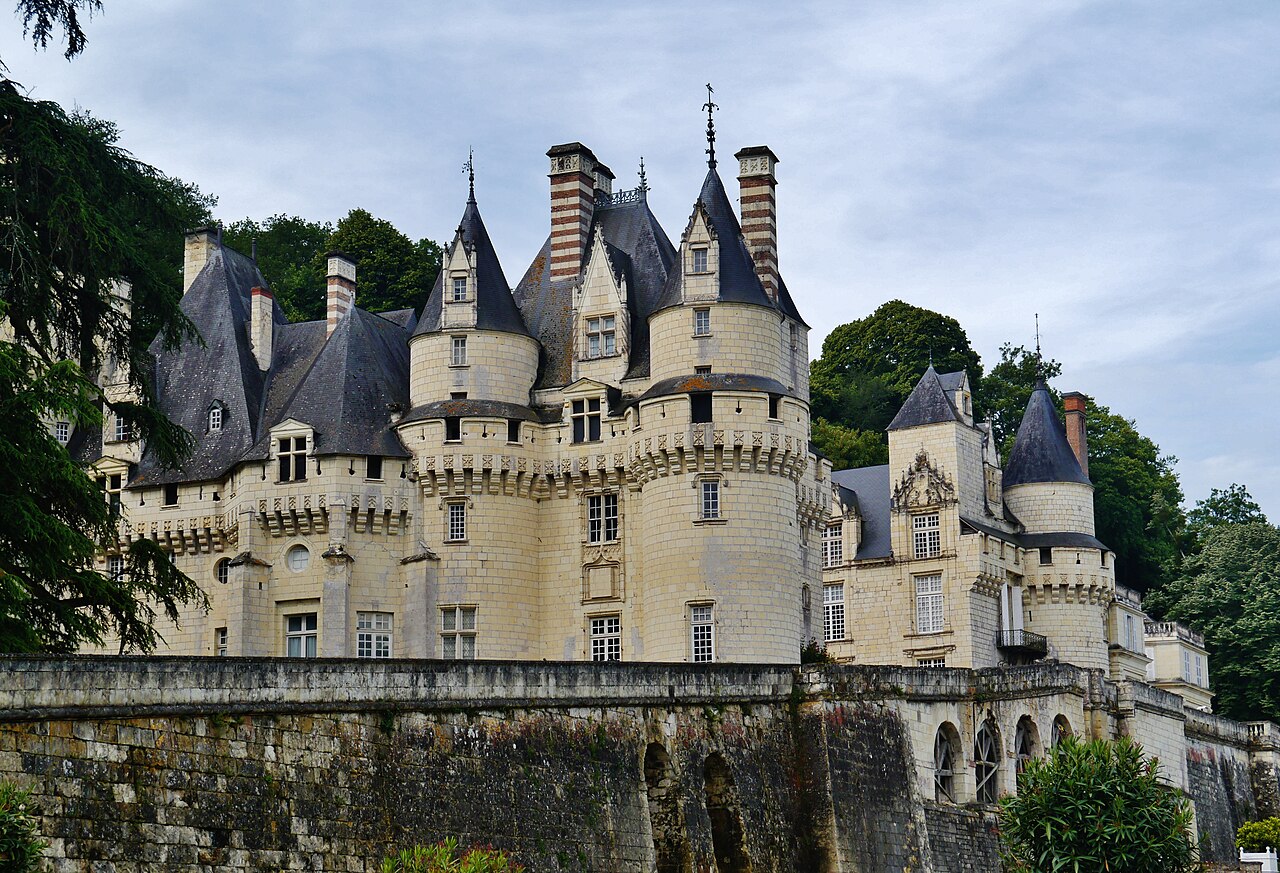
The Château d'Ussé is the Loire's storybook castle, a cluster of white towers, turrets and steep roofs that rise from the edge of the Chinon forest above the River Indre. It is often described as the inspiration for Sleeping Beauty, because Charles Perrault, who wrote the fairy tale in the seventeenth century, is said to have known the place. Whatever the truth, the château leans into the story. In the upper rooms and the towers, costumed figures and tableaux illustrate the tale from the cradle to the spinning wheel and the sleeping princess, and children respond to it at once. The building has several layers: a fortress began on the site in the eleventh century, the main house was built in the fifteenth and sixteenth centuries and the north wing was later removed to open the view over the valley. Inside, you can see the guard room, the staircases, the furnished apartments and a collection of objects that show the life of the noble families who lived here. In the grounds, a Renaissance chapel of fine proportions stands beside the château, and the terraced gardens look out over the river. Ussé is about fourteen kilometres from Chinon and lies in a quiet corner of the valley, a half-day outing that works well with the fortress and Fontevraud.
The best way to see Ussé is to arrive at the side where the view makes the biggest impression. The first view of the white towers framed by dark forest is the reason many visitors come, and the approach through the village adds to the effect. Inside, you climb through the interior, passing the guard room, the grand staircase and the apartments, then climb the towers where the Sleeping Beauty tableaux are staged. They are charming rather than sophisticated, and are best enjoyed with children or in the spirit of a fairy tale.
The chapel is the unexpected highlight. Set a little apart from the château, it is a small Renaissance building with carved stalls, a fine door and a plain interior that rewards a quiet visit. The gardens and terraces below the château offer wide views across the valley, and the long walk around the grounds is a pleasant way to see the building from different angles. The estate also has a historic orangery and outbuildings, which add to the sense of a place that has long been lived in.
Allow two hours at the château and a little more if you add a stroll in the village. Ussé is best reached by car, and you can build a day around Chinon, Fontevraud and Langeais. The château is open for much of the year but keeps a seasonal calendar, with a shorter programme in winter, so check the opening dates before you travel. Buying tickets at the entrance is the usual route.
Wear comfortable shoes for the steps and the gravel paths, and bring a warm layer in colder months, because the rooms and towers are cool. If you are visiting with children, the tower tableaux are the part to build the visit around, and it helps to read them the fairy tale beforehand so the scenes make sense. Allow a little time for the village, which is small and quiet, and for a coffee before the drive back.
What to expect
The experience
A self-guided visit through the apartments and towers with Sleeping Beauty tableaux, then the Renaissance chapel and terraced gardens.
Best time
A clear morning, when the towers stand out against the forest, or spring and early summer for the gardens.
How long
About two hours, longer if you add a walk in the village.
Tips
Check the seasonal calendar before you travel, wear shoes for the steps and gravel, and bring a warm layer for the cool towers.
Quick picks
- Best for
- Families and anyone who wants a fairytale castle and a quieter corner of the valley.
- Families
- The tableaux in the towers are a hit with children; keep an eye on the narrow stairs.
- Couples
- A romantic setting with long views, followed by lunch in nearby Chinon.
- Pair with
- The Royal Fortress of Chinon and Fontevraud Abbey on the same day.
- Time needed
- Half a day with travel from Tours.
Good questions
Is Ussé really the Sleeping Beauty castle?+
It is often said to have inspired Charles Perrault's tale, though the link is tradition rather than proof. The château embraces the story with tableaux in its towers.
How far is Ussé from Chinon?+
About fourteen kilometres. The two make an easy pairing by car, together with Fontevraud.
Is it suitable for young children?+
Yes, children usually love the fairytale tableaux, but the stairs are narrow and steep in places.
Is it open all year?+
It keeps a seasonal calendar, with a shorter programme in winter, so check the opening dates for your trip.
How long should I allow?+
About two hours, plus time for the village and lunch.