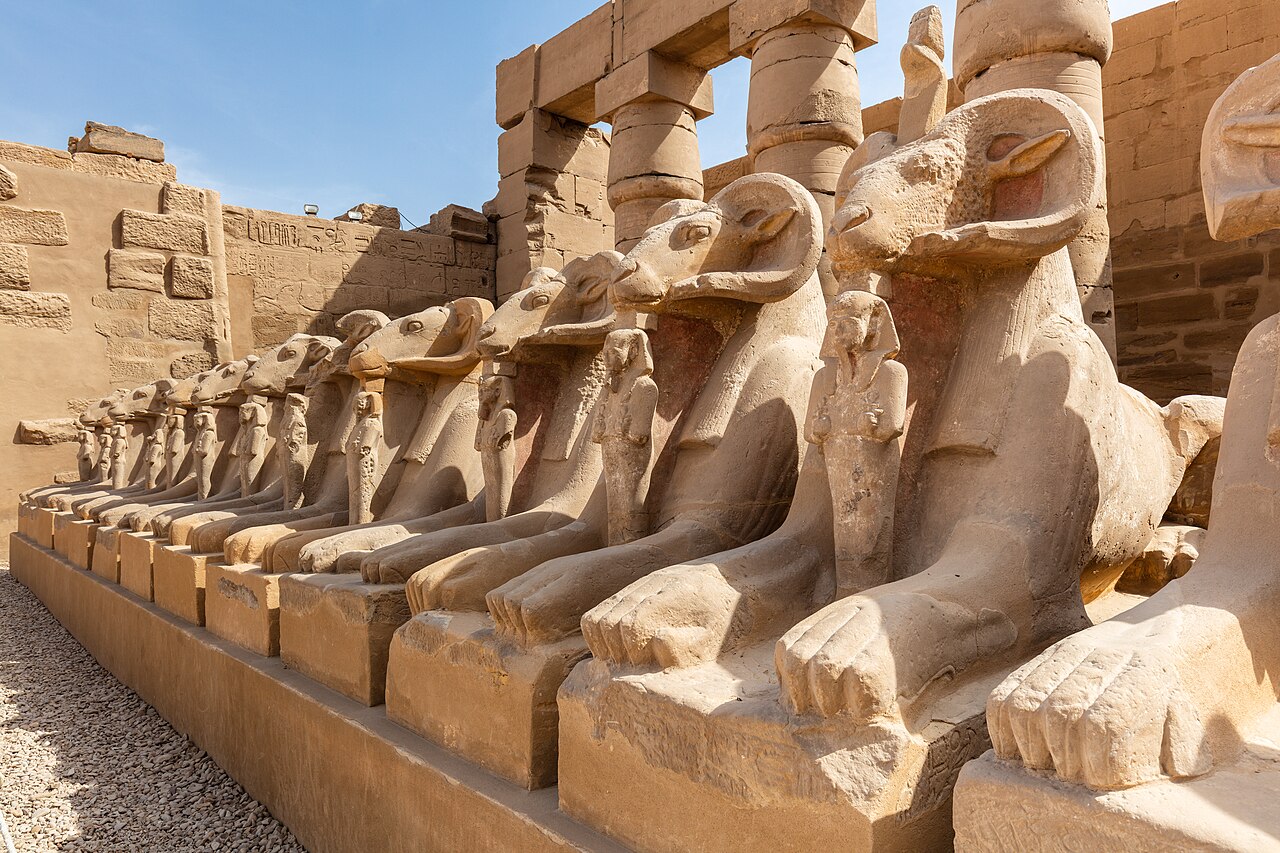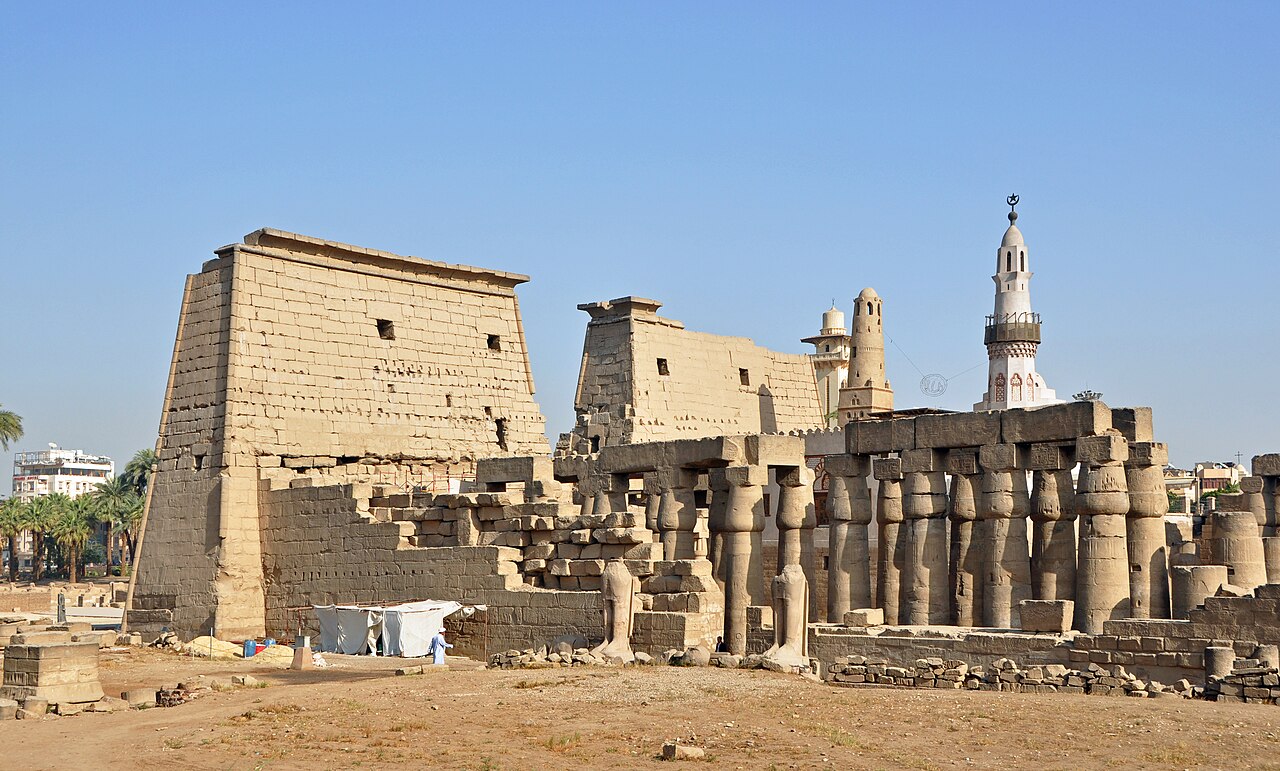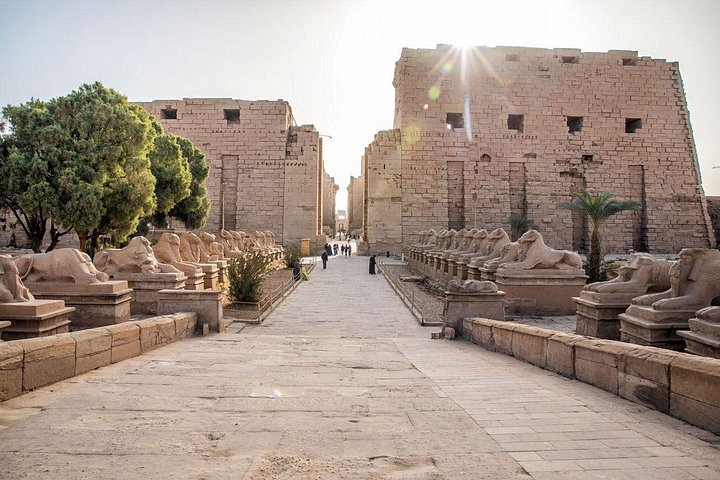
The Avenue of Sphinxes is an ancient road about two and a half kilometres long that connects Karnak Temple with Luxor Temple, and it was the route of one of the most important festivals in Egyptian religion. During the annual Opet Festival, the statues of Amun, Mut and Khonsu were carried along this route in sacred barques, with priests, musicians and crowds following, to celebrate the renewal of the king's divine power. The avenue was lined on both sides with hundreds of sphinx statues, many of them with ram heads symbolising Amun, and over the centuries the sand and the town covered much of the route. In modern times the avenue has been excavated and restored, and it can again be walked, giving a living sense of the link between the two temples. A private guided tour explains the festival, the statues and the history of the excavations, and usually pairs the walk with time inside Karnak and Luxor Temple. Walking the avenue with a guide helps you picture the processions and the lively streets that once surrounded them. The route passes through the modern city and gives a window into how ancient and modern Luxor sit side by side.
Why go
Visitors often see Karnak and Luxor Temple as separate sights, but the avenue shows that they were designed as one sacred landscape. Walking it explains why the two temples are aligned and why Luxor Temple was built as the destination of the festival procession. It is also a good way to see parts of the city that visitors rarely walk through, and the rows of sphinxes make a powerful sight in good light. The walk fits travellers with an interest in history, and gives everyone a better understanding of how the temples worked.
Planning the visit
The avenue is open on a schedule that can change, so a guided tour helps with access and with the practical details of the route. A walk of the full length takes around an hour, and a tour that includes temple visits may last three hours or more. Early morning or late afternoon is the best time, when the heat is lower and the light on the statues is warm.
Wear comfortable shoes, a hat and sun protection, and carry water, because shade is limited. Entry fees for the temples are separate, so check what your tour includes. Photography is usually allowed along the avenue.
Making the most of it
Start at Karnak and walk towards Luxor Temple, so that you end near the river at sunset, or reverse the route if you prefer the morning light on the Luxor end. Look for the ram-headed sphinxes and the varied statues along the way, and ask your guide about the Opet Festival and the discoveries made during excavation.
Couples will enjoy the long perspective of the avenue at golden hour. Families with older children can follow the sphinxes like a trail, but the length and the heat may tire younger ones. Pair the walk with the Karnak sound and light show or with dinner on the Corniche to make a full East Bank day.
Restoration continues in places, so details such as opening arrangements and the length of the walkable section can vary. Treat the walk as a flexible experience and let your guide decide the best entry point. Evening light is especially lovely, and ending at Luxor Temple as it lights up is a fitting finish to the route.
What to expect
The experience
A guided walk along the restored processional road between Karnak and Luxor Temple, usually with time inside the temples.
Best time
Early morning or late afternoon, to avoid the heat and catch warm light.
How long
Two to three hours, longer if combined with temple visits.
Tips
Wear comfortable shoes, carry water and sun protection and confirm what your tour includes.
Quick picks
- Best for
- History lovers who want to understand how Karnak and Luxor Temple were linked.
- Families
- Older children who like a trail of statues to follow.
- Couples
- A long, atmospheric walk at golden hour.
- Pair with
- Karnak, Luxor Temple and the evening sound and light show.
- Time needed
- Two to three hours.
Good questions
What is the Avenue of Sphinxes?+
An ancient processional road about two and a half kilometres long linking Karnak Temple and Luxor Temple, once lined with sphinx statues.
What was it used for?+
It was the route of the Opet Festival, when statues of the gods were carried between the two temples.
Can I walk the whole avenue?+
The restored route can be walked, but access can change, so a guided tour is a useful way to be sure.
How long does the walk take?+
About an hour for the length of the avenue, or two to three hours if you also visit the temples.
When is the best time to go?+
Early morning or late afternoon, when the heat is lower and the light is soft.