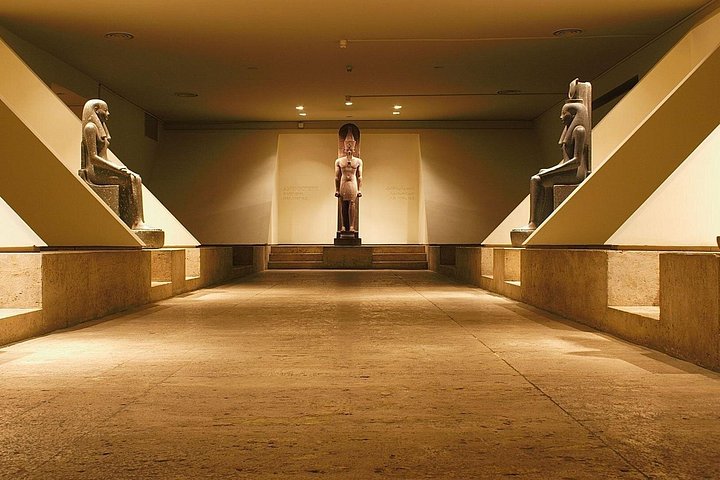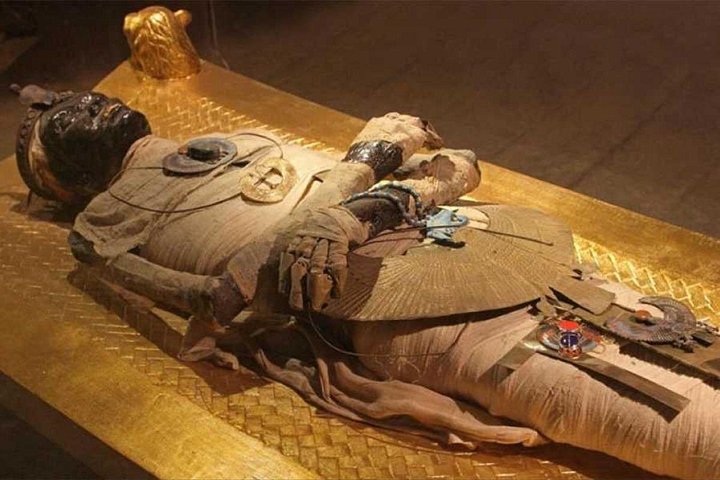
The Mummification Museum stands on the Luxor Corniche close to Luxor Temple, and it explains one of the most famous and mysterious practices of ancient Egypt: how the dead were prepared for the afterlife. The collection is small and well arranged, with dim lighting and clear displays that follow the process from start to finish. You see the tools used by embalmers, the natron salts that dried the body, the canopic jars that held organs, linen wrappings, amulets and the cases and coffins that finished the work. A human mummy is on display, along with mummified animals, which were produced in great numbers as offerings and companions in the afterlife, including cats, birds and a crocodile. Texts and models describe the ritual steps and the priests who carried them out, and the exhibits link the practice to beliefs about Osiris and the soul. The museum is air-conditioned, which makes it a welcome retreat from the midday heat, and it is easy to visit in about an hour. The linked tour is a half day that combines the museum with other East Bank stops.
Why go
After seeing temples and tombs, it helps to learn why the Egyptians went to such lengths to preserve the body. The museum answers that question clearly and without jargon, and its focused scope makes it easier to absorb than a large collection. Children are often fascinated by the animal mummies and the story of how a body was prepared, and adults will enjoy the clear explanation of materials and rituals. It is a good choice for a hot afternoon or a day when the weather turns unsettled.
Planning the visit
The museum lies on the Corniche between Luxor Temple and the Luxor Museum area, so it is easy to reach on foot from many East Bank hotels. Opening hours include an evening session, which suits travellers who spend their days on the West Bank, but check the current times before you go.
Photography rules inside can be strict, so ask at the entrance. Plan about an hour for a relaxed visit, and combine it with the Luxor Museum for a pair of indoor stops that complement each other, one on objects and kings, the other on the process of mummification.
Making the most of it
Read the panels that follow the stages of embalming in order, from the removal of organs to the final wrapping, and take your time at the display of tools and canopic jars. Look for the animal mummies, which show how widespread the practice was beyond the pharaohs. Families can turn the visit into a treasure hunt, spotting amulets and scarab beetles.
After the museum, walk along the Corniche to Luxor Temple and the river, where horse carriages and felucca boats wait, then have dinner nearby. A guide adds depth, but the displays are clear enough for independent visitors who like to move at their own pace.
For a fuller picture, read a little about Osiris and the idea of the afterlife before you go, because the objects make more sense when you know what the embalmers were trying to achieve. If you are travelling in the hottest months, treat the museum as a mid-afternoon refuge, then step out onto the Corniche as the shade lengthens and the river breeze picks up.
What to expect
The experience
A self-paced walk through dimly lit galleries that follow the stages of mummification, with a human mummy and animal mummies.
Best time
Midday heat or in the evening, since the museum is cool and open late.
How long
About an hour for a relaxed visit.
Tips
Ask about photography rules, read the panels in order and combine the visit with the Luxor Museum.
Quick picks
- Best for
- Anyone curious about how the ancient Egyptians prepared the dead.
- Families
- Children often love the animal mummies and the tools.
- Couples
- A cool, quiet stop that makes a good prelude to a Corniche dinner.
- Pair with
- The Luxor Museum, Luxor Temple and a stroll on the Corniche.
- Time needed
- One to one and a half hours.
Good questions
What can I see in the Mummification Museum?+
Embalming tools, canopic jars, linen wrappings, coffins, a human mummy and a collection of mummified animals, with panels explaining each step.
Where is it?+
On the East Bank Corniche, close to Luxor Temple, so it is walkable from many hotels.
How long does a visit take?+
About an hour, though you can spend longer if you read all the panels.
Is it suitable for children?+
Yes, most children enjoy the animal mummies, though a few exhibits may be unsettling for very young ones.
Can I visit in the evening?+
The museum has traditionally had evening opening hours, but check the current times before you plan.