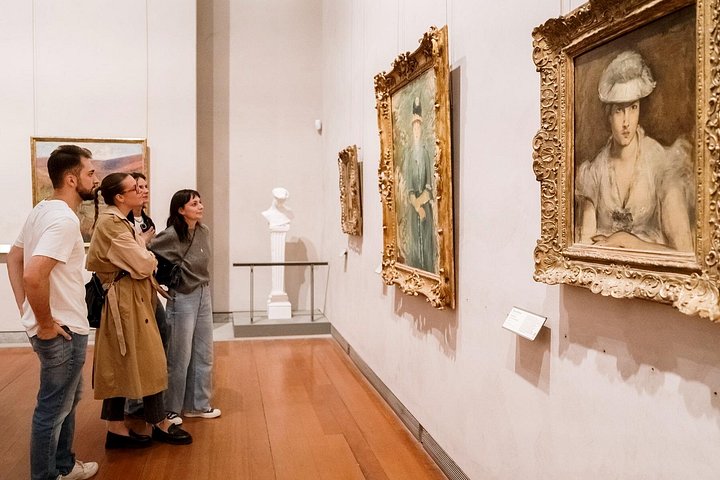
Most visitors arrive in Lyon for the food and the old town, but the Musée des Beaux-Arts is one of the strongest reasons to spend an hour or two indoors. It occupies the Palais Saint-Pierre, a 17th-century Benedictine abbey on Place des Terreaux, the square in front of the city hall. The building itself is part of the experience: a cloister garden with sculptures and shady trees sits at its heart, and the museum wraps around it, so you move between galleries and calm outdoor space. The collections run through the history of art, from Egyptian and Greek antiquities and medieval works to Renaissance and Baroque paintings, then into the 19th and 20th centuries, with important Impressionist and modern pieces by artists such as Monet, Manet, Degas, Gauguin, Picasso, Matisse and Braque, plus sculpture including works by Rodin. The scale is generous without being overwhelming, which is part of its charm: it is easy to see highlights in two hours. The ticket here includes an audio guide, and the museum is a natural choice on a wet day or in the heat of the afternoon.
How to visit
The museum is at 20 place des Terreaux, a short walk from the Hôtel de Ville metro stop on line A. It is open daily except Tuesdays and public holidays, from ten in the morning to six in the evening, opening half an hour later on Fridays. Ticket offices close shortly before the museum, and some rooms close for a midday break, so do not arrive in the last half hour. Hours can change, so check at the entrance on the day.
What to expect
Plan two hours for the highlights or longer if you enjoy a slow pace. The cloister garden is a good spot to rest. Seating is plentiful, the museum is partly accessible, and visiting with children is easier if you pick a theme, such as animals in paintings, to look for. A temporary exhibition may add another price band, so check what you want to see before you buy.
Making the most of it
Start with the antiquities and work your way forwards, or head straight for the 19th-century rooms if time is short. Afterwards, Place des Terreaux has the fountain by Bartholdi, the sculptor of the Statue of Liberty, and the Croix-Rousse slopes are a short walk away. If you are using the Lyon City Card, check whether entry is included before you buy a separate ticket.
A few practical thoughts
The museum is large, so decide before you enter whether you want antiquities and Old Masters, the Impressionists, or modern art, and head there first while your energy is high. Cloakroom lockers and a café make a longer visit comfortable, and the cloister garden is the best place to rest tired feet.
Visitors with limited mobility should ask staff about lifts and accessible routes, since the building is historic and spread over several levels. Photography without flash is usually allowed for personal use in the permanent galleries, though rules can differ in temporary exhibitions, so look for signs at the door of each room.
What to expect
The experience
A self-guided visit through galleries of antiquities, European painting and sculpture arranged around a quiet cloister garden.
Best time
Weekday mornings, or any wet or very hot afternoon.
How long
Ninety minutes to two hours for the highlights.
Tips
The museum is closed on Tuesdays and holidays, opens later on Fridays and has a midday partial closure, so avoid the final half hour.
Quick picks
- Best for
- Art lovers and anyone who wants a calm, high-quality indoor visit in the city centre.
- Families
- Older children enjoy a treasure hunt through the rooms; the garden is a good break.
- Couples
- Combine it with a drink on Place des Terreaux and a walk up to the Croix-Rousse.
- Pair with
- The Croix-Rousse slopes and traboules, or lunch at a nearby bouchon.
- Time needed
- Two hours.
Good questions
When is the Musée des Beaux-Arts closed?+
It is closed on Tuesdays and on public holidays. It opens at 10:00 on most days and 10:30 on Fridays, and closes at 18:00.
Where is the museum?+
It is in the Palais Saint-Pierre at 20 place des Terreaux in the centre of Lyon, close to the Hôtel de Ville metro stop.
What art can I see?+
The collections run from Egyptian and Greek antiquities through Old Masters to Impressionist and modern works, plus sculpture and decorative arts.
How long do I need?+
Allow about two hours for the main highlights. Art enthusiasts could easily spend half a day.
Is there a garden?+
Yes, a cloister garden with sculptures sits at the heart of the museum, and it is a pleasant place to rest between galleries.