Three days is enough to see the Maldives properly if you keep your base close to the airport and let boats do the work. The country is a scatter of islands, so every journey takes time, and the best short itineraries avoid long transfers and stack the experiences that matter most: a taste of the capital, a day on the water and a look at island life. This plan is built around Malé and Hulhumalé, with one local island day, and it works for first-timers who want a real picture of the place rather than a single resort stay.
Before you go
Book your accommodation and its transfer first, because boat and flight times shape everything else. Hulhumalé is the easiest base for a short trip, since it sits beside the airport and is the departure point for several excursions. Malé suits travellers who want the sights on foot. Either way, book your main excursion a few days ahead, keep your first and last hours flexible for flights, and confirm every boat departure the evening before. Seas, showers and swell can shift plans, so choose products with free cancellation where you can.
Day one: Malé on foot
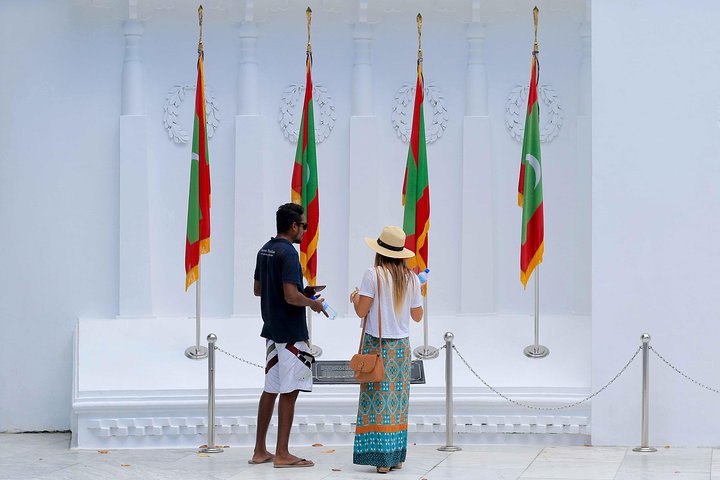
Start early, before the heat builds. Begin at the fish market on the harbour, where tuna is landed and cut, then walk to the Old Friday Mosque, Hukuru Miskiy, a coral-stone mosque from 1658 with carved stonework. Continue through the old quarter to Sultan Park and the National Museum, which shows royal artefacts and the story of the sultanate. From there it is a short walk to the golden-domed Islamic Centre and Republic Square, where the national flag flies beside the harbour and speedboat jetties. The guided walking tour covers most of this in about four hours and adds context that you would otherwise miss. Have lunch at a local cafe, trying short eats such as tuna fish cakes with sweet tea, and rest through the hottest part of the afternoon. In the evening, take a taxi to the artificial beach or walk the waterfront for sunset.
Day two: the water
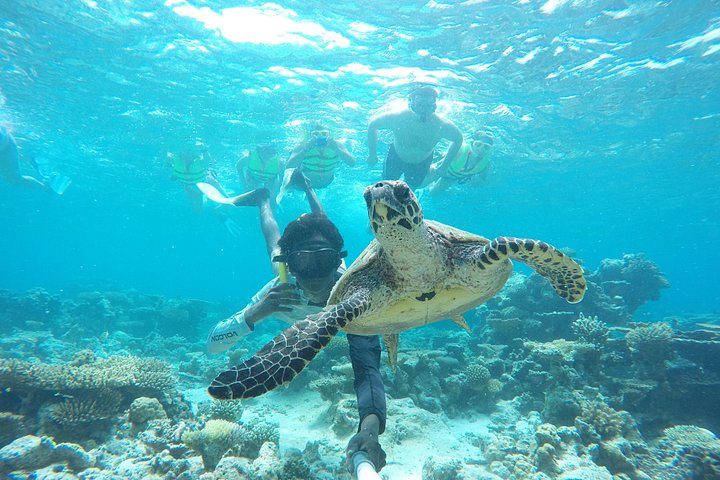
Spend your second day on the lagoon. The Sandbank Snorkelling and Sunset Cruise leaves Hulhumalé in the afternoon with a small group, stops at a sandbank and two reef sites and returns at sunset with a chance of dolphins. If you prefer a morning start, the three-site snorkel safari is a shorter option, and the all-day boat adventure through the Himmafushi sandbank suits those who want a long, full day. Whichever you choose, bring reef-safe sunscreen, a rash vest, a towel and a dry change of clothes, and eat before you go. Keep your hands off turtles, rays and sharks, and do not stand on coral. Marine life is wild, so treat sightings as a bonus.
Day three: a local island
For your last full day, see how Maldivians live. The Local Island Day Trip from Hulhumalé takes you to inhabited islands to walk through a village, swim at the bikini beach and eat a local lunch. If you are based on Maafushi instead, the local trips there combine a shipwreck, nurse sharks and dolphin watching, or a full day of snorkelling and island hopping. Dress modestly away from the beach, with shoulders and knees covered, carry small cash, and remember that alcohol is not available on local islands. Plan to be back in time for dinner and, if you fly out the next day, for an early night.
Moving around
Malé is walkable, and taxis are cheap. Between islands, public ferries are cheap but slow and do not serve every island every day, shared speedboats are faster, and private boats and seaplanes are the premium option. Seaplanes fly in daylight, so a late arrival needs a night near the airport. Ask your accommodation to confirm each leg, and allow generous buffers before any flight.
Where to sleep
For a short trip, a city hotel such as JEN Maldives Malé by Shangri-La puts the capital's sights on foot, while Huvan Beach Hotel in Hulhumalé is a good-value base near the beach and the excursion jetties. If you want a night of resort luxury at the end, Niva Kurumba Maldives is about ten minutes by speedboat from the airport, which keeps transfers short. On a tight budget, a guesthouse on Maafushi gives you a local island base for the second and third days.
Final tips
The northeast monsoon from roughly December to April brings the calmest seas, and the wetter months bring showers and swell but better rates, so adjust your expectations. Carry cash, wear a hat, drink plenty of water and respect local customs. If you have a fourth day, add a dive or snorkelling trip, or simply spend it on the beach. Three days will not exhaust the Maldives, but it will show you why people return.