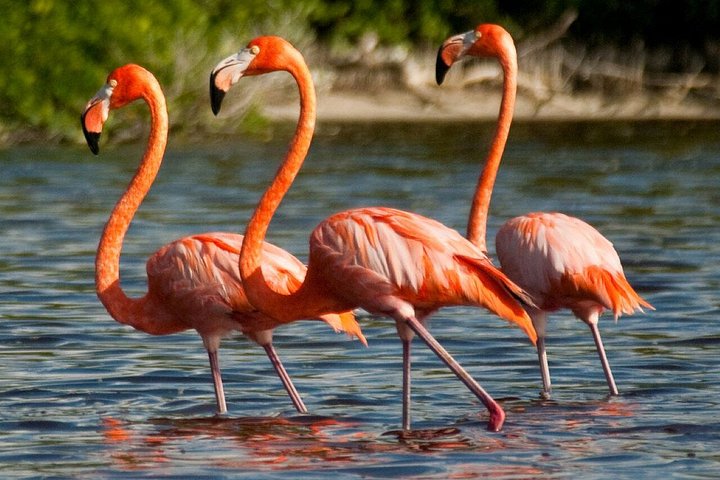
Most visitors to Mérida come for pyramids and colonial streets, but the coast within a day's reach is one of the region's best surprises. Within two or three hours you can watch flamingos feed in shallow lagoons, paddle through mangroves, see lakes the colour of bubblegum and swim in the warm Gulf. This guide explains the main coastal options, how they differ and how to choose between them, so that you can add a nature day to a trip that might otherwise be all ruins.
Why the coast is different
The north coast of the Yucatán is flat, low and rimmed with lagoons, salt pans and mangroves, and it feels far from the jungle and the plazas of the interior. The water is the Gulf of Mexico, calmer and warmer than the open Caribbean, though less clear. Because the coast is quiet and not heavily developed, it suits travellers who want space, birds and simple seafood rather than resorts.
Celestún: flamingos on the west coast
About an hour and a half west of Mérida, the Celestún biosphere reserve is the classic flamingo trip. A small boat takes you onto the estuary, where flocks of pink flamingos feed in the shallows, and it continues through mangrove tunnels and past a freshwater spring where you can swim. Flamingos are present for much of the year, and the numbers are typically highest in the cooler months, though they move with the seasons, so ask the operator what to expect. Add a seafood lunch in the village and a stretch on the beach, and you have a classic day.
Río Lagartos and Las Coloradas: the pink lakes
Far to the northeast, Río Lagartos is another flamingo stronghold, and the nearby salt works at Las Coloradas are famous for their pink water. The drive is long, about three hours each way, so this is best as an early start or an overnight, but the scenery is memorable. Visitors often combine a boat trip on the estuary with a stop at the pink lakes and, in some tours, a mud bath. Check the rules about access to the salt works, because they can change.
Sisal: mangroves and a quiet port
Sisal was once the main shipping point for henequen and is now a small, relaxed village with a fort, a beach and mangrove channels that are perfect for kayaking. It is more peaceful than Progreso and a good choice for travellers who prefer a paddle and a quiet beach to a busy promenade. Early mornings are best for birds, and mosquitoes can be active near the mangroves, so bring repellent.
Progreso and Isla Columpios: the easy beach day
Progreso is the nearest beach to Mérida, about forty minutes by road, with a very long pier, a seafront promenade and plenty of seafood restaurants. A boat ride to Isla Columpios and the surrounding coast adds a bit of scenery and a swim. It is the easiest option for families and for anyone who wants a short drive. Weekends are busy with local families, and cruise days can crowd the port, so a weekday is calmer.
How to choose
If you want wildlife, choose Celestún or Río Lagartos. If you want a quiet paddle and a village feel, choose Sisal. If you want the shortest trip and a beach day, choose Progreso. If you want something that feels remote and unusual, take the long trip to the pink lakes. Many travellers pick one coastal day and pair it with a cenote morning for contrast, since the freshwater and saltwater worlds are such a pleasing mix.
Best season and conditions
The dry months from about November to March are the most comfortable, with milder temperatures and good conditions for boats. Summer is hot and humid with afternoon storms, and wind can make the Gulf choppy at any time of year. Start early, because the water is calmest and the birds are most active in the morning. Always check the forecast, since a windy day can cloud the water.
What to bring
Pack a hat, sunglasses, reef-safe or biodegradable sunscreen, insect repellent, swimwear, a towel and a light long-sleeved layer for the boat. Keep cameras and phones in a waterproof bag and carry pesos for tips, boat captains and snacks. Take binoculars if you enjoy birdwatching. Do not feed or touch the wildlife, and follow the guide's instructions near nesting areas.
Getting there
A tour that includes transport is the simplest way, because boat operators work at set places and the roads are long. A hire car is a good alternative for Celestún and Progreso, but allow time for the return in the dark, and drive carefully in villages. For the farthest options, consider an overnight so you are not rushing.