The Sahara is a land of extremes, and Merzouga is no exception. The best time to visit depends on how you handle heat and cold, what you want to do and how busy you want the area to be. This guide breaks down the seasons so that you can choose a time that suits your plans.
Spring, March to May
Spring is one of the best seasons. Days are warm to hot, nights are mild and the light is clear. The landscape may show flowering shrubs after winter rain, and activities such as camel treks, quad rides and hiking are comfortable early and late in the day. By May, midday heat climbs, so shift outings to morning and evening. Spring is popular, so reserve camps early, particularly around holidays.
Summer, June to August
Summer is very hot, with daytime temperatures often exceeding forty degrees. Nights are warm. Activities are best at sunrise and sunset, and the middle of the day is for rest and shade. Many travellers avoid the season, which means fewer crowds and lower prices, but only visitors who tolerate heat should consider it. Choose camps with air conditioning or hotels with pools, drink plenty of water and use sun protection. Strenuous hikes and long motorbike rides are not advisable.
Autumn, September to November
Autumn brings comfortable days and cooler nights. Heat eases by October, and the clear sky is excellent for stargazing. It is another popular season, and a good one for combining the desert with the gorges and Atlas passes. Weather can still be warm in September, so plan activities with care. Occasional storms can bring flash floods in wadis, so check conditions.
Winter, December to February
Winter days are pleasant, often mild and sunny, but nights are cold and can approach freezing. Camps with heating or thick blankets are essential. Rain is rare but possible, and when it falls the seasonal lake of Dayet Srji can fill and attract birds. Snow may affect the High Atlas passes on the way from Marrakech. Winter is good for long walks and for visitors who dislike heat, but pack warm layers, a hat and gloves for evenings.
Wind and sandstorms
Wind is common, especially in spring, and can lift sand into a haze. The chergui, an easterly wind, is hot and dry. Sandstorms are usually short, but they can interrupt rides and reduce visibility. Operators may delay or cancel activities for safety. Carry a scarf, goggles and a cover for your camera. Be flexible with your schedule and allow a buffer day in case of delays.
Moonlight and stars
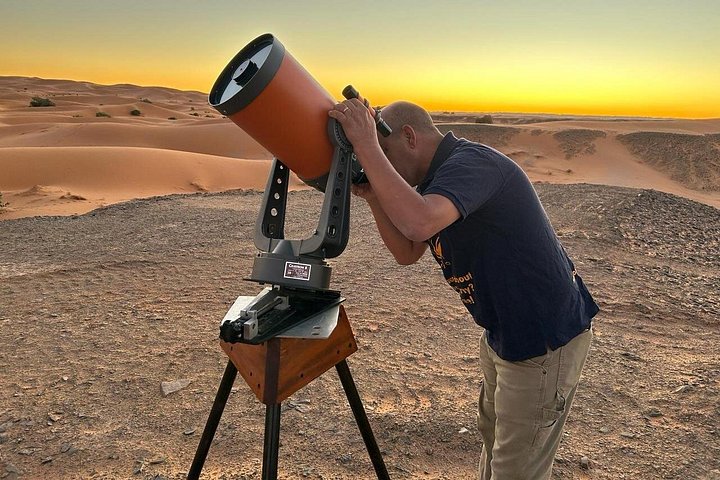
If stargazing matters, check the moon phase. New moon nights are darkest and show the Milky Way best. Full moon nights light the dunes beautifully and are excellent for evening walks, but they dim the stars. Winter air is often the clearest. Photographers should plan for tripods and extra batteries, which drain quickly in the cold.
Religious calendar and holidays
Ramadan changes daily rhythms in the region: some restaurants close during the day, and activities may be scheduled around evening meals. Major holidays can make camps busy. Check the calendar when you plan, and book ahead. Showing respect for fasting by not eating or drinking openly in public during the day is appreciated. Many guides adapt programmes, and visitors still enjoy the dunes.
Clothing by season
In spring and autumn, bring light layers, a sun hat and a fleece for the evening. In summer, pack breathable long sleeves, a wide hat and sandals you can remove easily. In winter, add a warm jacket, gloves, a hat and thermal layers for the night. A scarf is useful in every season. Shoes should be closed and comfortable, since you will walk in sand, and socks that dry quickly are worth having.
Crowds and prices
The busiest periods are spring, autumn and the Christmas and New Year break, when camps and hotels fill and prices rise. Summer is quieter and often cheaper, though hot. Weekends see more tour groups arriving from Marrakech and Fes. If you want a calmer experience, travel midweek or choose a camp farther from the village. Booking ahead is wise in peak months, and a flexible plan helps you adapt to weather.
Events
The area is home to local celebrations such as the date festival in Erfoud in the autumn and gatherings of nomad families. Ask your host about any local events during your stay, since they can add colour and music to a trip. Respect local customs and ask before taking photographs.