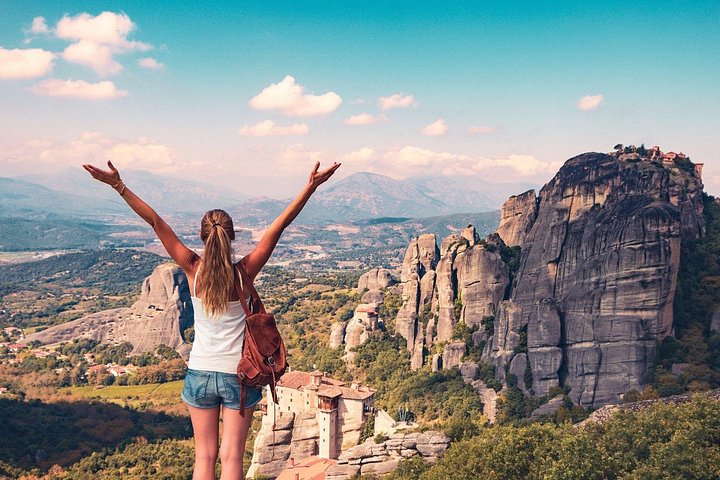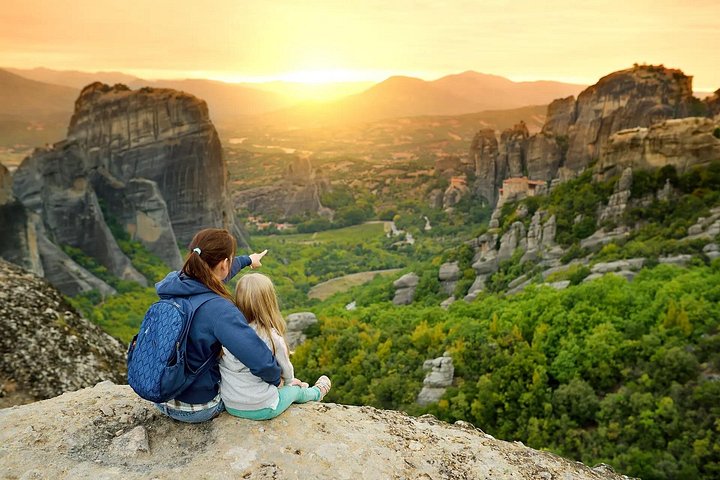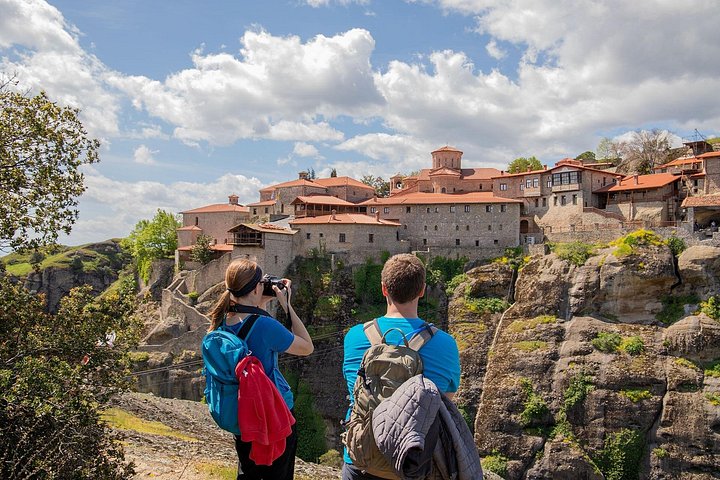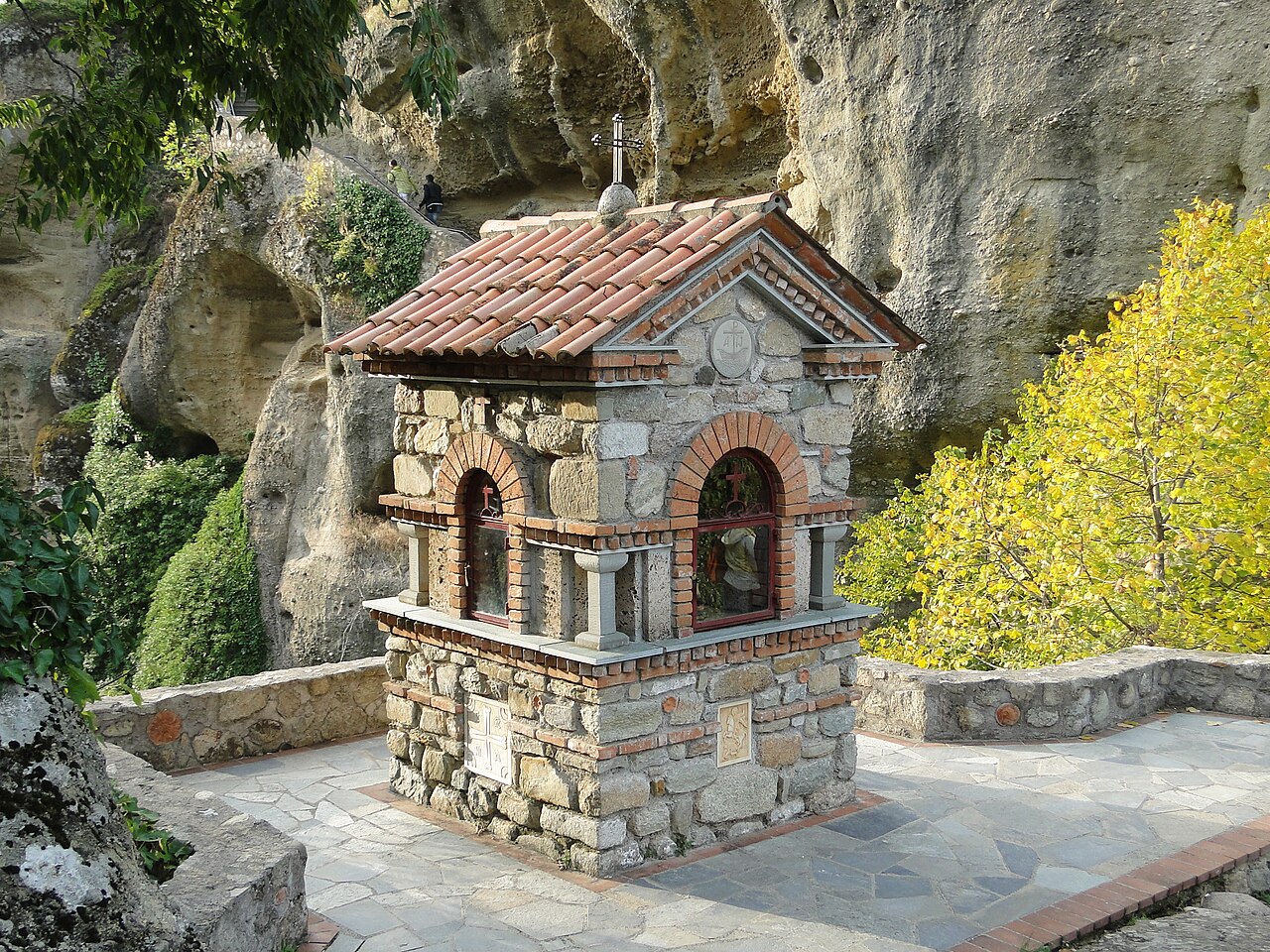
Meteora can be visited in every season, but each one gives a different trip. The monasteries keep a summer and a winter schedule, the weather swings from snow to heat, and crowds vary dramatically between the quiet months and the busy ones. Here is how the year looks, so that you can choose the time that suits you.
Spring (March to May): green, mild and lively
Spring is one of the best seasons. The countryside is green, wildflowers appear below the rocks, temperatures are comfortable for walking and the light is clear. Rivers run higher, which makes it the best time for rafting. The monasteries move to their longer summer schedule from 1 April, which gives you more open hours. Easter, which in Greece often falls on a different date from the western Easter, is a special and busy time, so book hotels early if you plan to be there.
Summer (June to August): hot, busy and long days
Summer days are long, but they can be hot, especially on the stone steps at midday, and the monasteries are at their busiest. Visit as early as possible, when the doors open, bring water and a hat and plan to rest in the middle of the day. Sunset tours are most popular in this season, and hotels with pools come into their own. Book accommodation and tours well ahead, because demand is high.
Autumn (September to October): warm light and fewer people
Many regulars consider early autumn the finest time. The heat has eased, the crowds thin out, the light is golden and the evenings are comfortable for dinner outdoors. Walking, cycling and climbing are all pleasant, and sunset tours continue. Rain becomes more likely later in the season, so keep a light waterproof in your bag.
Winter (November to February): quiet, cold and atmospheric
From 1 November the winter schedule applies until the end of March, with shorter hours and a different closing day for each monastery. Sources differ on the exact closing days for the largest monasteries, so confirm before you travel. Mornings are cold and often windy, snow is possible on the rocks and mist can wrap the towers in drama. The compensation is quiet, with fewer tour groups, lower hotel prices and dramatic photographs. Some seasonal businesses and a few hotels close for part of the winter, so check before you book. If you visit in winter, plan monastery visits from Friday to Monday when more of them are open, and carry warm layers, gloves and shoes with grip.
Weekly closing days
In every season each monastery has one or more weekly closing days, and these change with the schedule. As a rule, Saturday and Sunday are the safest days to see the most monasteries in one trip, and this is more important in winter. Build your itinerary around the closing days, rather than hoping that you will be lucky.
Crowds and timing within a day
The busiest period is mid-morning to early afternoon, when tour coaches arrive, so arrive when the doors open or visit late in the day before closing. Sunset viewpoints fill up in summer, so arrive early if you want a good place. Weekdays are quieter than weekends in most months.
What to pack
Pack for the season, but always bring modest clothing for the monasteries, with long trousers or a skirt below the knee and covered shoulders. Sturdy shoes matter all year, because the steps are steep and can be slippery. Bring a windproof layer even in spring and autumn, since the air on the rocks can be much cooler than in the town.
Booking ahead
Hotels and tours for Easter, the summer weeks and the long holiday weekends sell out first, so reserve early for those dates. Winter and the shoulder months are easier, and many places will offer lower rates and a warmer welcome when the town is quiet. Whatever the season, confirm opening hours the week before you go.
The short answer
If you can choose freely, go in April, May, September or October for the best balance of weather, light and open monasteries. If you want solitude and drama, go in winter and plan carefully. If you must visit in summer, start early and rest in the afternoon.