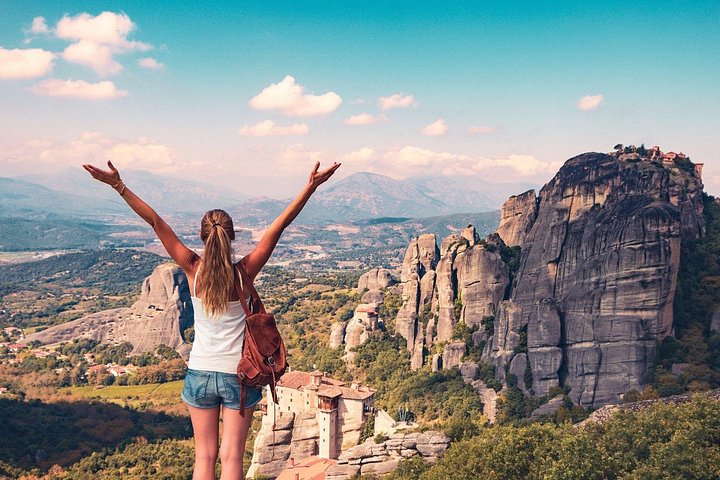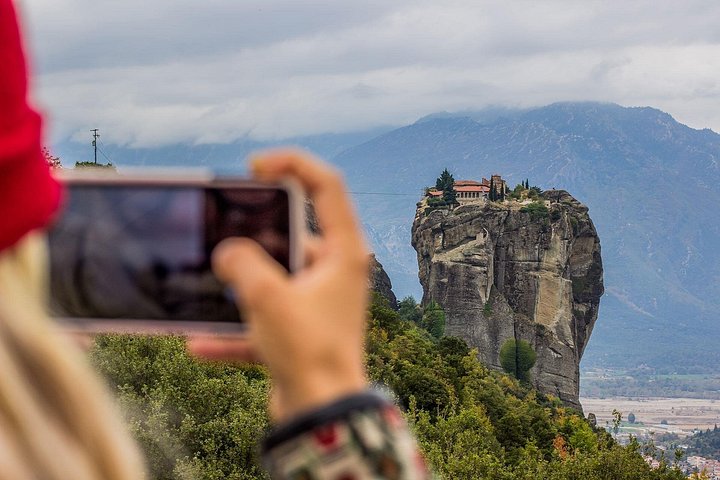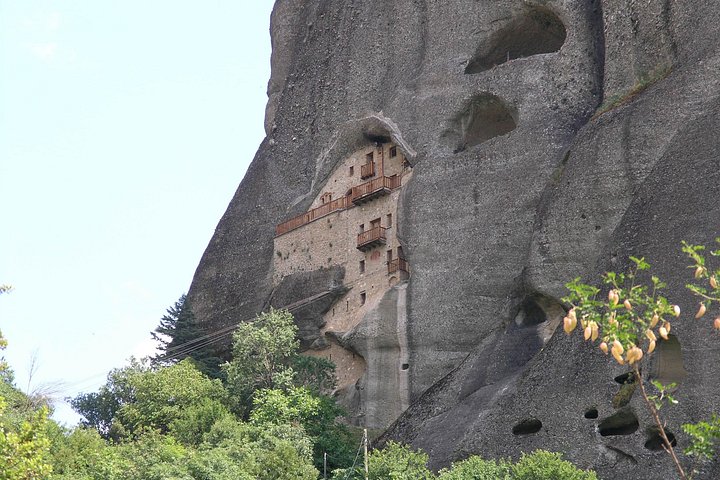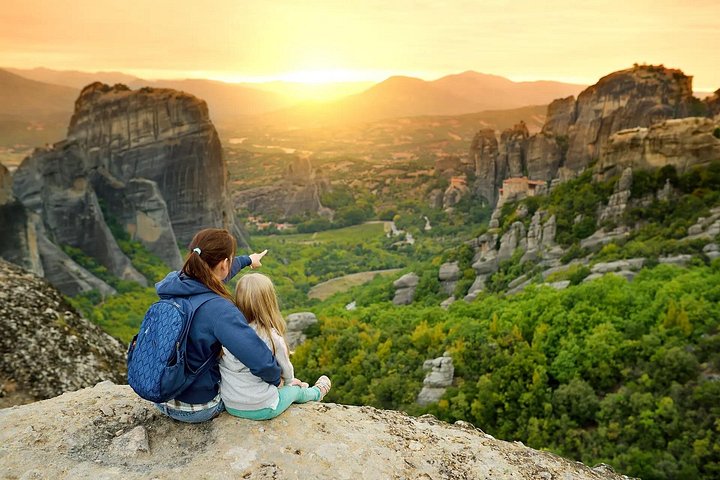
Three days is the sweet spot for Meteora. It is long enough to enter several monasteries without rushing, to see the rocks in morning and evening light and to try one active experience, and short enough that the stone steps and the museums do not blur together. The plan below assumes you are based in Kalambaka or Kastraki and that you move by car, taxi or guided tour. Because each monastery has its own weekly closing day, and winter hours apply from 1 November to 31 March, treat the order as a template and swap days to suit what is open.
Day one: the two great monasteries and a first sunset
Start early at Great Meteoron, the largest and most complete of the six active monasteries, while the tour minibuses are still on the road. Allow about ninety minutes for the church, the museum, the old kitchen and the terraces. Move on to Varlaam, which has a painted church, a winch tower and an enormous wooden barrel, and which needs about an hour. Eat a late lunch in Kalambaka, rest, and keep the late afternoon for a sunset tour or a viewpoint drive, when the pillars turn gold and rose and the plain of Thessaly fills with shadow. Both big monasteries have restricted winter weeks, so check which days they are open and plan day one around them.
Day two: the smaller monasteries and the town
Visit Roussanou and St Nicholas Anapausas in the morning. Roussanou is a compact building of white walls on a narrow pillar, reached by a short bridge, and St Nicholas is the walkable one from Kastraki, set in a tight cleft of rock with remarkable frescoes. Then drive to Holy Trinity, which has a long flight of steps and sits high above the valley, and to St Stephen, the only monastery reached by a level bridge. After lunch, walk through Kalambaka and look in at the Church of the Dormition, an eleventh-century Byzantine church. Dress modestly at every stop, carry cash for entry fees and remember that photography is not allowed inside the churches.
Day three: the hermit caves or an active day
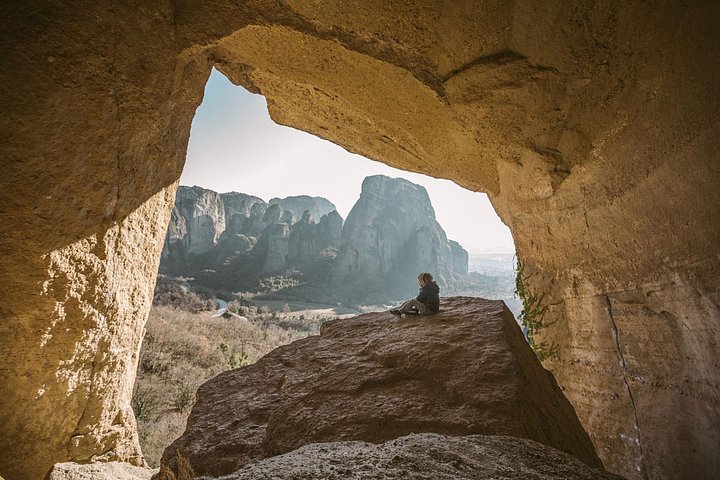
The final day is for the landscape rather than the buildings. A hiking tour follows the old monk paths between the towers and shows how the first hermits lived in caves and crevices before the monasteries were built. If you prefer something different, try an electric bike ride, a horseback tour to the ruined Ypapanti Monastery, an off-road buggy morning or, in the warmer months, a rafting day. Climbers and scramblers can book a guided session with equipment and an instructor. End the day with a slow dinner in Kastraki, where the village tavernas sit directly beneath the cliffs.
Getting around
Kalambaka has a railway station and intercity buses, but local buses to the monasteries are limited and seasonal. A rental car gives the most freedom, a taxi works well for a day, and a half-day guided tour solves the problem of parking and winding roads. St Nicholas Anapausas is within walking distance of some Kastraki hotels, but the others are too far to walk comfortably.
What if the weather is bad?
Low cloud and rain are common in the cooler months. Cloud can be spectacular around the rocks, with the towers appearing and disappearing, but views from a viewpoint on a wet day are poor. Keep an interior day in reserve, perhaps a museum, a long lunch and a visit to a monastery church, and save the viewpoints and trails for the clear day that often follows.
Where to stay
Kalambaka suits visitors who arrive by train and want restaurants within walking distance, while Kastraki has the view and the quiet. Whichever you choose, ask for a room facing the rocks, and confirm the opening dates of the hotel and its restaurant if you travel in winter.
A rainy-day and rest-day option
If you have a fourth half day, use it for the Geological Museum of Meteora in Kastraki, a slow lunch or a visit to the small churches in Kalambaka. Rest matters on a trip built around steps, and a quiet afternoon with a coffee and a view of the rocks is as much a part of Meteora as any monastery. Pack a small day bag with water, a scarf for covering shoulders and a layer, and keep the car or taxi booked for the early morning when the monasteries are quietest.
A simple pacing rule
Do not try to enter every monastery on the same day. Two monasteries and one outdoor activity make a good day, and the sense of scale only builds when you have time to stop and look. Keep one late afternoon free and let the light decide where you end up.