Food at Meteora is simple, generous and rooted in the mountains of Thessaly. You will not find a fine-dining scene, but the tavernas of Kalambaka and Kastraki serve honest Greek cooking at fair prices, often in rooms with views of the rock towers. A good meal is part of the day, because the monasteries close in the afternoon and the best hours for walking and viewpoints come before dark. Use this guide to plan what to order and when to eat.
Grilled meats are the centre of the menu
The tavernas are built around the grill. Look for souvlaki, pork or lamb chops, sausages and the mixed grills that come to the table on a board, usually with chips, salad and bread. In the mountains you will also see slow-cooked dishes such as lamb or goat baked in the oven, and offal grills served on special occasions. Order a few plates to share and a Greek salad of tomato, cucumber, onion, olives and a slab of feta, which is almost always good.
Pies are the local speciality to look for
The Trikala and Thessaly area has a strong tradition of savoury pies, usually in thin, crisp layers of pastry filled with cheese, spinach, leeks or meat. A slice from a bakery makes an ideal breakfast or a snack between monasteries, and many bakeries in Kalambaka sell them warm. Try a cheese pie, a spinach pie and a sweet pie for a taste of the region, and ask what the baker recommends that day.
Dairy and the mountain table
Expect local cheeses, thick yoghurt with honey, fried saganaki cheese and sautéed mushrooms in the cooler months. Bean soups, stewed greens, baked vegetables and slow-cooked beans are common, and they suit visitors who prefer vegetarian food. Vegetarian travellers will find enough choice, though some dishes use meat stock, so ask when it matters.
Wine and spirits
Thessaly has a long wine tradition, and the red wines grown on the slopes of nearby Mount Olympus, in the Rapsani area, are worth trying if you see them on a menu. Many tavernas serve house wine by the carafe, which is usually a safe and inexpensive choice. Tsipouro, a strong grape spirit, is often served in small bottles with a plate of snacks, and you can finish a meal with a glass of it if you like. If wine interests you, a guided tasting is one of the extra experiences on offer in the area.
Sweet things
Look for galaktoboureko, a custard pie in syrupy pastry, baklava, spoon sweets of fruit preserved in syrup and thick yoghurt with honey and walnuts. A coffee and a sweet in the afternoon is a good way to fill the gap after the monasteries close.
Where to eat
Kalambaka has the widest choice, with tavernas along the main streets and around the central squares, along with bakeries and cafes. Kastraki has fewer places, but several sit directly beneath the rocks, and a table outdoors in the evening is one of the pleasures of the trip. Ask your hotel for a recommendation, and look for places where local people are eating. In winter some seasonal businesses close, so check opening times and be prepared for early closing on quiet evenings.
Meal timing
Greeks eat late, with lunch from about two o'clock and dinner from around eight, but tourist areas serve earlier. A good plan is a pie for breakfast, a light lunch after the monasteries and a long dinner in the evening. Carry water and a snack on hiking days, because the trails have no shops.
Breakfast and picnics
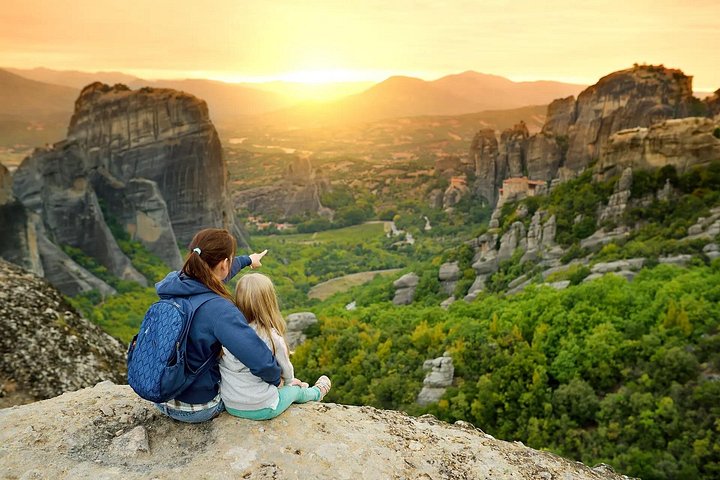
Many hotels serve a buffet breakfast, but a bakery stop is more fun, and you can buy bread, cheese, fruit and pies to carry up to a viewpoint. Bring a small bag for rubbish and a bottle of water, and leave no litter on the rocks. A simple picnic at sunset, with a view that few restaurants can match, costs very little and is one of the most memorable meals of the trip.
Tips and manners
Tipping is appreciated but modest, and it is common to leave small change on the table. Bread is often charged per person. Cash is useful, since small places may not accept cards. Ask for the day's dishes, which are often not on the printed menu, and be adventurous with the plates you do not know.