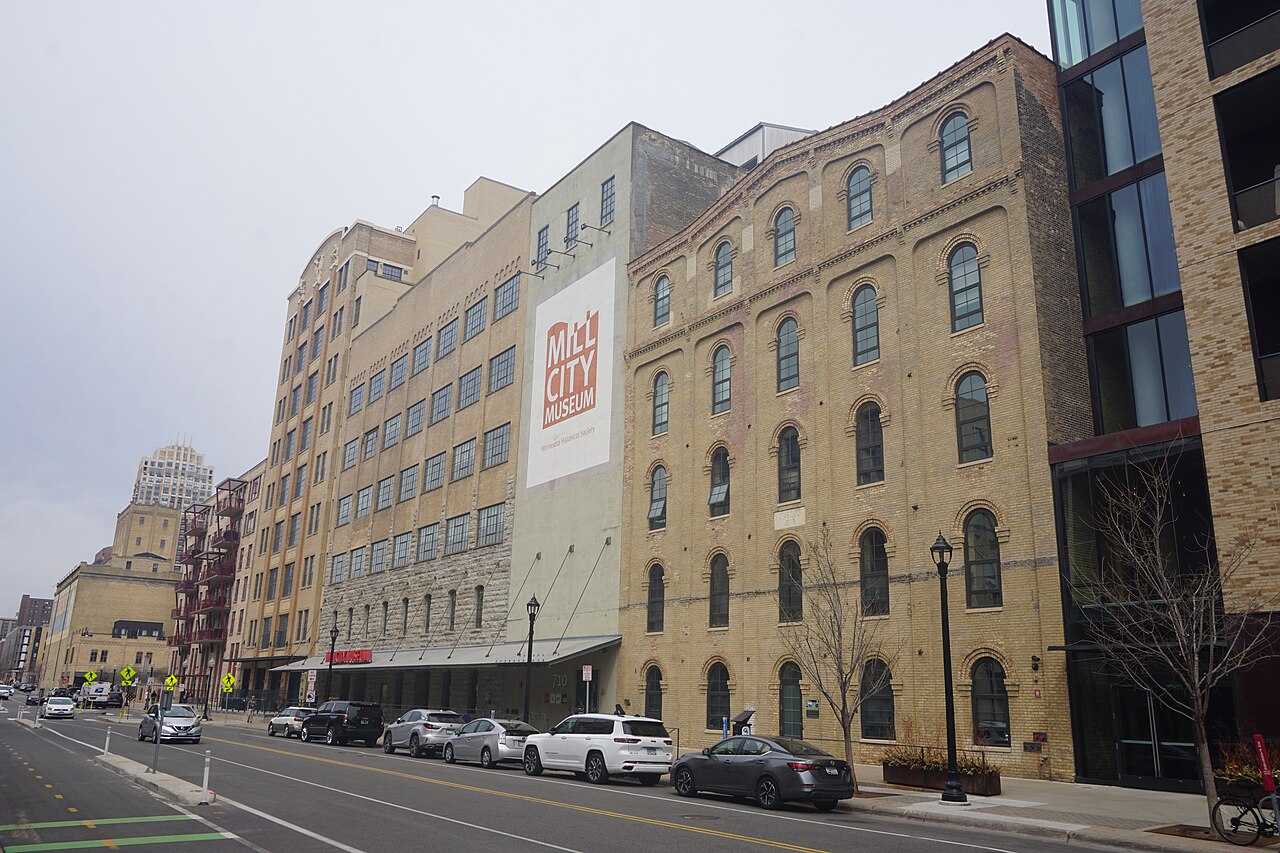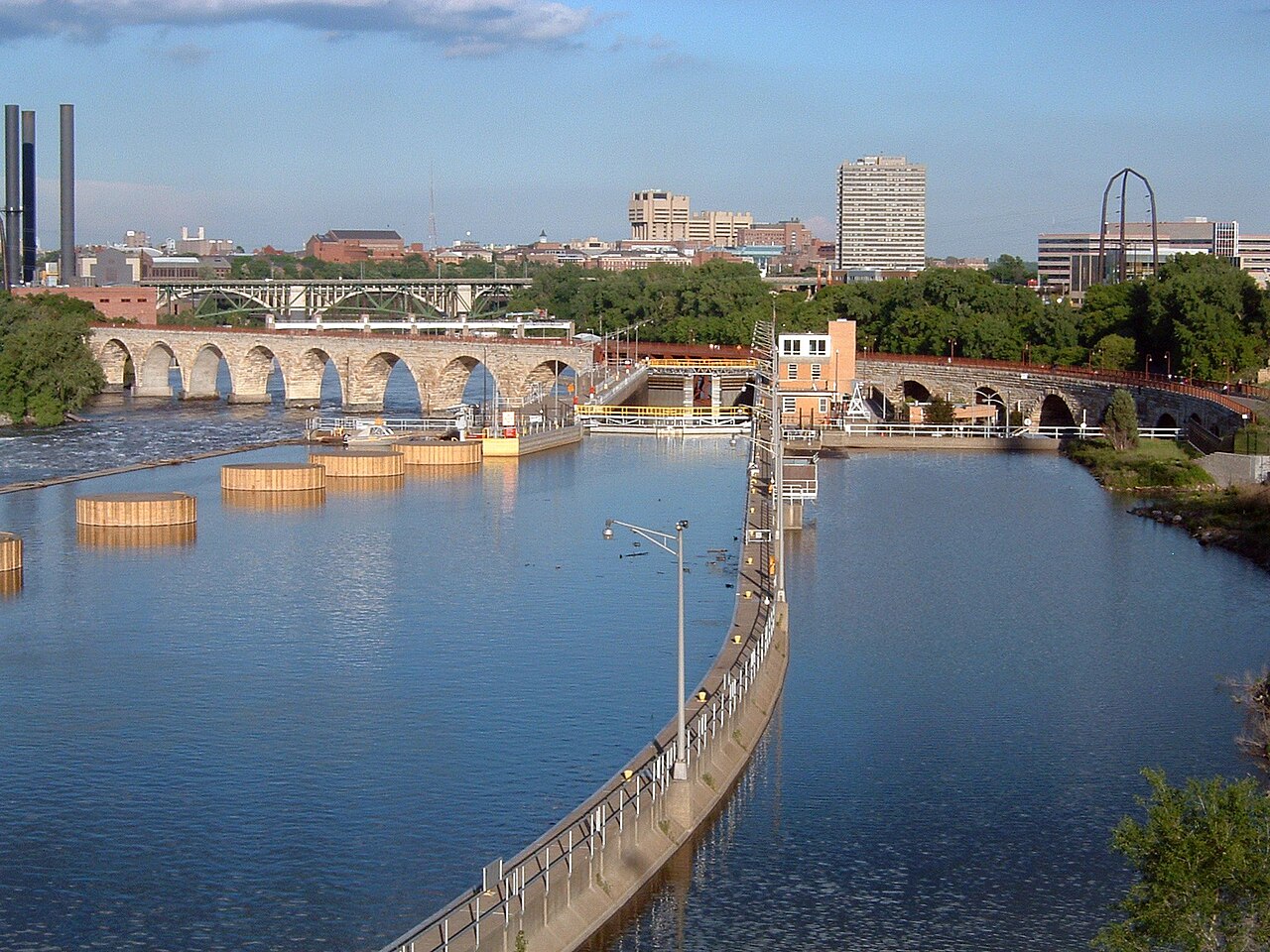
Mill Ruins Park sits on the west bank of the Mississippi River in downtown Minneapolis, beside Saint Anthony Falls, and it is the best place to see what remains of the industry that made the city. The park is built around the ruins of flour mills, with exposed stone walls, canals, tailraces and foundations that give a vivid sense of the scale of the old operations. Interpretive signs explain how the mills worked, how water power drove the machinery and how the area grew, and the paths and viewpoints allow you to look down into the ruins and across to the falls. The park is part of a wider riverfront area that includes the Water Works, a newer development that reuses parts of the mill complex, and it connects to the Stone Arch Bridge and the Mill City Museum. It is free and open to the public, which makes it an easy and rewarding stop for any visitor. It suits history lovers, photographers, families and anyone who wants to understand the city’s origins in a setting rather than a museum. The park offers a real sense of place, with the sound of the river, the stone and the skyline all in view.
Planning
The park is outdoors and open to the public, with no admission charge, but check the opening hours and any closures before you go, since parts of the riverfront can be closed for maintenance or events. Wear comfortable shoes, since the surfaces can be uneven and wet, and dress for the weather. The park is within walking distance of downtown hotels and the light rail, and parking is available nearby, though it can fill on busy days. Winter visits are possible but be careful of ice.
What to expect
Stone ruins, interpretive displays, paths and viewpoints beside the river. You can walk through the remains of the mills and read about the history, and look out over the falls and the water. The mood is quiet and reflective, with the sounds of the river in the background, and there are places to sit and look. The nearby Water Works area includes spaces for food, events and relaxation, depending on the season. Keep children close near the edges, and follow any posted safety signs.
Making the most of it
Combine the park with the Mill City Museum, which tells the story of the flour mills in depth, and with the Stone Arch Bridge, which gives the best views of the falls and the skyline. A morning walk is the quietest, and late afternoon light is good for photographs. If you want a guided experience, the Past and Present walking tour and the narrated trolley cover the same area, while the park itself is free to explore on your own.
For families, the open space and the water make it a pleasant stop, and for couples a sunset walk here is a classic Minneapolis outing. Allow an hour, more if you are combining it with the museum and the bridge, and bring water and a camera.
A few practical extras
Read the interpretive signs slowly, since they explain how the water was channeled and how the mills were organized, and look for the details in the stonework that show the age and scale of the buildings. If you are visiting with children, a short game of finding the canals, arches and walls turns the park into a treasure hunt, and the open space lets them move.
What to expect
The experience
A free riverfront park built among the ruins of the Minneapolis flour mills beside Saint Anthony Falls.
Best time
Morning for quiet, or late afternoon for the light.
How long
About an hour.
Tips
Wear sturdy shoes, watch for wet or icy surfaces and keep children close near edges.
Quick picks
- Best for
- History lovers, photographers and families.
- Families
- A good open space for children, with supervision near edges.
- Couples
- A scenic sunset walk.
- Pair with
- The Mill City Museum and the Stone Arch Bridge.
- Time needed
- About an hour.
Good questions
Is the park free?+
Yes. It is open to the public with no admission charge.
What can I see?+
Mill ruins, canals, interpretive signs and views of Saint Anthony Falls.
Is it near the Mill City Museum?+
Yes. They are part of the same riverfront area.
Is it accessible?+
Some surfaces are uneven. Check the route before you go.
Can I visit in winter?+
Yes, but be careful of ice and dress warmly.