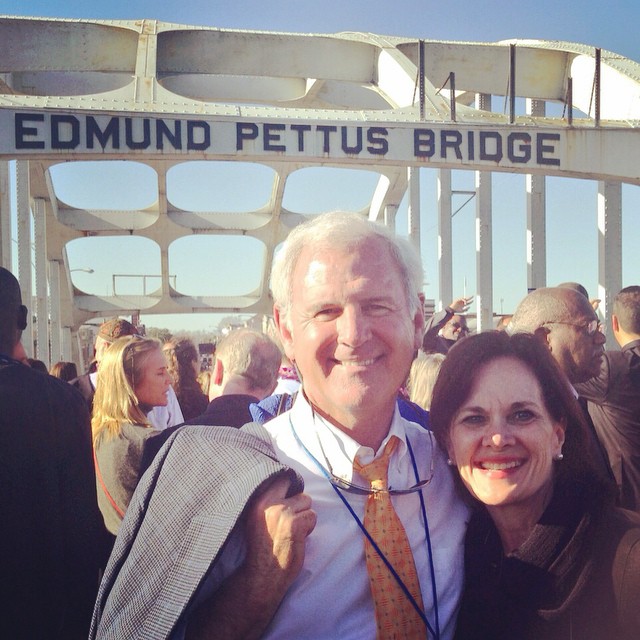
The National Voting Rights Museum and Institute stands near the foot of the Edmund Pettus Bridge in Selma, where the story of the voting rights movement is told by the people who lived it. Founded by veterans of the Selma campaign, the museum emphasizes the role of ordinary participants, the so-called foot soldiers, rather than only famous leaders. Exhibits include photographs, newspaper clippings, handwritten records and personal belongings, along with displays of the long struggle for the vote from Reconstruction to the passage of the Voting Rights Act in 1965. Because it is a community museum, many visitors meet staff members or volunteers who offer personal recollections. It is a modest building with a big story, and the proximity to the bridge makes it a natural companion to a walk across the river.
The museum highlights the footprints of marchers who crossed the bridge, with names and handprints that honor participants. Galleries describe the barriers that Black citizens faced when trying to register, including literacy tests, poll taxes and intimidation, and the organizing that took place in churches and homes. Visitors can read about the local people who risked their jobs and safety to attend mass meetings, as well as outside volunteers who traveled to Alabama. The tone is personal and direct, and the building's simple, working-museum feel adds to its authenticity.
Because Selma is a small city, a visit is usually combined with a walk across the bridge, a stop at Brown Chapel AME Church and a look at the Selma Interpretive Center, which the National Park Service runs near the bridge. Time your trip so that the museum is open, as hours are limited and can change, and consider calling ahead if you have a group. Some visitors schedule a guided tour with a local leader, which can make the experience far richer than a self-guided visit.
A few practical suggestions
Allow about an hour for the museum, wear comfortable shoes if you plan to walk the bridge, and bring water in summer. Parking is available close to the museum, and the building has a small shop with books and mementos. Donations support the organization's educational mission.
A day in Selma, including lunch at a local restaurant, is easy to manage from Montgomery if you leave in the morning. Seen together, the museum and the bridge give a human face to the story of voting rights and a clear sense of how recent that struggle was.
Take a moment to talk with staff. Many have personal links to the movement or to families who took part, and their stories are often the most memorable part of the visit. If you plan the trip around a weekday, you are more likely to find the museum open and a quieter town. After the museum, walk up to the bridge and then across it, reading the historical markers as you go.
Lunch in Selma, perhaps at a local restaurant, gives time to talk through what you have seen. If you are traveling with students, ask the museum about educational materials in advance. The museum's value lies in the human detail, such as the handwritten notes and the names of people who might otherwise be forgotten. Take your time with the displays, ask questions and consider signing the guest book, which often contains messages from visitors from around the world.
What to expect
The experience
A small community museum with photographs, documents and personal stories of the Selma campaign.
Best time
Weekdays, combined with a bridge walk.
How long
About an hour.
Tips
Check the limited hours, consider a guided visit and pair with the bridge and Brown Chapel.
Quick picks
- Best for
- Visitors who want personal stories from the voting rights struggle.
- Families
- Best for older children and teens.
- Couples
- A thoughtful stop within a Selma day.
- Pair with
- The Edmund Pettus Bridge.
- Time needed
- About an hour.
Good questions
Where is the museum?+
In Selma, Alabama, near the foot of the Edmund Pettus Bridge.
What does it focus on?+
The foot soldiers of the voting rights movement and the long struggle for the vote.
How long should I allow?+
About an hour.
Is it far from Montgomery?+
About fifty miles, roughly an hour's drive.
Are hours limited?+
Hours can be limited and may change, so check before you travel.