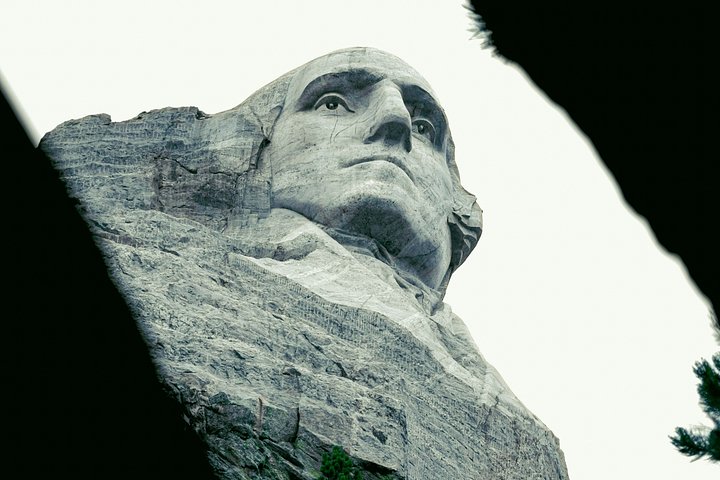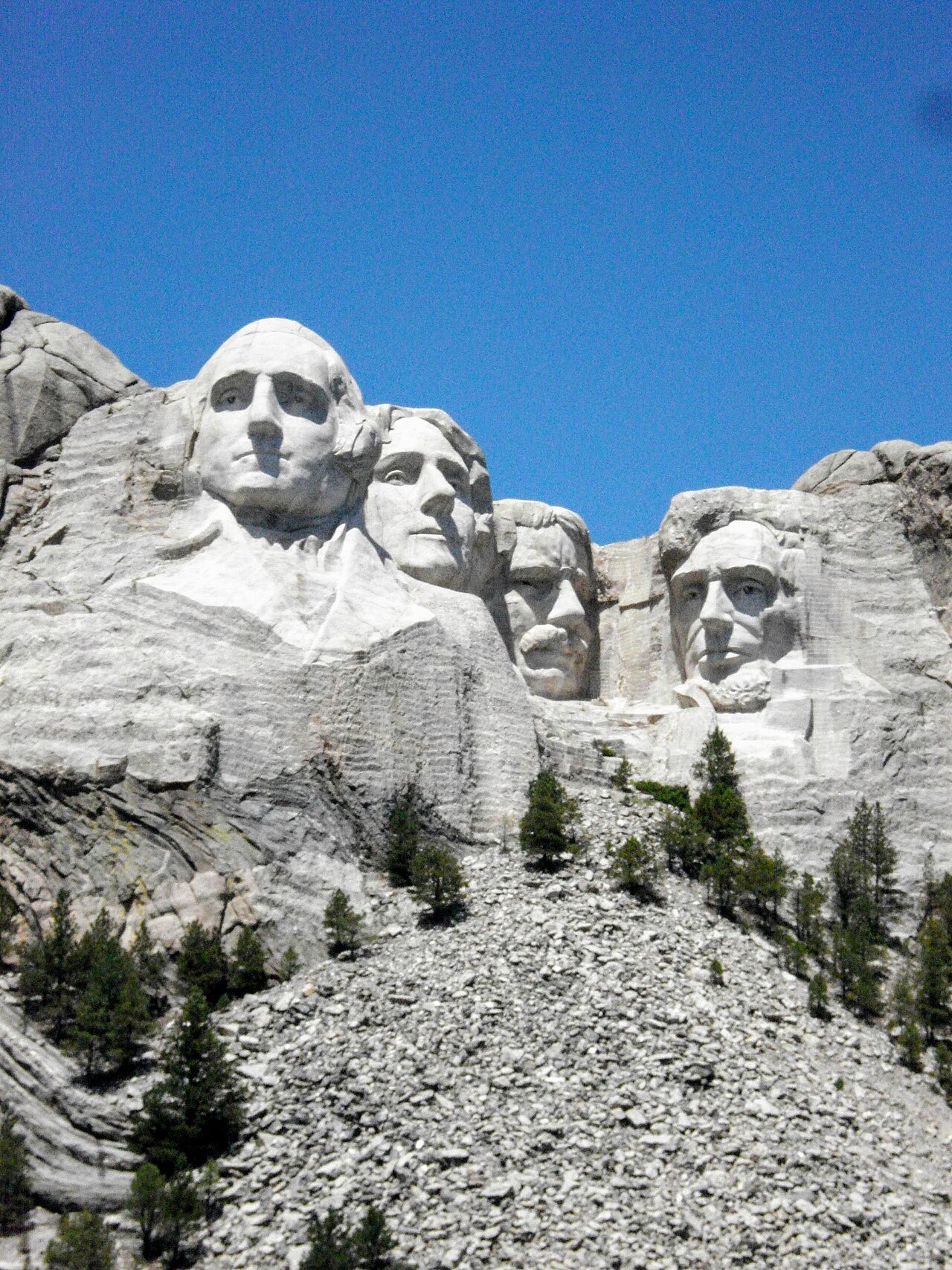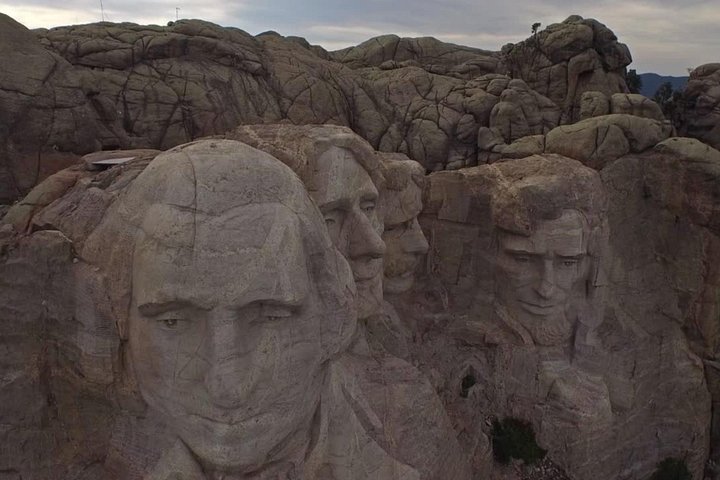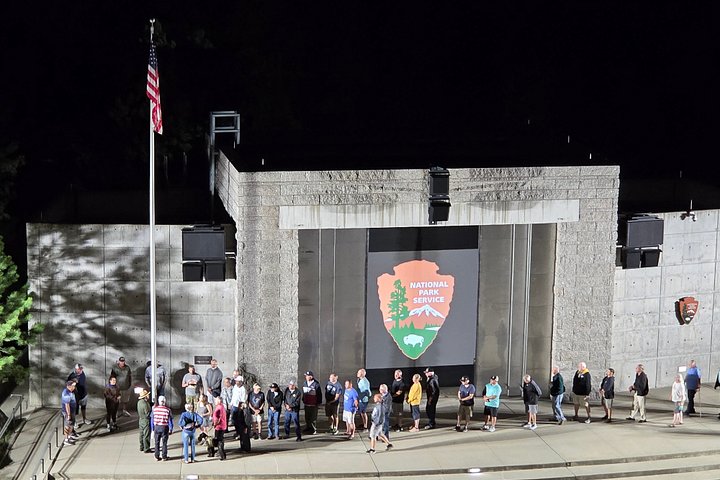
The evening program at Mount Rushmore is the most attended ranger program at the memorial, and it is easy to see why. A talk, a short film, the lighting of the carving and a flag ceremony fit into about forty-five minutes, and the whole thing is free apart from the parking fee. Doing it well is mostly a matter of timing and preparation.
When it runs
The formal program is nightly from late May through the end of September. The sculpture itself is illuminated every night of the year, so outside the ceremony season you can still see it lit at dusk, just without the talk and film. The start time follows dusk, which means the ceremony begins later in early summer and earlier from early August onward. Rather than relying on a number in a guidebook, check the posted time for your dates and plan to be seated well beforehand.
How the evening unfolds
A ranger gives a talk of roughly twenty minutes in the amphitheater, a film follows, the lights come up on the faces and the program closes with a flag ceremony that invites veterans and service members to take part. Children generally manage the full length if they have eaten and have a jacket, and the crowd tends to be respectful and quiet. It is a program for all ages, and many visitors say the flag segment is the part they remember.
Getting there and getting out
Arrive early in July and August, because the amphitheater fills and the walk from the garage takes longer than expected. You still pay the garage parking fee, and national park passes do not cover it. When the program ends, the garage exit lanes back up, so either accept a short wait or linger on the terrace to see the lit carving as the crowd thins. Exit kiosks accept cards only.
What to bring
A jacket, even in July, because temperatures fall quickly after sunset at this elevation. Eat before you arrive, since food options at the memorial are limited in the evening. A seat cushion helps on the amphitheater benches, and a small flashlight makes the garage walk easier. Photography is difficult in low light, so decide early whether you would rather watch the program or fight for the perfect frame.
Without a car
If you are staying in Rapid City or do not want to drive winding mountain roads in the dark, evening tours with transport are available. A shared departure at a modest price and a private ranger-led evening at a premium both follow the ceremony season, which means they are not options in winter. Both avoid the night drive, the parking queue and the timing guesswork.
Seating, families and photography
The best seats go in the first half hour, so arriving early matters more than arriving at a particular spot. Families with young children should plan a snack, a layer and a plan for the garage queue, since the program ends after dark and bedtimes slip. If you want photographs, a steady surface and a longer exposure work better than a handheld phone, because the lighting is soft and the faces are dimmer than in daylight. Many visitors find it more rewarding to put the camera down for the flag ceremony and take a few pictures on the terrace afterward.
Combining it with a day
The best use of the evening is as the second half of a full Rushmore day. Visit in the morning, when the sun lights the faces and the crowd is thinner, walk the Presidential Trail, spend the afternoon in Keystone or on Iron Mountain Road, have an early dinner and return for the program. Your parking ticket is valid for a year, so the second visit costs nothing extra.
Weather and accessibility
Summer storms can delay or reshape an evening, and the temperature drop after sunset catches many visitors out, so check the forecast and bring a rain layer as well as a jacket. The route from the garage to the amphitheater involves stairs and a fair amount of walking, which can be demanding for some visitors, so allow extra time and ask staff about accessible routes if you need them. Wildfire smoke and low cloud can also dim the view of the carving, which is one more reason to see it in daylight as well.
After September
When the ceremony season ends, the carving is still lit, and a cold clear evening with almost no one around is a very different, quiet experience. Check the memorial's hours before you go, since facilities shorten after the first of October, and dress for real cold. If you want the full program, plan the trip between late May and the end of September.