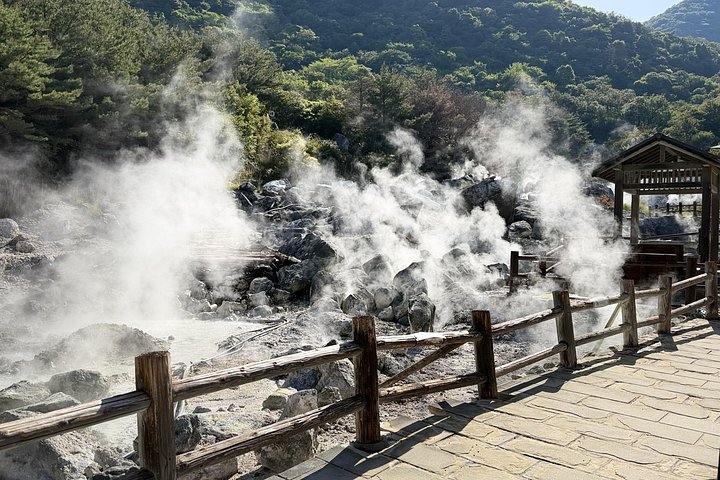
Unzen lies on the Shimabara Peninsula, a volcanic region east of Nagasaki that forms part of Unzen-Amakusa National Park, one of Japan's first national parks. The resort town sits among steaming vents known as the hells, where hot gas pours from the ground, and the air smells of sulphur. It has drawn bathers since the seventeenth century. A day tour from Nagasaki combines the steam trails with a soak in a hot spring and a stop at Obama, a coastal onsen town with a very long footbath. The scenery and quiet pace are a welcome change from city sightseeing.
The hells are the signature sight. Boardwalks lead through areas of boiling water and white vapour, with signs explaining the history, including a grim period when Christians were tortured here during the persecution. Today it is peaceful, and you can buy eggs boiled in the vents. Beyond the hells, trails lead to viewpoints, ponds and forests.
Soaking in an onsen is part of the experience. Many ryokan and hotels offer day-use baths, and the water is mineral rich. Observe the etiquette: wash before entering, keep towels out of the water and check tattoo policies. Tours often include lunch, and local cooking experiences, such as cooking with hot spring steam, are popular.
Mount Fugen, the peak behind the town, erupted in the 1990s, and exhibits on the Shimabara Peninsula tell this story. Seasons shape a visit: azaleas in spring, cool air in summer, red leaves in autumn, and frost and ice in winter. Dress in layers and wear sturdy shoes. Allow a full day for a tour from Nagasaki, or stay overnight to enjoy the baths in the evening.
There is more to the area than the main hells. Walk the circular footpath to see the different vents, some of which are named for how they sound or look. Further along, Unzen Jigoku has a viewpoint, and nearby Shimabara town has a castle, preserved samurai houses and clear spring-fed canals with carp. The Shimabara Peninsula is also linked to the Shimabara Rebellion of 1637 to 1638, in which mostly Christian peasants rose against heavy taxes and persecution, a story that connects to the wider Christian history of Nagasaki.
Local food includes Shimabara sweets, seafood and a hearty stew called guzoni. If you visit in winter, ice trees and frost make the hills spectacular, but check road conditions. Many visitors extend the day with a night in a ryokan, where kaiseki dinners and early morning baths are part of the charm.
Plan your transport carefully. Buses to Unzen from Nagasaki and Shimabara take around two hours, and services are less frequent than in cities, so check timetables and last departures. A guided day tour or private car makes the journey easier and often includes several stops. Roads can be affected by snow in winter and fog at any season, and mountain weather changes quickly.
Pack a swimsuit only if the venue requires one, since most Japanese baths are taken unclothed and separated by gender. Small towels are usually for sale or rent, and lockers are common. After bathing, drink water and rest, as hot spring soaks can be tiring, and avoid bathing straight after a heavy meal or alcohol.
What to expect
The experience
A full-day excursion to steaming hells, hot spring baths and coastal onsen towns.
Best time
Autumn for colour; winter for steaming baths.
How long
A full day, or an overnight stay.
Tips
Bring a towel, observe onsen etiquette and dress in layers.
Quick picks
- Best for
- Travellers who want nature and relaxation.
- Families
- Fine for children, but baths have rules.
- Couples
- A restful escape.
- Pair with
- A night in a ryokan.
- Time needed
- A full day.
Good questions
How do I get there?+
By bus or car from Nagasaki, or on a tour.
Are tattoos allowed in onsen?+
Policies vary; ask first.
What are the hells?+
Volcanic vents with steam and sulphur.
Is it a day trip?+
Yes, though overnight is relaxing.
What should I bring?+
A towel, layers and cash.