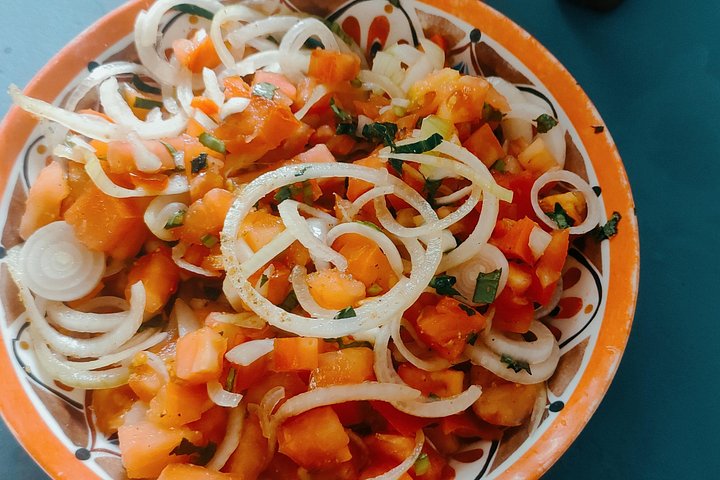
Nicoya cooking is built on corn, beans, rice, squash and tropical fruit, and a class with a local cook is one of the best ways to understand it. Under the guidance of a host from the area, you prepare traditional dishes from scratch, perhaps handmade tortillas, a rice and bean base, a plantain dish and a fresh fruit dessert, and then sit down to eat what you have made. The title says with a local, which suggests a personal, home-style experience rather than a commercial kitchen. Along the way you learn about ingredients, such as the maize that has been central to the peninsula for centuries, the cultural meaning of staples like gallo pinto and the herbs that give dishes their taste. It is also a window into daily life, since the conversation often covers family, farming and community. It is a rewarding rainy-day or midday option and works well for travellers who like to bring a recipe home.
How it works
You book a session and are given the location, which may be a home, a small kitchen or an open-air space. Menus vary by season and by what is fresh, so ask about dietary needs, such as vegetarian or gluten-free, when you book. Group size and duration depend on the option.
What to expect
Expect to chop, mix and stir with guidance, and to taste along the way. Corn-based preparations are often a highlight, and fresh tropical fruit and drinks are likely to feature. Classes are social and relaxed, so you do not need cooking experience. The meal at the end is the reward, and recipes may be shared.
Making the most of it
Arrive hungry, wear comfortable clothes and ask questions, because the host is your cultural guide. If you are curious about why this area is known for long and healthy lives, the blue zone guide on this site explains the food and lifestyle. Buy a few spices or ingredients to cook with at home if you can.
Where it fits in your stay
A cooking class is a good plan for a rainy afternoon or the hottest part of the day, and it is a gentle way to meet local people. Because meals and recipes are central to community life on the peninsula, you also come away with a better sense of what makes the region special, from the lasting importance of maize to the comfort of shared tables.
Good to know
Tell the host about allergies, dietary restrictions and spice preferences, and ask in advance whether children can help with the cooking. Menus are seasonal, so what you make depends on what is fresh and available. Bring a notebook or take photographs of the steps, since many classes share recipes. A modest tip or a small purchase from the host is appreciated, and it supports local households.
What to ask before you book
Confirm the location and how to reach it, whether the class includes a market or farm visit, how many guests join and whether children can take part. Ask whether the menu is fixed or can be adapted for dietary needs, and whether you will receive the recipes.
If you like to cook at home, ask where to buy ingredients such as maize flour, spices and plantains. The experience is as much about conversation as technique, so come curious, ask about family recipes and local customs and be ready to enjoy a long, relaxed meal.
What to expect
The experience
A hands-on cooking class with a local host, ending in a shared meal of traditional Nicoya dishes.
Best time
Late morning or afternoon, depending on the session; it works well on a rainy day.
How long
Roughly three hours including cooking and eating.
Tips
Mention dietary needs when you book and arrive hungry.
Quick picks
- Best for
- Food lovers and curious travellers who want a cultural experience.
- Families
- A good rainy-day idea for children who like to help in the kitchen; check ages.
- Couples
- A cosy, shared activity for couples.
- Pair with
- A walk on the beach to digest.
- Time needed
- Allow half a day.
Good questions
Do I need cooking experience?+
No, the class is hands-on but beginner friendly.
Can it cater to dietary needs?+
Often yes. Tell the host when you book.
What will I cook?+
Menus vary, but expect Costa Rican staples such as corn, beans, plantain and fruit.
Do I eat what I cook?+
Yes, the class normally ends with a shared meal.
Is it suitable for children?+
Many children enjoy it. Check minimum ages when you book.