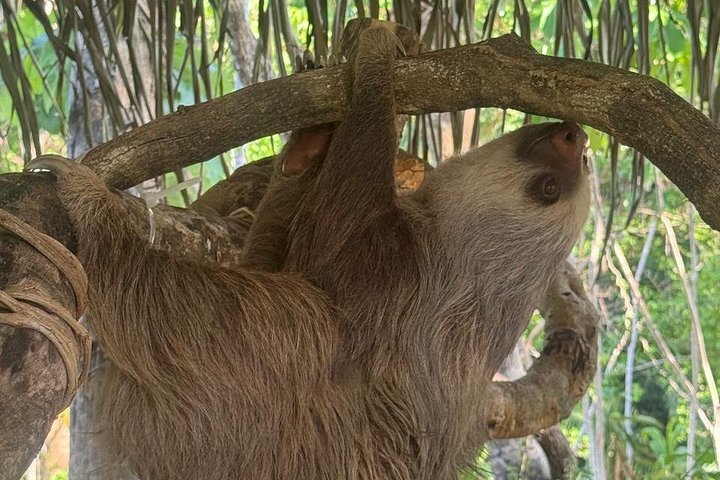
Sloths are the animal most visitors to Costa Rica hope to see, and they are also the hardest to spot without help, because they move slowly, sleep for most of the day and blend with the canopy. This outing pairs a guided hike with a butterfly garden, which gives you two kinds of encounter in one morning. The guide leads you along trails where sloths are known to hang out, using trained eyes to find the round, mossy bundle in the branches, and may set up a telescope so that you can watch without disturbing the animal. Along the way you learn how sloths digest leaves for days, why they come down to the ground once a week and how their fur hosts algae. The butterfly garden is a gentler, brighter stop, where blue morphos and other species flutter around planted flowers and visitors can learn about their life cycle from egg to wing. The combination works well for families and for anyone who likes close-up nature in short, easy stretches.
How it works
You book a slot and meet the guide at a pickup point or the trailhead. The walk is at an easy pace with frequent stops. Group size, tour length, entrance fees and whether transport is included vary by option, so read the details when you book and confirm anything that matters to you.
What to expect
Finding a sloth is a mix of skill and luck, and guides usually succeed because the animals stay in the same trees for days. Please keep your distance and never touch or feed them. The butterfly garden is a small, netted space, warmest and busiest around mid-morning, when butterflies are most active. Expect humidity, a few insects and some uneven paths.
Making the most of it
Wear closed shoes and light clothing, bring water and a hat, and keep your camera ready but off flash. Binoculars are helpful. If you are travelling with children, explain beforehand that sloths are quiet and slow, so they know the joy is in spotting them. For another look at the forest, add the biological reserve walk on a different day.
Where it fits in your stay
This outing is a reliable choice for a first full day in Samara or for a family morning, because it is short, comfortable and rewarding. It also works well as a rain-day plan, since much of the activity can be done under the forest canopy or inside the butterfly garden, and the animals are often calmer after rain.
Good to know
Sloths are wild animals and are easily stressed by noise and handling, so guides keep groups small and encourage quiet. Flash photography is discouraged, and good photos usually come from patient waiting rather than from getting close. Butterfly gardens are often small enterprises that support local families and conservation education, and a modest tip for the guide or a purchase of a souvenir is a nice way to say thanks.
Seasonal notes
Sloths can be found throughout the year, but they are often easier to spot in the dry season, when trees are less dense, and they may be more visible after rain when they come out to dry. Butterfly numbers rise in the green season, when more plants are in flower.
Morning is generally the best time for both. Wear light, long clothing that protects against insects, closed shoes and a hat, and bring water. If you have children with you, a little preparation, such as reading about sloths beforehand, makes the walk more fun and helps them to be patient and quiet.
What to expect
The experience
A guided nature hike searching for sloths, followed by a visit to a butterfly garden.
Best time
Morning, when it is cooler and the garden is active.
How long
Roughly two to three hours with easy walking.
Tips
Wear closed shoes, bring water and repellent, and do not use flash near the animals.
Quick picks
- Best for
- Families and first-time visitors who want a reliable, gentle nature outing.
- Families
- One of the better choices for children, who often love sloths and butterflies.
- Couples
- A calm, scenic walk that gives couples time to look and talk.
- Pair with
- A swim at the beach or lunch in town afterwards.
- Time needed
- Allow a morning.
Good questions
Will I definitely see a sloth?+
Guides usually find one, since sloths stay in the same trees for days, but nothing is guaranteed.
Is it a hard hike?+
No, it is easy to moderate with short distances and plenty of stops.
Can children join?+
Yes in most cases. Ask about minimum ages when you book.
Can I touch a sloth?+
No. Handling wild animals is harmful and illegal in Costa Rica, and responsible guides will not allow it.
When are butterflies most active?+
Mid-morning, when it is warm and sunny.