On 26 July 1963 an earthquake destroyed much of Skopje, killing many people and leaving a large share of the city homeless. The international response was extraordinary: the United Nations and many countries sent aid, and architects and planners, including the Japanese master Kenzo Tange, were invited to help draw up a new vision. The result was a city rebuilt with a strong modernist and brutalist character, with raw concrete forms, sculptural lines and bold public buildings. A guided walk in this part of Skopje is a way to see another side of the capital. Highlights include the vast postal and telecommunications complex, the railway station and its clock frozen at the minute the earthquake struck, the Museum of the City of Skopje housed in the old station, and the Museum of Contemporary Art on the hill, which grew out of art donated by many countries. Many buildings are still in daily use, which gives the tour a living, unpolished feel. It makes a rich contrast with the Ottoman bazaar across the river and with the neoclassical statues and facades of the Skopje 2014 project in the centre. Together the three layers of the city, Ottoman, modernist and neoclassical revival, tell a story that few capitals can match, and walking between them in a single day is a lesson in how a place reinvents itself after a disaster.
Why go
This is the story of a city that was broken and rebuilt, and the tour turns a field of grey concrete into something that makes sense. A good guide explains how the plan was meant to work, why some designs were never completed, what the architects hoped for and how Skopje's residents now feel about their brutalist inheritance. It is a particularly good choice for travellers interested in design, photography or twentieth-century history, and for anyone who has seen the Old Bazaar and wants to understand the modern city.
Many visitors find it one of the most surprising hours in the capital, because the buildings look stark at first and then reveal clever details, sculptural stairways and ambitious ideas about how people should live and work.
Working the visit
The walk is mostly in the central and station areas and can be done on foot with a guide, which usually takes two to three hours. Some operators offer a longer version with a car or a combined route that links the brutalist sights with the Old Bazaar. A self-guided walking route is also possible with a map, though the context is thinner. Wear comfortable shoes because pavements can be uneven, and bring a camera, since the concrete forms are best in side light in the morning or late afternoon.
Good to know
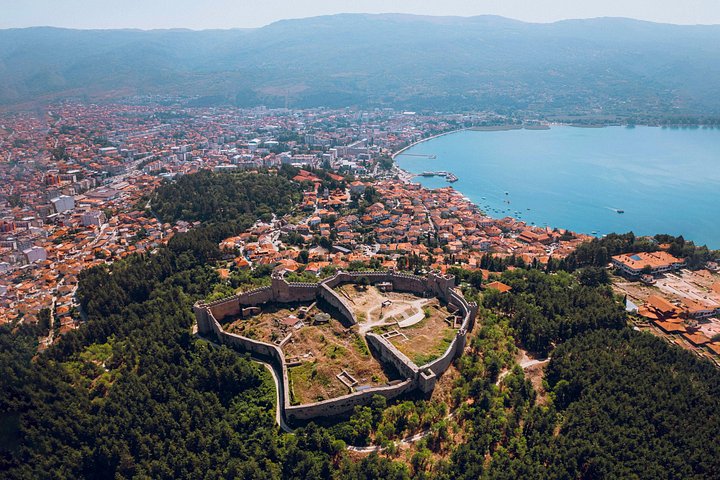
Several buildings are working offices, so you may see them from outside only, and photography rules can vary near public institutions. Interiors, museum hours and access change, so check what your tour includes. The tour is a good choice for a rainy or very hot day when the outdoor sights are less attractive, and it works year-round. Pair it with a visit to the Skopje Fortress for the view across the city that shows how the old and new quarters sit on either side of the Vardar.
What to expect
The experience
A guided walk or short drive through the post-earthquake modernist districts, with stops at the post office complex, the station and other brutalist landmarks.
Best time
Morning or late afternoon for good light on the concrete; the tour works in any season, including wet or hot days.
How long
Two to three hours on foot; longer if combined with the Old Bazaar or a museum stop.
Tips
Wear comfortable shoes, bring a camera, and ask your guide which interiors are open on the day.
Quick picks
- Best for
- Design lovers and history-minded travellers who want to understand how modern Skopje was rebuilt.
- Families
- Better for older children and teens with an interest in buildings; younger children may find it dry.
- Couples
- A thoughtful, offbeat afternoon that pairs well with dinner in the bazaar.
- Pair with
- The Old Bazaar, Skopje Fortress and the Skopje street food tour.
- Time needed
- A half day including a coffee break.
Good questions
Why is Skopje full of concrete buildings?+
Because a major earthquake in July 1963 destroyed much of the city, and it was rebuilt with help from international architects and planners in a modernist and brutalist style.
What is special about the railway station clock?+
It is stopped at the minute the earthquake struck, preserved as a memorial. The old station now houses the Museum of the City of Skopje.
Do I need a guide?+
A guide adds a lot of context about the rebuilding plan, but a self-guided route is possible if you prefer to wander.
Can I go inside the buildings?+
Some are working offices or institutions, so you may see them from outside. Ask your guide what is accessible on the day.
Is it a good rainy-day option?+
Yes, because much of the route is short and flexible, and museums can be added if the weather turns.