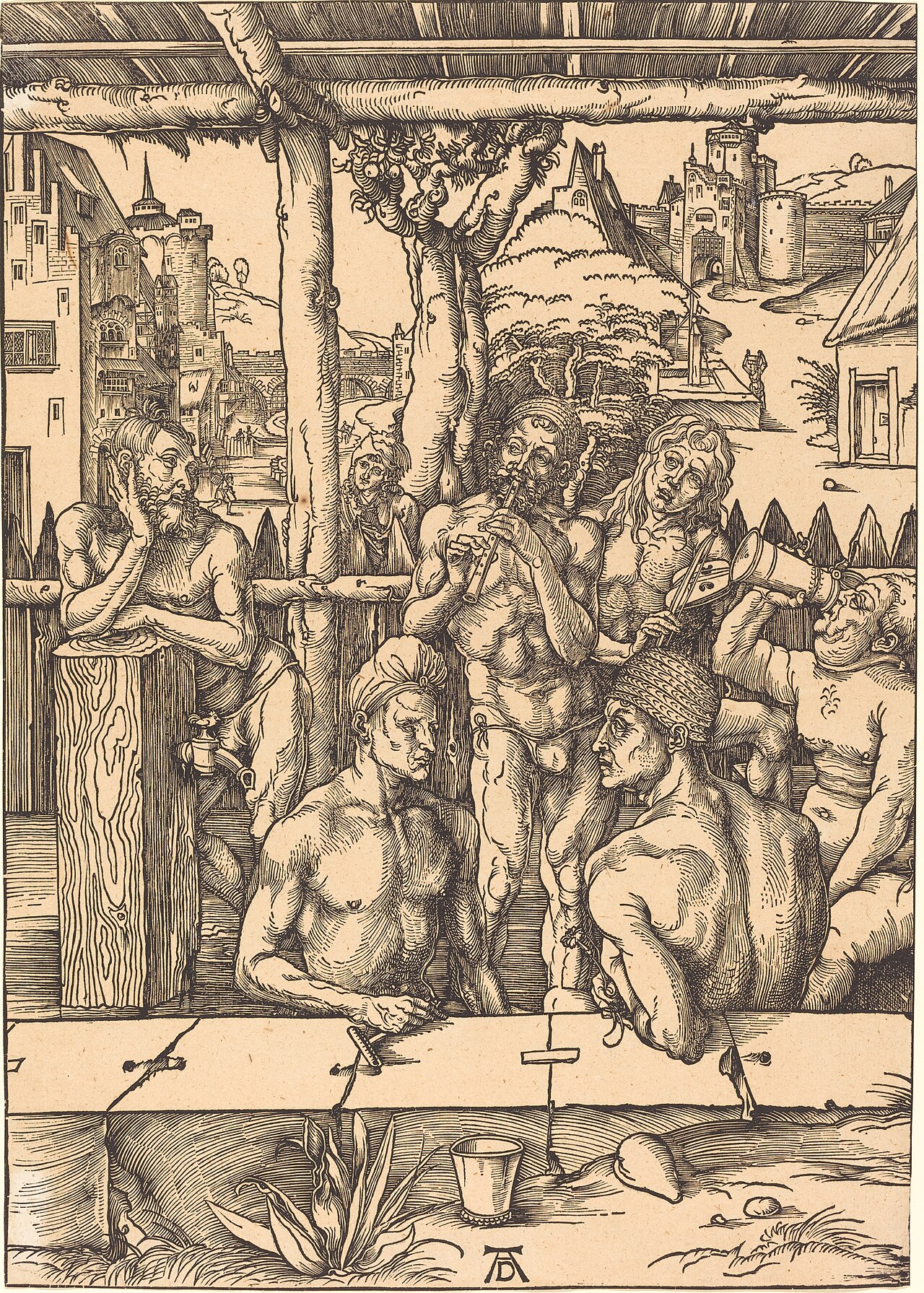
Albrecht Dürer, born in Nuremberg in 1471, is the city's most famous son and one of the great artists of the northern Renaissance. In 1509 he bought a tall, half-timbered house near the Tiergärtnertor, just below the castle hill, and lived and worked there until his death in 1528. It is one of the very few homes of a major artist of that era to survive, and it is now a museum that shows how a successful painter and printmaker lived, worked and ran a business. The ground floor and kitchen have been furnished to give a sense of daily life, with a big hearth, utensils and a simple dining space. Upstairs, rooms display reproductions of his drawings, paintings and engravings, since the originals are held in major collections. The house is small, steeply stacked and deeply atmospheric, and the staff are enthusiastic about explaining Dürer's techniques.
The highlight for many visitors is the workshop on the upper floors, where printing demonstrations show how Dürer's woodcuts and copper engravings were made. A working press is used to pull impressions, and you see how an image goes from the carved block to the sheet of paper. Dürer's prints, such as Melencolia I and Knight, Death and the Devil, were sold across Europe and made him wealthy and famous, and the demonstration explains why he took such care with the craft.
Costumed guides sometimes play Agnes Dürer, his wife, who ran the sales of the prints at markets and fairs, and their performances give a lively view of the household economy.
The museum is also a good lens on the city. Nuremberg in the early sixteenth century was a major centre of printing, metalwork and science, and Dürer moved among humanists, merchants and astronomers. The house helps you understand the networks of patronage and commerce that allowed an artist to thrive. Audio guides in English narrate the rooms, and temporary displays often focus on one print or one period of his life. If you want to see original paintings, the Germanisches Nationalmuseum holds important works, while the Dürer House focuses on the person and the practice.
Visit early in the day, because the house is small and numbers are controlled at busy times. The staircases are steep and narrow, so there is no wheelchair access to the upper floors, and larger bags are best left at the entrance. Opening days vary, with the house generally closed on Mondays and with shorter hours in winter, so check before you go. A visit takes around an hour, and it pairs well with the Imperial Castle just above, the Tiergärtnertor square and the nearby craftsmen's courtyard.
It also helps to know a little about Dürer before you go. He travelled to Italy twice, absorbed the ideas of the Venetian painters, and brought back a confident, mathematical approach to proportion that he later set down in his own books. His self-portraits, including the famous frontal image from 1500, were remarkable for their time, and his drawings of a hare and a clump of grass are among the best-loved studies of nature ever made.
The house gives these famous images a human setting, and many visitors leave wanting to see the originals in the museums that hold them. A short stop in the shop is worthwhile for prints and books, and the square outside is lovely at dusk.
What to expect
The experience
A self-guided visit through a steep half-timbered house, with an audio guide, reconstructed rooms, a print workshop and sometimes costumed guides.
Best time
Mornings are quietest. Closed on Mondays in most seasons, so plan for Tuesday to Sunday.
How long
About an hour, including a print demonstration if one is running.
Tips
Take the English audio guide, time your visit for a printing demonstration, and expect steep stairs.
Quick picks
- Best for
- Art lovers and anyone curious about how a Renaissance artist actually worked.
- Families
- Children enjoy the press demonstration and the kitchen, though the stairs are steep.
- Couples
- A small, atmospheric stop for couples before a castle walk.
- Pair with
- The Imperial Castle, the Tiergärtnertor square and the craftsmen's courtyard.
- Time needed
- One hour.
Good questions
Did Dürer really live in this house?+
Yes. He bought the house in 1509 and lived and worked there until his death in 1528. It is one of the few surviving homes of a major artist from that period.
Are the artworks in the house original?+
Mostly reproductions, since the original drawings and prints are held in major collections. The value of the visit is in the rooms and the printing demonstration.
Is the house accessible?+
Access is limited by the steep, narrow staircases and the building's age. The ground floor is easier, but the upper floors are not suitable for wheelchairs.
When is the Dürer House closed?+
It is usually closed on Mondays and has shorter hours in winter. Check the schedule before you go.
Where can I see original works by Dürer?+
The Germanisches Nationalmuseum in Nuremberg holds significant works, and major collections in Vienna, Berlin and Munich hold many of his most famous paintings and drawings.