The Germanisches Nationalmuseum, often shortened to GNM, is the largest museum of cultural history in the German-speaking world, with more than a million objects spanning prehistory to the present. It occupies a former Carthusian monastery on the southern edge of the old town, a rambling complex of cloisters, halls and modern wings. Founded in 1852 to preserve and present the heritage of the German-speaking lands, it was shaped by the nineteenth-century idea that a nation could be understood through its objects. Today it is a more thoughtful institution, with collections covering painting, sculpture, musical instruments, scientific instruments, weapons, toys, textiles and everyday life. For visitors, the museum is best approached with a plan: the scale is overwhelming and trying to see everything is a mistake.
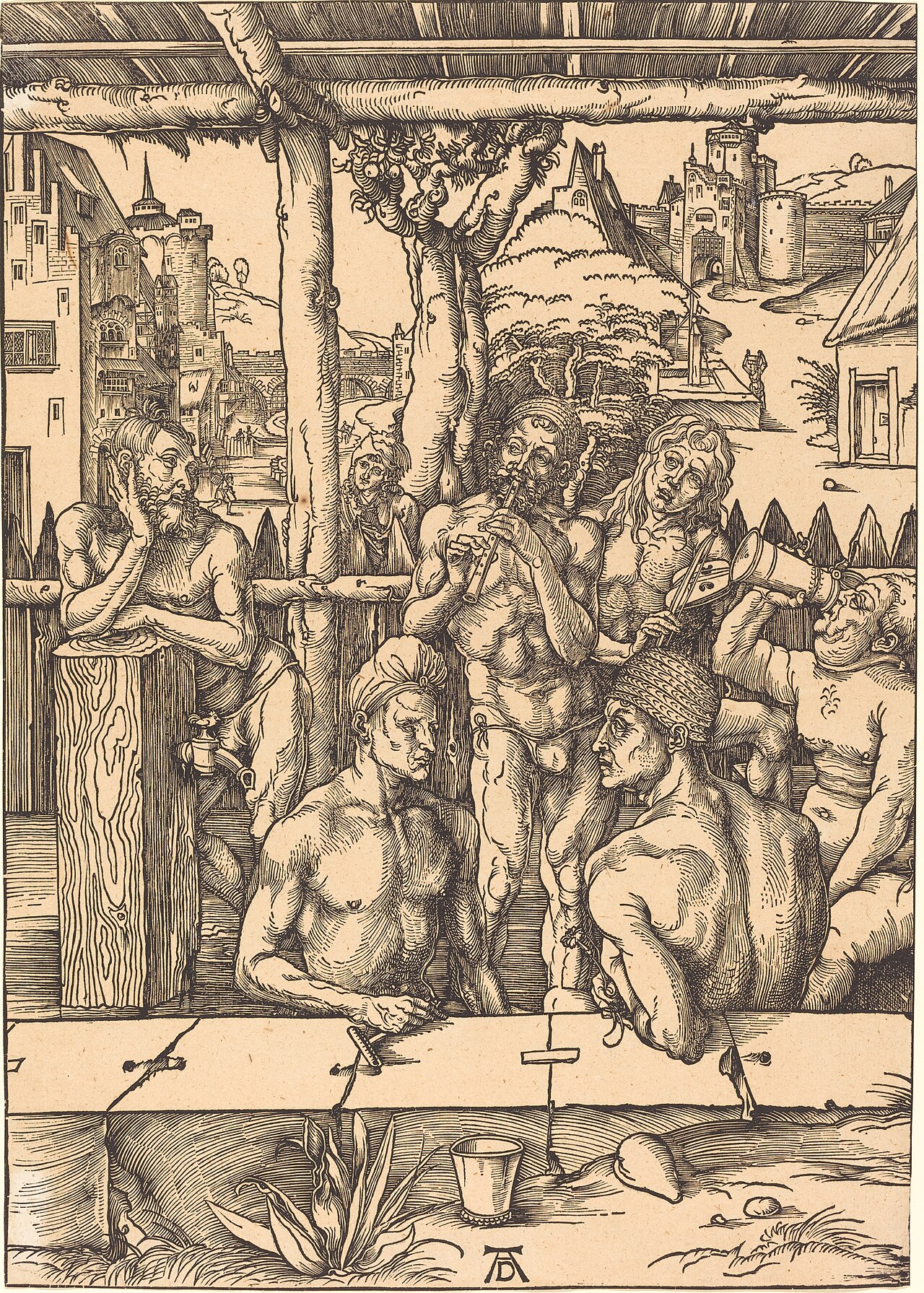
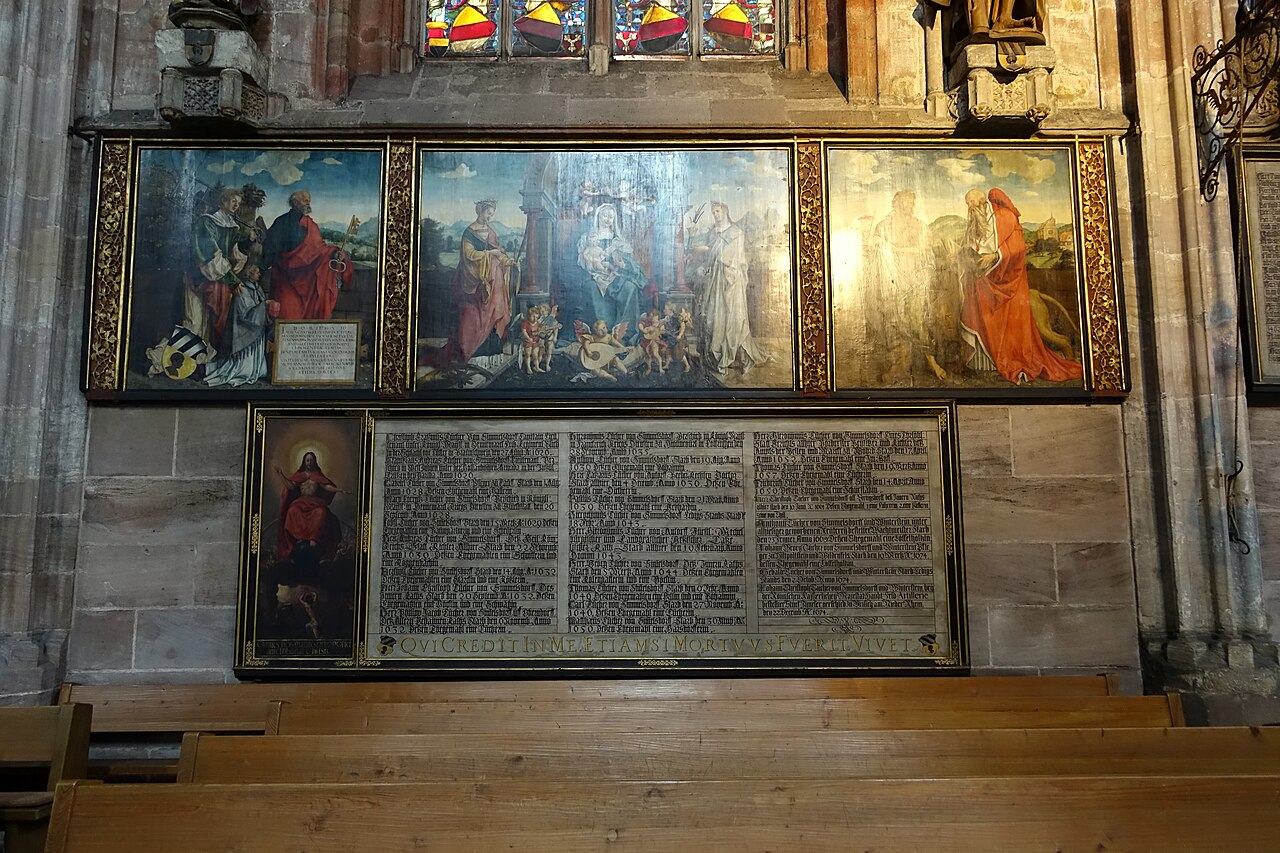
Major highlights include works by Albrecht Dürer, Veit Stoss and other Nuremberg masters; the Erdapfel globe made by Martin Behaim in 1492, which is the oldest surviving terrestrial globe and shows the world just before Columbus; and a significant collection of historic musical instruments. Medieval altarpieces and sculpture fill the vaulted halls, while the toy collection and dolls' houses charm younger visitors.
Parts of the building are under renovation from time to time, and some galleries rotate, so confirm which collections are on view before you set out. A good plan is to choose two or three themes, such as Dürer and the Nuremberg Renaissance, medieval sculpture, and the Behaim globe, and let the rest go.
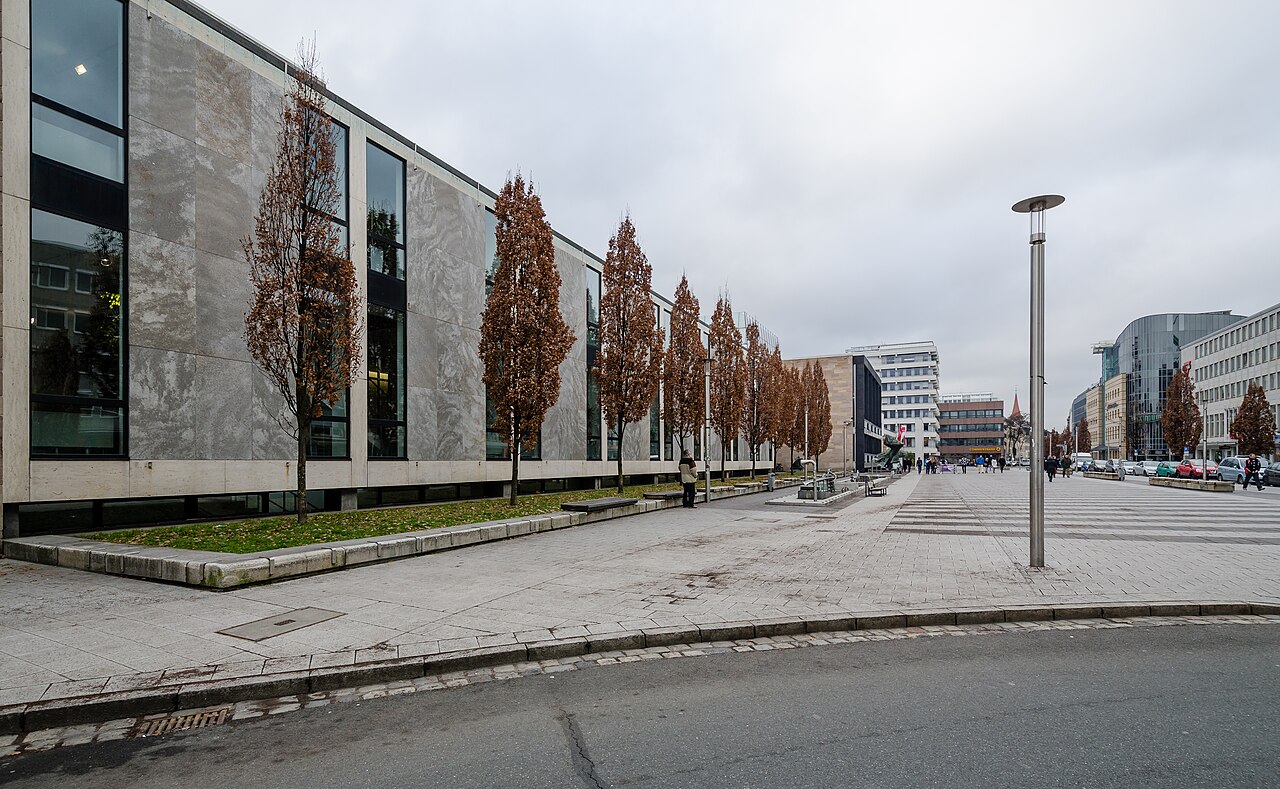
Outside the museum, the Way of Human Rights, a modern installation by the artist Dani Karavan, is a row of white columns carrying the articles of the Universal Declaration of Human Rights in many languages. It stands in the courtyard beside the museum entrance and is free to visit at any time. Together with the nearby Documentation Center and the Palace of Justice, it forms part of the city's long-running effort to connect its history with a human rights message.
Practical advice
The museum is closed on Mondays in most seasons, usually opens later in the morning, and has extended hours on one evening each week; check the schedule when you plan. Audio guides in English are available, and the cafe in the courtyard is a good place to rest.
Allow two to three hours for a focused visit, or a whole morning if you love museums. Because it is a short walk from the main station, it is a good rainy-day option and a useful anchor for a day that also includes the old-town churches and the Hauptmarkt.
For families, the museum's strongest offer is its collection of historic toys, dolls and dolls' houses, which are displayed with enough care to interest adults as well. For musicians, the instrument collection includes early keyboards and string instruments that show how sound was made before the modern orchestra. For history lovers, the armour and weapons halls, the guild objects and the daily life displays explain how people lived in the Holy Roman Empire.
The museum also hosts changing exhibitions and a lively programme of talks, so check what is on during your stay. If you plan to use a city pass, see whether the museum is included before buying individual tickets.
What to expect
The experience
A self-guided walk through a large monastery-based museum, with English audio guides, medieval art, musical instruments, toys and a famous globe.
Best time
Weekday mornings are quiet. Often closed on Mondays; one evening a week is typically open late.
How long
Two to three hours for a focused route; half a day if you dig deep.
Tips
Pick two or three themes before you go, check which galleries are open, and finish with the Way of Human Rights outside.
Quick picks
- Best for
- Culture seekers who want German art and history under one roof.
- Families
- The toy and doll collections work well for children, who may tire in the big halls.
- Couples
- A good rainy-day activity for couples who like galleries.
- Pair with
- The Dürer House, St. Lorenz church and the Toy Museum.
- Time needed
- Two to three hours.
Good questions
What are the must-see objects?+
Many visitors prioritise the Behaim Erdapfel globe, the works by Dürer and Veit Stoss, the musical instruments and the toy collection.
Is it open every day?+
It is typically closed on Mondays and has one longer evening a week. Check the schedule before visiting.
Is the museum suitable for children?+
Older children enjoy the toys, weapons and instruments. The scale and the amount of text can be tiring for younger ones.
Is there an English audio guide?+
Yes, English audio guides are available and give helpful context in a collection of this size.
What is the Way of Human Rights?+
It is an outdoor art installation of white columns carrying the articles of the Universal Declaration of Human Rights, set next to the museum entrance and free to visit.