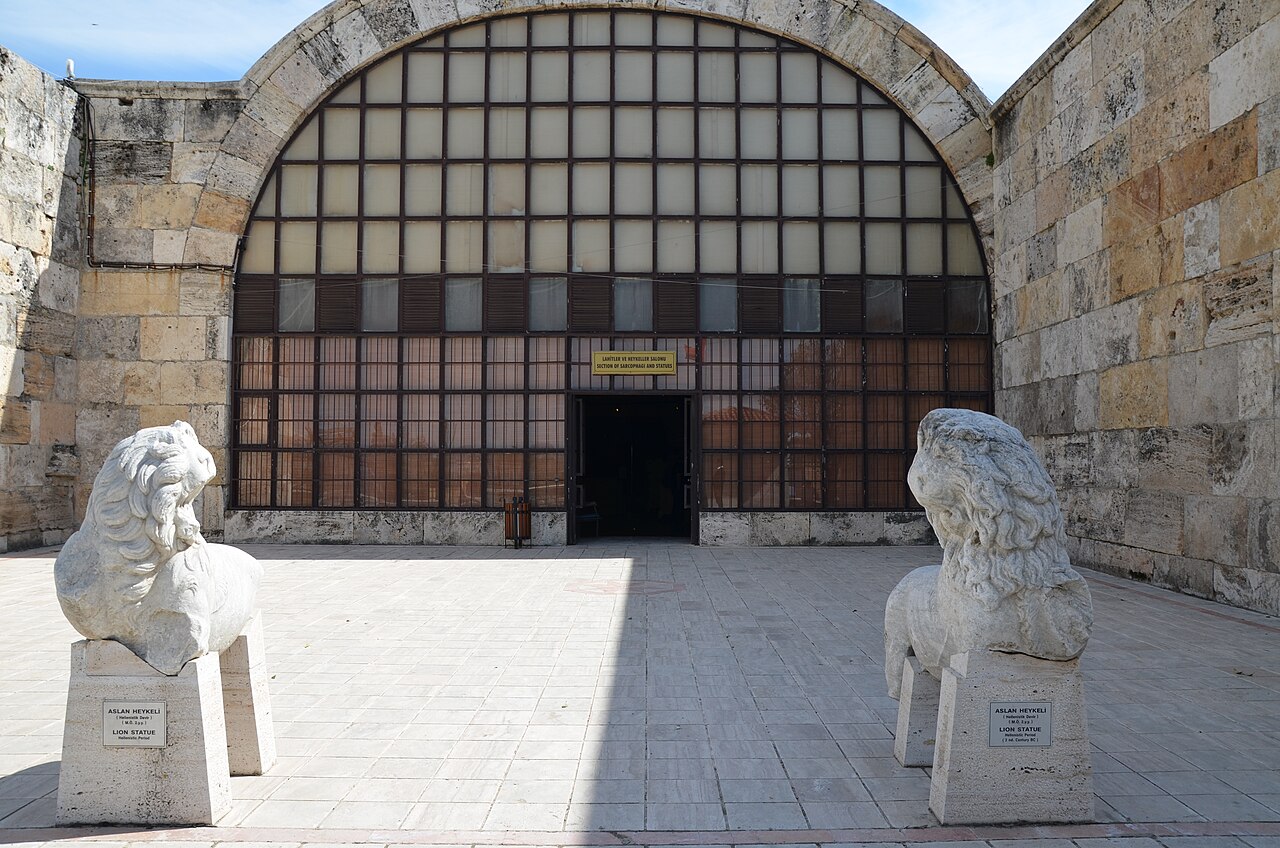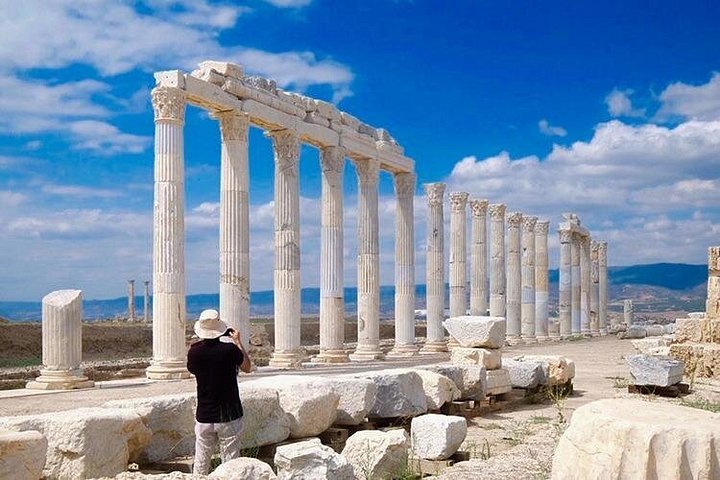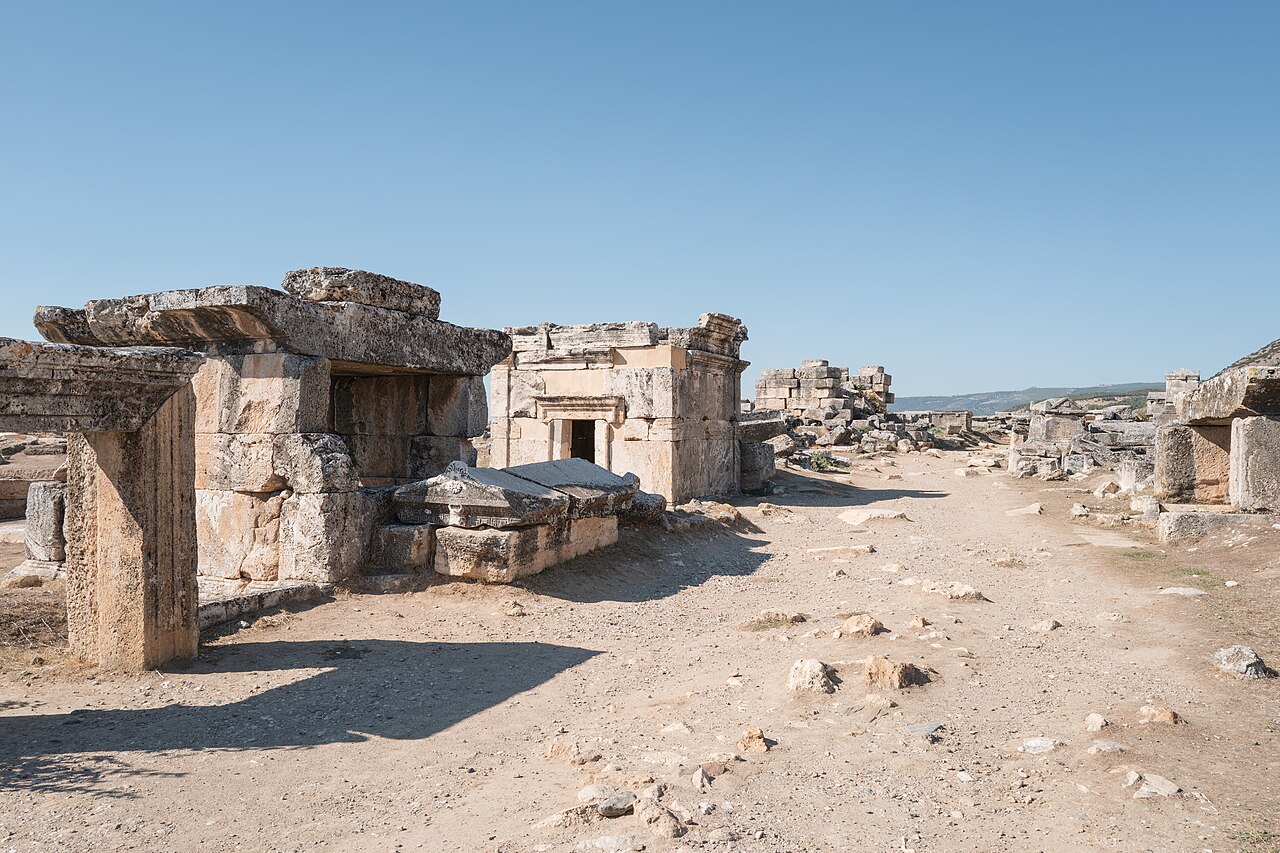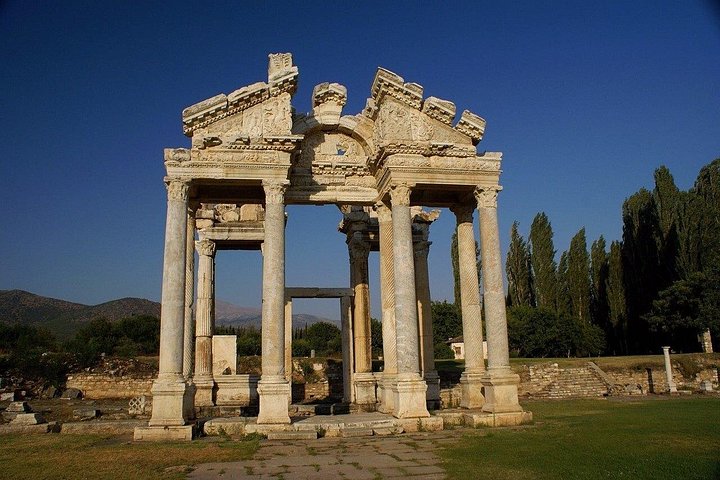
Aphrodisias was a city of the goddess Aphrodite and, for centuries, a centre of marble sculpture whose carvers worked for emperors. Its ruins lie in the hills of the Aydin province near the village of Geyre, and UNESCO inscribed the site and its marble quarries in 2017. The highlights include the Sebasteion, a long processional building decorated with carved relief panels of gods, emperors and myths, the huge stadium, one of the best preserved in the ancient world and long enough for a crowd of tens of thousands, the Tetrapylon gateway, the theatre, the Temple of Aphrodite that later became a church, and a museum of sculpture. The museum of sculpture is the heart of the visit, so check that it is open on your day. A day trip from Pamukkale or Karahayit hotels lets you see all this with a driver and guide, and the tour is a good choice if you do not have a car, since the site is far out of town.
Why make the trip
Aphrodisias is quieter and more intact than many better-known sites, and the sculpture is outstanding. The Sebasteion reliefs and the portraits in the museum show a skill that can rival anything in Rome, and the stadium and Tetrapylon give a sense of scale. Travellers who enjoy Greek and Roman art often rate it above Hierapolis, even though it gets far fewer visitors.
The practical side
The site's own page lists it as open every day from 08:30 to 19:00, with the ticket office closing at 18:30, though a shorter 17:30 time appears elsewhere on the page, so in November aim to arrive in the morning and leave plenty of margin. The site lists a ticket priced in euros for non-Turkish visitors, so check the tour page to see whether admission is included.
The drive from Pamukkale is long, roughly two hours each way, so most visitors choose a full-day tour with a guide, lunch and hotel pick-up. The tour here is arranged from Pamukkale and Karahayit hotels, and group size and what is included are shown on the booking page.
How to prepare
Wear comfortable shoes and a hat, bring water, and expect uneven paths among the stones. Allow around two hours on site, and more if you want the museum. Combine it with a quiet evening back in Pamukkale, or a soak in your hotel's thermal pool. If you are short on time, Aphrodisias is the stretch trip worth making, especially for travellers who have already seen Hierapolis and want something different.
What to expect
The experience
A full-day guided excursion by road to the marble city of Aphrodisias, arranged from Pamukkale and Karahayit hotels.
Best time
Go in a clear, mild spell and start early, especially in winter when days are short.
How long
A full day, with about two hours on site and a long drive each way.
Tips
Check whether admission is included, wear comfortable shoes and bring water and a hat.
Quick picks
- Best for
- Sculpture and history fans who have the time for a second major site.
- Families
- Older children enjoy the stadium; the drive is long, so bring snacks.
- Couples
- A private tour can make a relaxed, unhurried day.
- Pair with
- Laodicea or a thermal soak in the evening.
- Time needed
- A full day.
Good questions
How far is Aphrodisias from Pamukkale?+
It is roughly two hours each way by road, which is why most visitors take a full-day tour. Confirm timings on the booking page.
Is the museum open?+
The museum is part of the visit, but galleries can close for works, so check on the day. Opening times can change, so check on the day.
What are the opening hours?+
The site lists daily opening from 08:30 to 19:00 with the ticket office closing at 18:30, though a shorter closing time appears elsewhere on the page. In November, arrive in the morning.
Is admission included in the tour?+
That depends on the tour, so check the booking page. The site lists a ticket in euros for non-Turkish visitors.
Is Aphrodisias a UNESCO site?+
Yes, UNESCO inscribed Aphrodisias and its marble quarries in 2017.