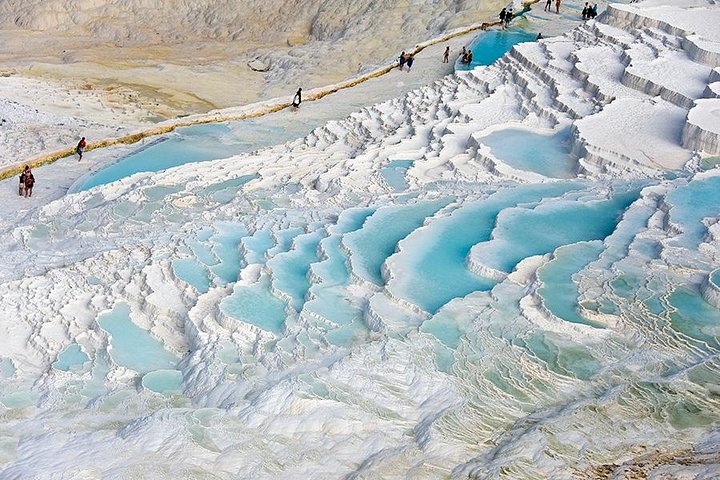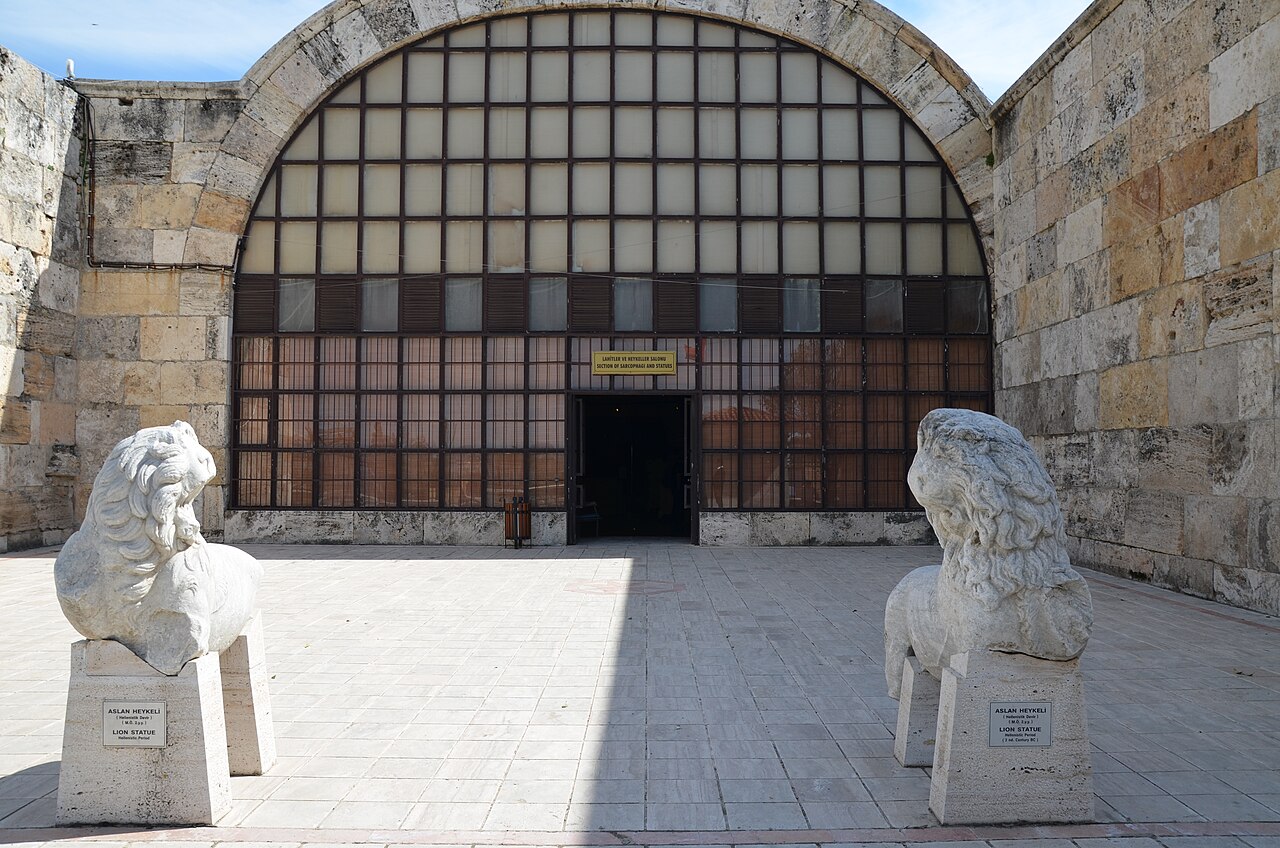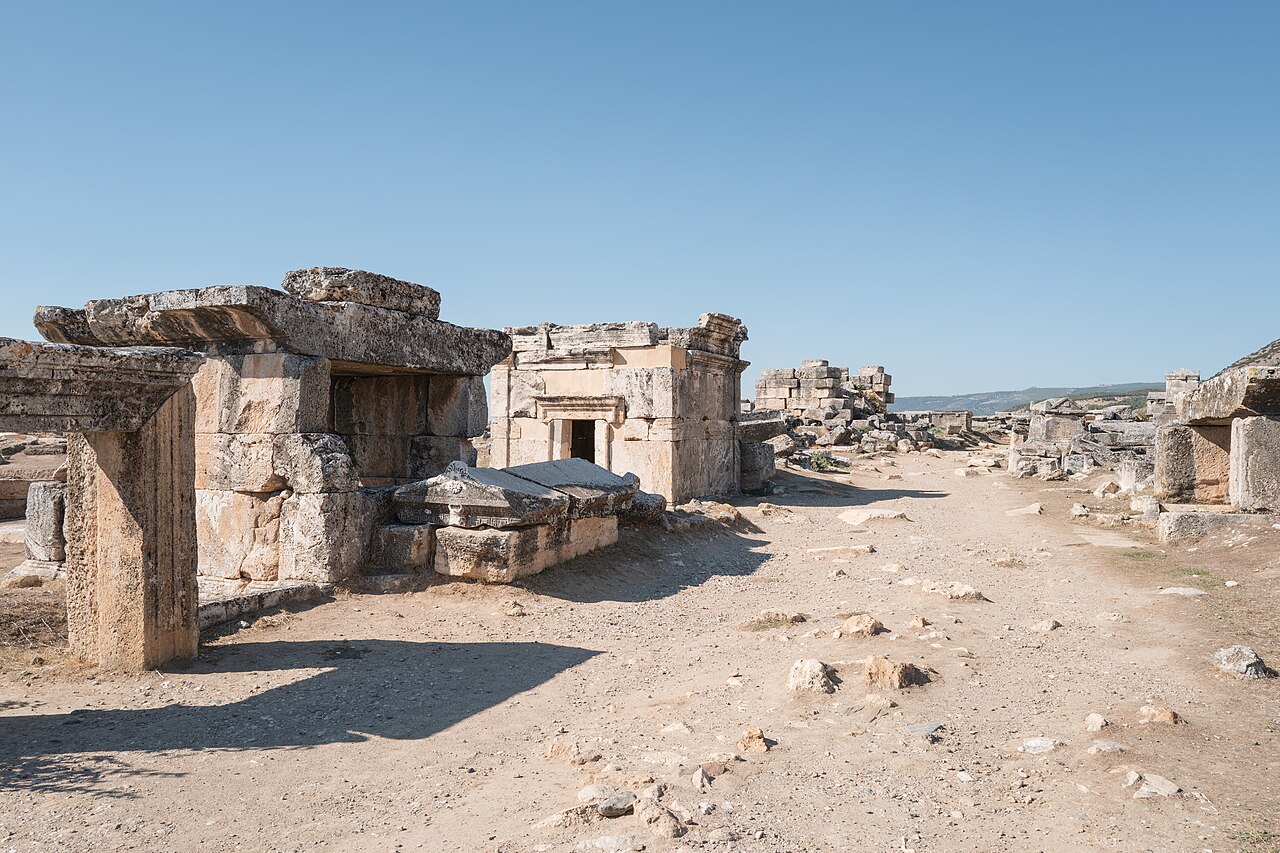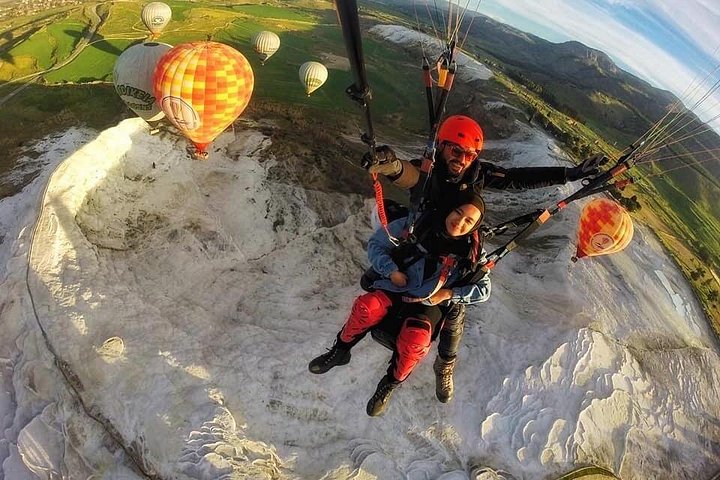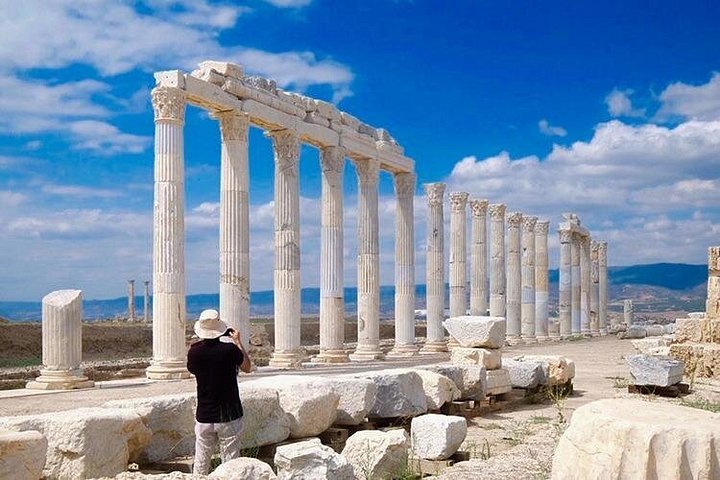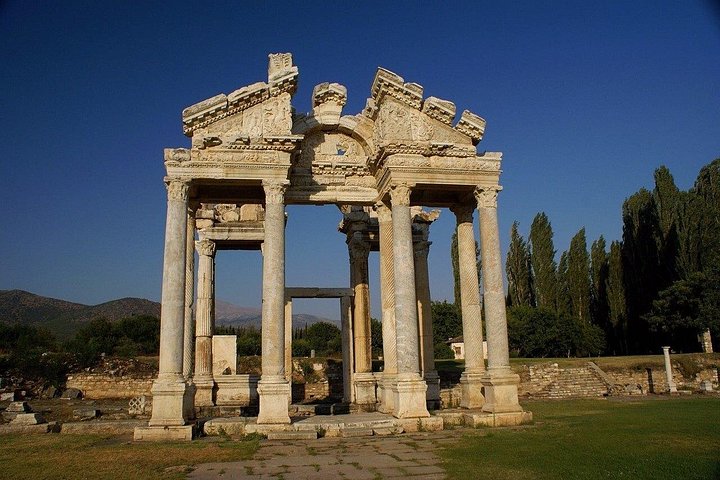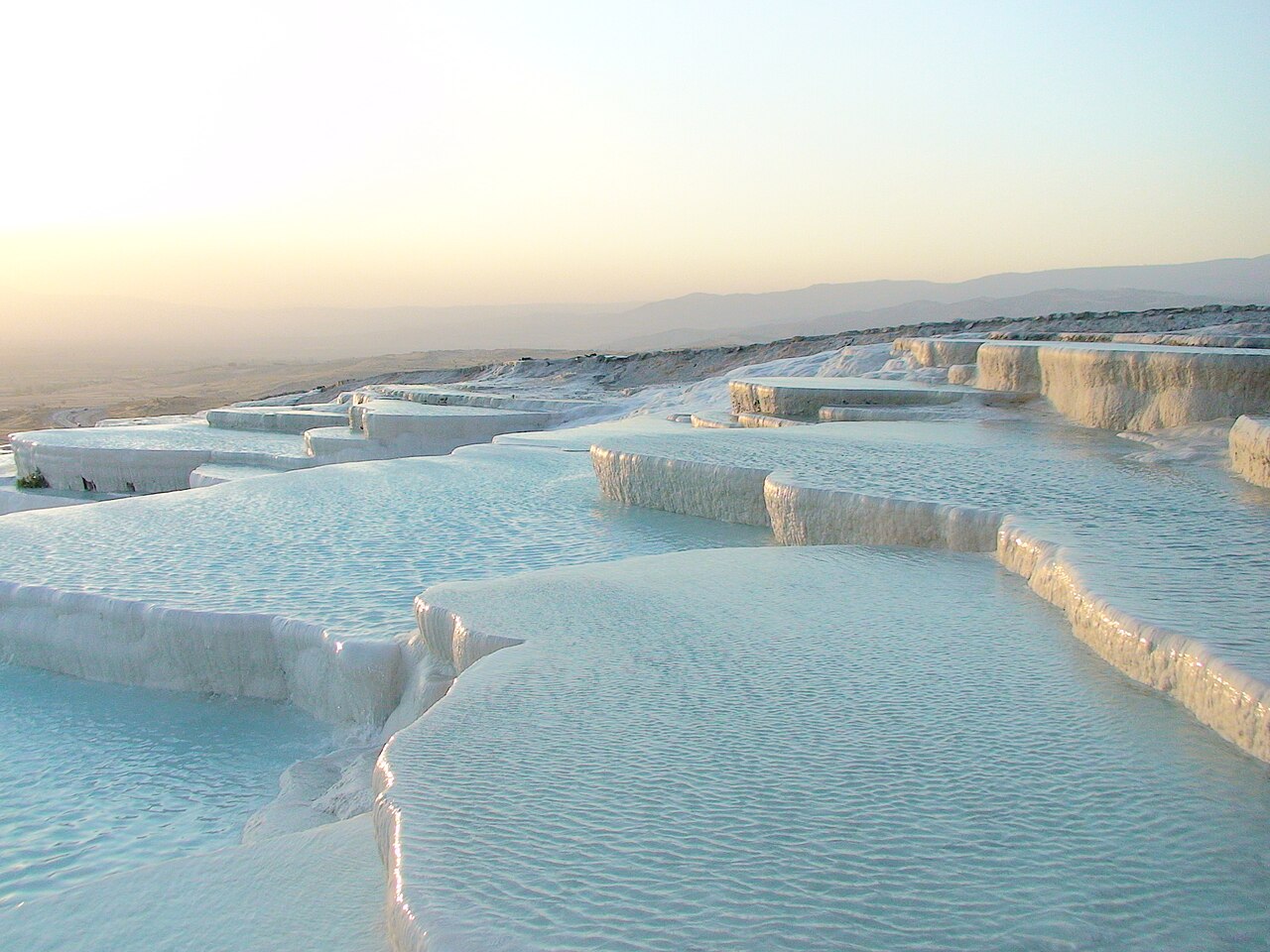
Pamukkale means cotton castle, and the name fits. Warm spring water rich in calcium carbonate runs down a steep slope above the Denizli plain and leaves behind white travertine terraces, pools and frozen-looking cascades that are visible from miles away. Above them lies Hierapolis, founded around 190 BC by the kings of Pergamon and later a busy Roman and Byzantine spa town, where people came to bathe in the same hot springs that built the terraces. UNESCO listed the two together as a single World Heritage Site in 1988. Today one ticket covers the terraces, the ancient city and the archaeology museum. You walk barefoot on the travertine, wade in shallow, milky pools, then climb through the ruins: the Roman theatre, the Temple of Apollo, the colonnaded main street, the great bath complex and a vast necropolis. The two halves of the site complement each other, with natural white terraces below and carefully excavated stone above, and the view back over the valley from the theatre is among the best in western Turkey.
How the site works
There are gates at both ends. The north gate sits beside the Byzantine Gate and suits visitors arriving by tour coach, because you walk gently downhill through the ruins and finish on the terraces. The south gate is nearer the village and the theatre and lets you start with the white slopes, though the climb back is steeper.
Shoes, including sandals and water shoes, must come off before you step onto the travertine, and swimming is not allowed in the white pools, where wading is knee deep at most. Take a small bag for your shoes, because the surface can be slippery where algae grows.
Planning a visit
The museums portal lists the site as open daily, with winter hours from 1 October to 30 April of 08:00 to 18:00 and longer summer days. Foreign adults pay a ticket priced in euros, children under eight enter free, and Turkey's museum passes are worth checking, though the Cleopatra Antique Pool is a separate purchase that the passes do not cover.
In November the crowds are thin, mornings are cool and the terraces can be shaded or damp, so wear a layer and give yourself at least half a day. Late afternoon light is lovely on the white slopes, and sunrise is the quietest time of all if your hotel is close.
Make the most of it
Walk the terraces first while your feet are fresh, then take the road up through the ruins and finish at the theatre or the Frontinus Street gate. A guided tour adds a lot at Hierapolis, where most of the stones are unlabelled, and guided day tours bundle the entrance and hotel transfers if you do not want to organise it yourself. Carry water, because there is little shade among the ruins, and keep a hat handy even in winter when the sun is out.
What to expect
The experience
A self-guided walk across the white travertine terraces and through the ruins of Hierapolis, with a barefoot stretch on the terraces.
Best time
Arrive at opening, or go in late afternoon for softer light and fewer tour groups.
How long
Three to five hours covers the terraces, the theatre and the main ruins comfortably.
Tips
Carry your shoes in a bag, bring water and a hat, and start at the gate that suits your legs: north for a downhill walk, south for a short climb to the terraces.
Quick picks
- Best for
- First-timers who want the valley's headline sight in a single visit.
- Families
- Children enjoy wading in the shallow pools, but watch the slippery surface and the steep edges.
- Couples
- Late afternoon on the terraces, then the view from the theatre as the light turns gold.
- Pair with
- Cleopatra's Antique Pool, the archaeology museum and a sunset drink in Pamukkale village.
- Time needed
- Half a day, or a full day if you add the pool and the museum.
Good questions
Is Pamukkale open in November?+
Yes, the site is open daily all year, with winter hours from 1 October to 30 April. The museums portal lists 08:00 to 18:00 for those months, so confirm the day's hours before you go.
Do I need to take my shoes off?+
Yes, shoes of any kind must come off on the travertines, and you carry them. Walk slowly because the surface can be slippery in places.
Can I swim in the white pools?+
No, swimming is not allowed in the terrace pools, where wading is only knee deep. Full swimming is possible in Cleopatra's Antique Pool, which has its own fee.
Does the ticket include the museum and the ruins?+
Yes, the main ticket covers the travertine terraces, the ancient city of Hierapolis and the archaeology museum. Cleopatra's Antique Pool is bought separately on site.
How long should I allow?+
Plan three to five hours for the terraces and ruins. Add time if you want to swim in the antique pool or study the museum.