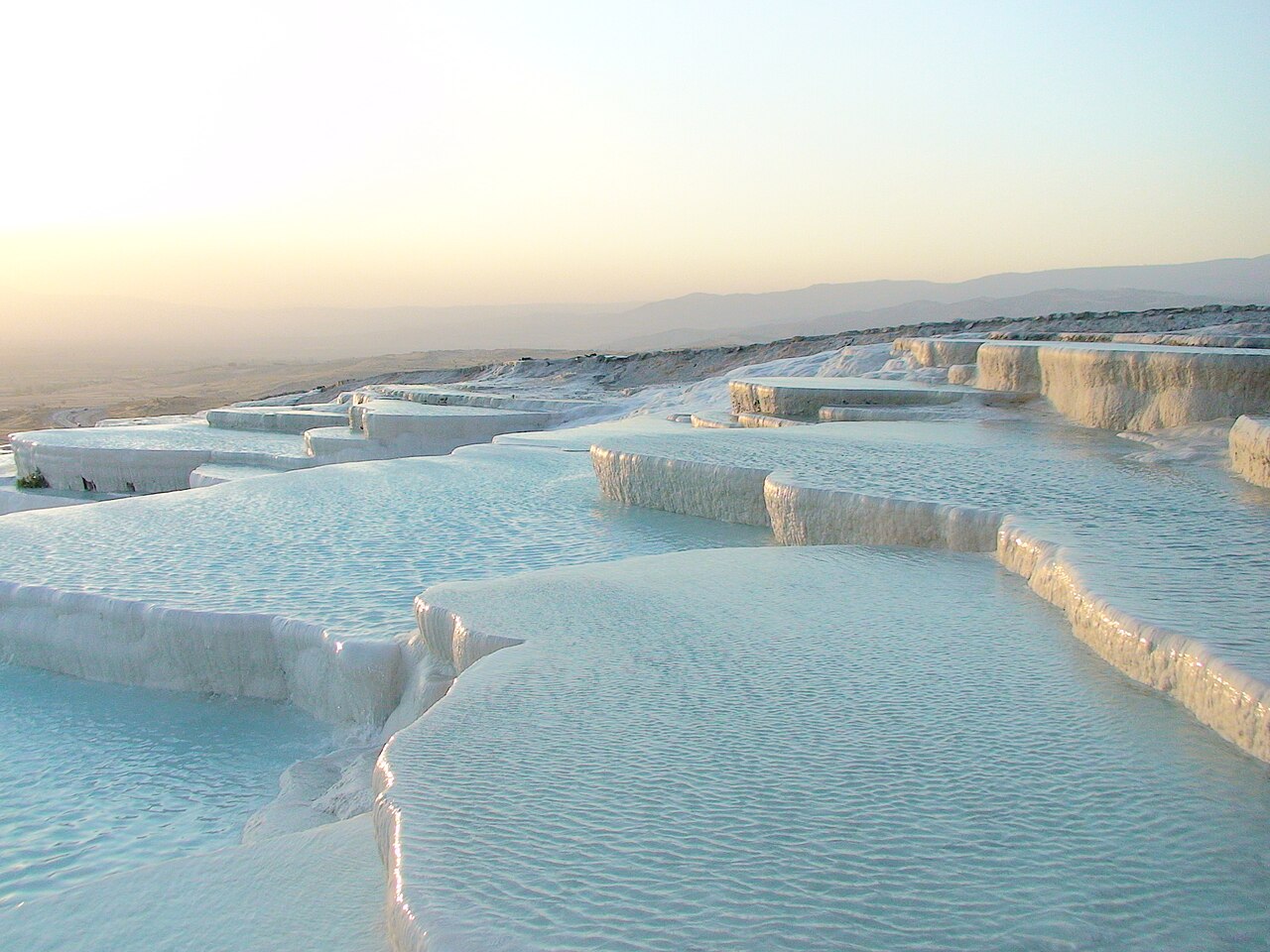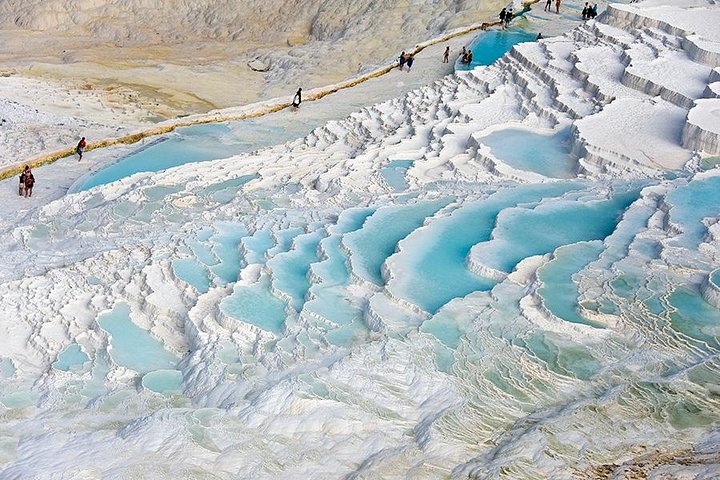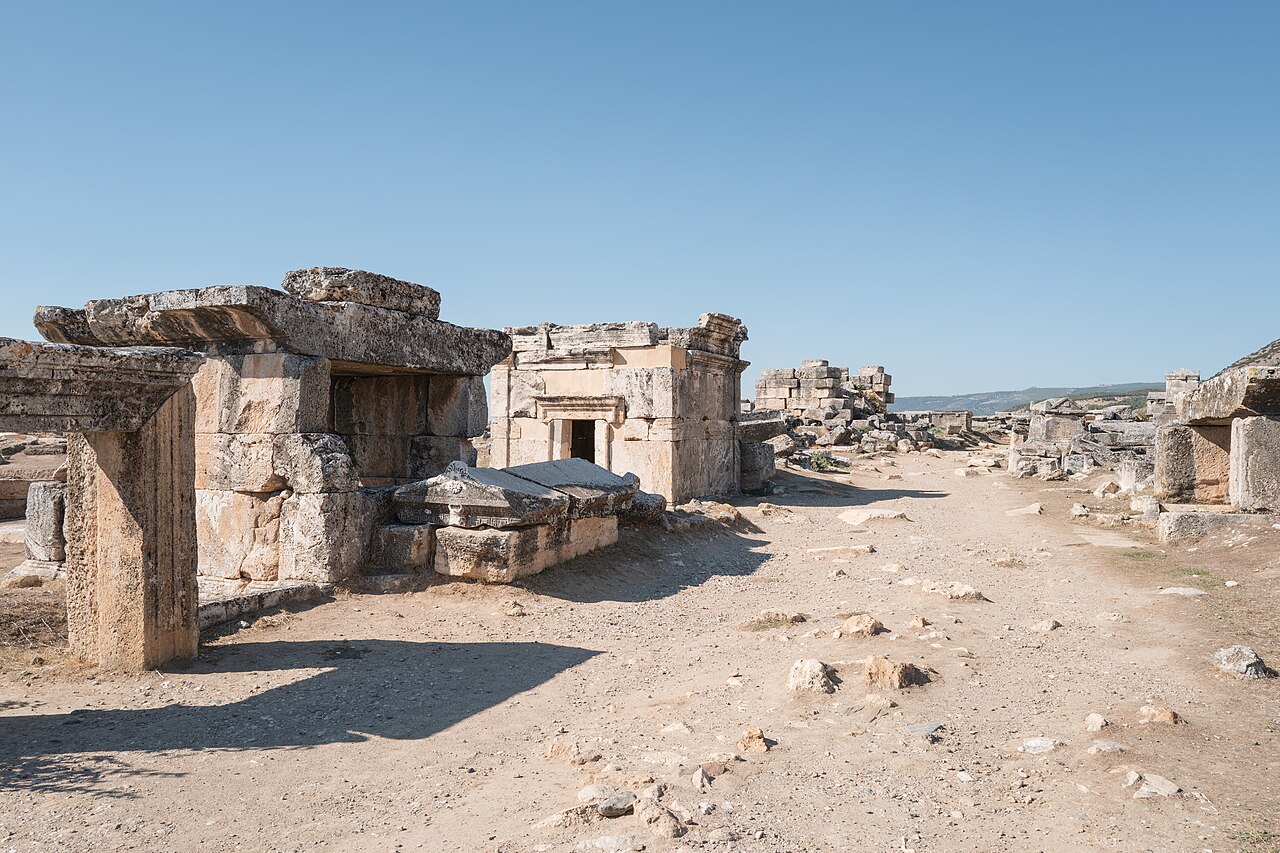
The necropolis of Hierapolis stretches along the ancient road north of the city and is often described as one of the biggest and best-preserved burial grounds in Anatolia. Its tombs come in several forms: great stone sarcophagi on pedestals, house-shaped tombs with carved roofs, and rounded tumulus graves that look like small hills. Many carry inscriptions in Greek, naming the families who lay there and sometimes the fines to be paid by anyone who reused the grave. The people of Hierapolis were buried here for centuries, from the Hellenistic period through the Roman and Byzantine eras, and the cemetery grew to enormous size. Walking through it feels very different from the busy terraces: it is quiet, scattered with wildflowers in spring, and filled with leaning, half-buried stone coffins in a landscape that stretches to the horizon. Many visitors say it is the most evocative part of Hierapolis, and it makes a good counterpoint to the white terraces.
Why it matters
The number and variety of tombs show how important Hierapolis was as a spa town. Invalids came to the springs and many never went home, which is one reason the cemetery is so large. The tombs also show a mix of local and Roman customs, and the inscriptions give clues about trades, family names and civic life. Look for the sarcophagi on raised platforms and for the house-type tombs, whose carved stone roofs imitate buildings.
Visiting well
The necropolis is part of the Hierapolis site and is covered by the main site ticket, so no extra payment is needed. It lies along the road north of the city, beyond the northern gate area, and visitors often walk a stretch of it when they arrive from the north entrance or when they head out toward the martyrium of St Philip. Wear sturdy shoes, because paths are uneven and rocky, and bring water, since shade is limited. Tombs are fragile, so look but do not climb.
Timing
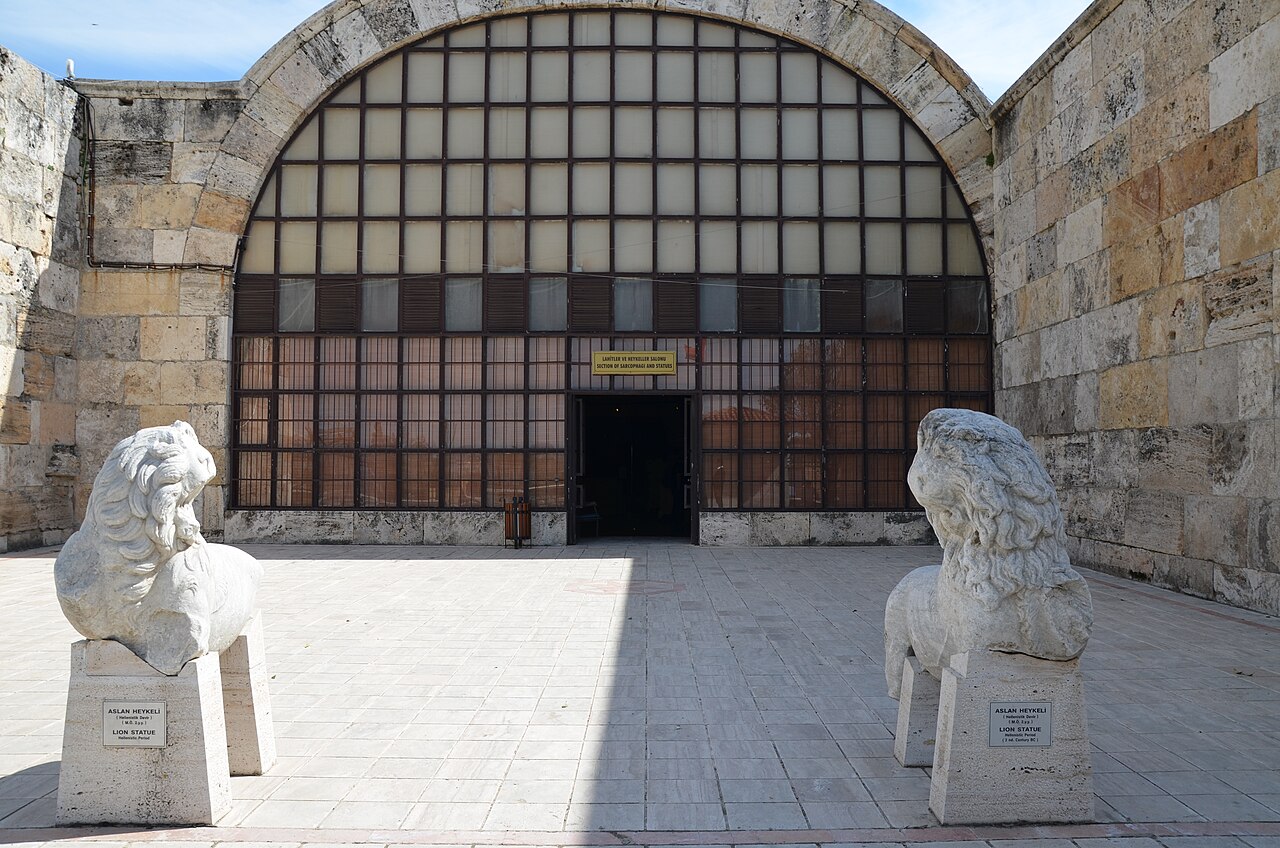
In winter the site's opening hours are shorter, with the ticket office closing at 18:00, so allow the necropolis a quiet hour before dusk if you have energy left. The low afternoon sun gives long shadows among the sarcophagi and makes for good photographs. Combine it with the archaeology museum, where related sarcophagi are displayed indoors, and then finish at the theatre. Expect few crowds compared with the terraces, even in high season.
What to expect
The experience
A self-guided walk among sarcophagi, house tombs and burial mounds along the ancient road.
Best time
Late afternoon, when the light is low and the paths are quiet.
How long
About an hour, longer if you wander the far edge.
Tips
Wear sturdy shoes for rocky paths, carry water and do not climb on the tombs.
Quick picks
- Best for
- Travellers who like quiet, atmospheric history away from the crowds.
- Families
- Older children may find it intriguing; keep them off the tombs and on the paths.
- Couples
- A peaceful stroll in the low afternoon light.
- Pair with
- The archaeology museum, the theatre and the martyrium of St Philip.
- Time needed
- One hour, plus walking time.
Good questions
Is the necropolis included in the Pamukkale ticket?+
Yes, it is part of the Hierapolis site and covered by the main ticket. You do not pay separately.
How big is it?+
It is one of the largest ancient cemeteries in Anatolia, with more than a thousand tombs spread along the old road. You will not see it all in one visit.
What kinds of tombs are there?+
Sarcophagi on pedestals, house-shaped tombs with carved roofs and rounded tumulus graves. Many have Greek inscriptions.
Is it suitable for children?+
Yes for older children who like exploring, but paths are uneven. Keep everyone off the monuments.
When is the best time to go?+
Late afternoon for soft light and quiet paths. In winter, check closing times because the ticket office shuts at 18:00.