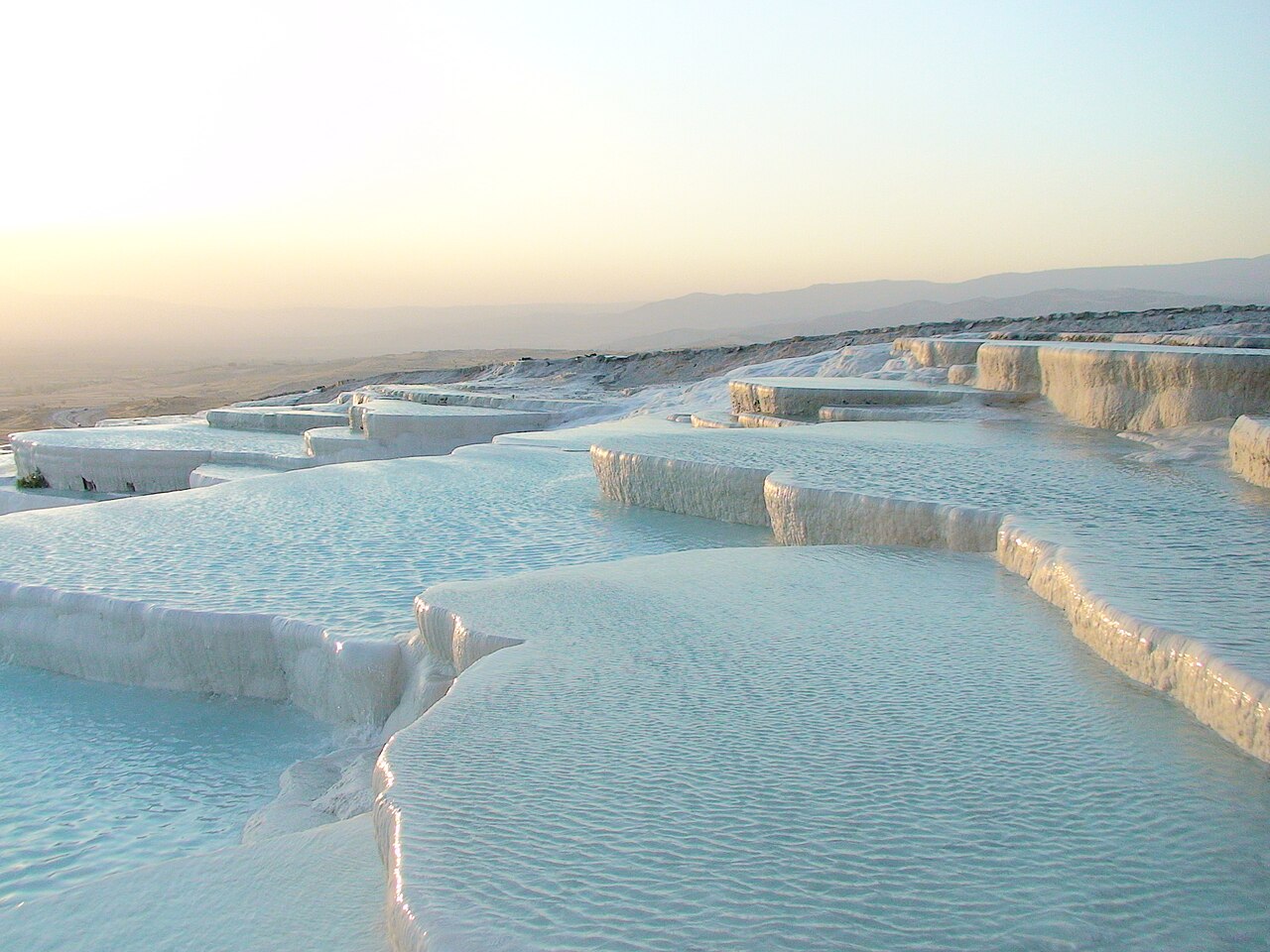
Pamukkale is the white hillside of calcium terraces that Turkish speakers call the Cotton Castle, and above it sit the ruins of Hierapolis, a Greek and Roman spa city. One combined ticket covers both, and together they are the reason most people come to this valley.
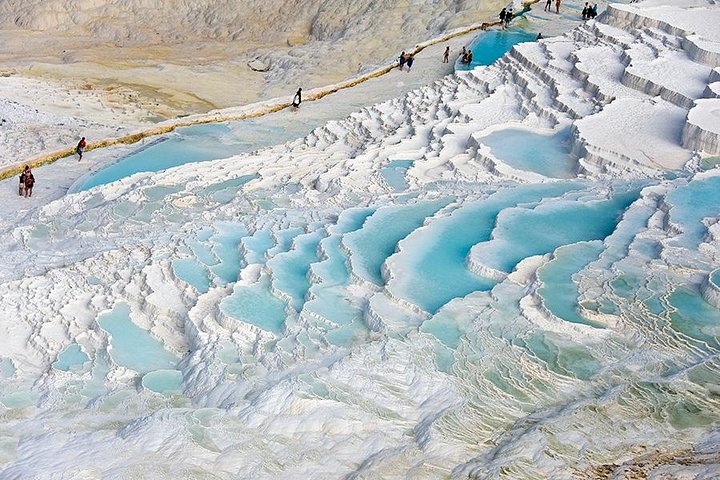
A warm spring pool filled with fallen Roman columns, set inside Hierapolis, where you can actually swim. It is the one place on the Pamukkale slopes where full swimming is allowed, and it costs a separate fee on top of the site ticket.
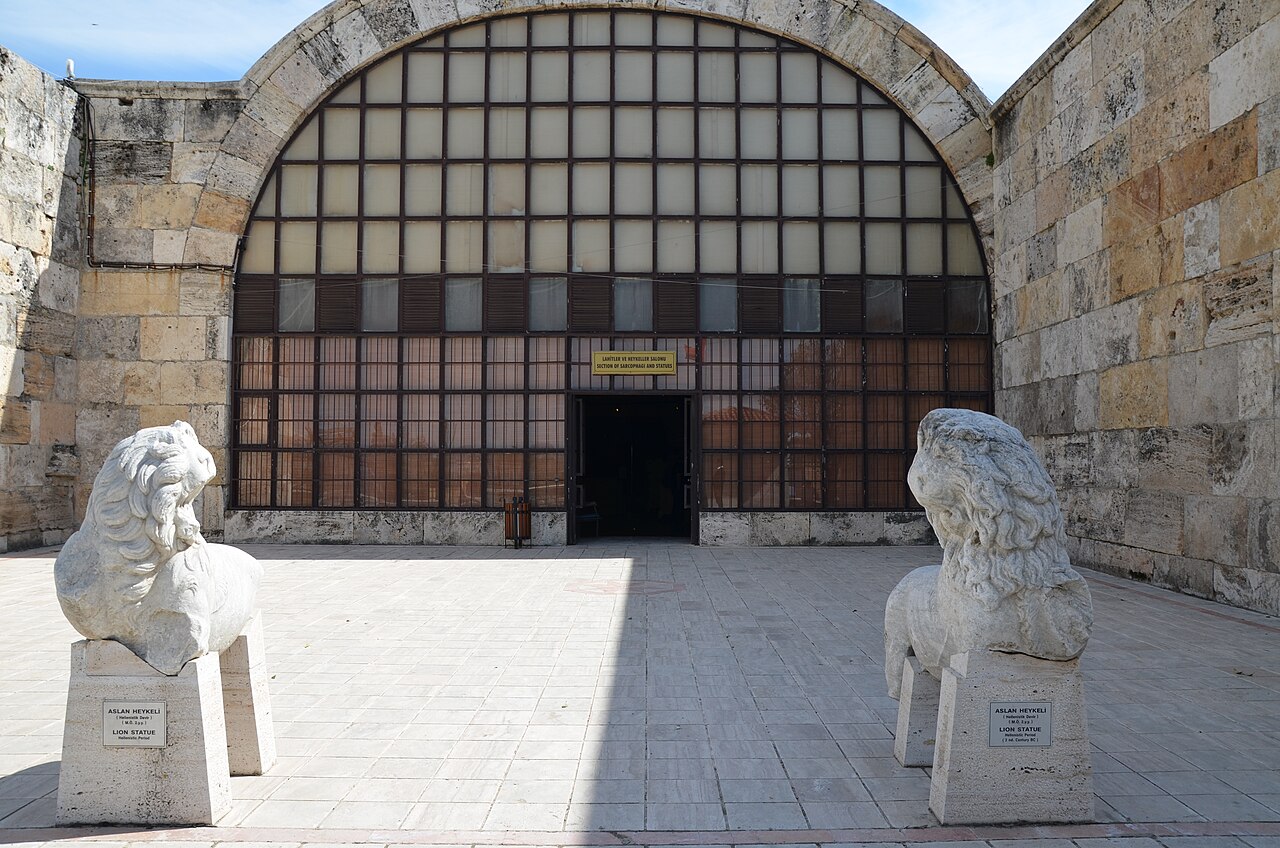
A compact museum of sarcophagi, statues and small finds from Hierapolis and nearby Laodicea, set inside the ancient city. It is easy to add to a Hierapolis walk and makes the unlabelled ruins easier to read.
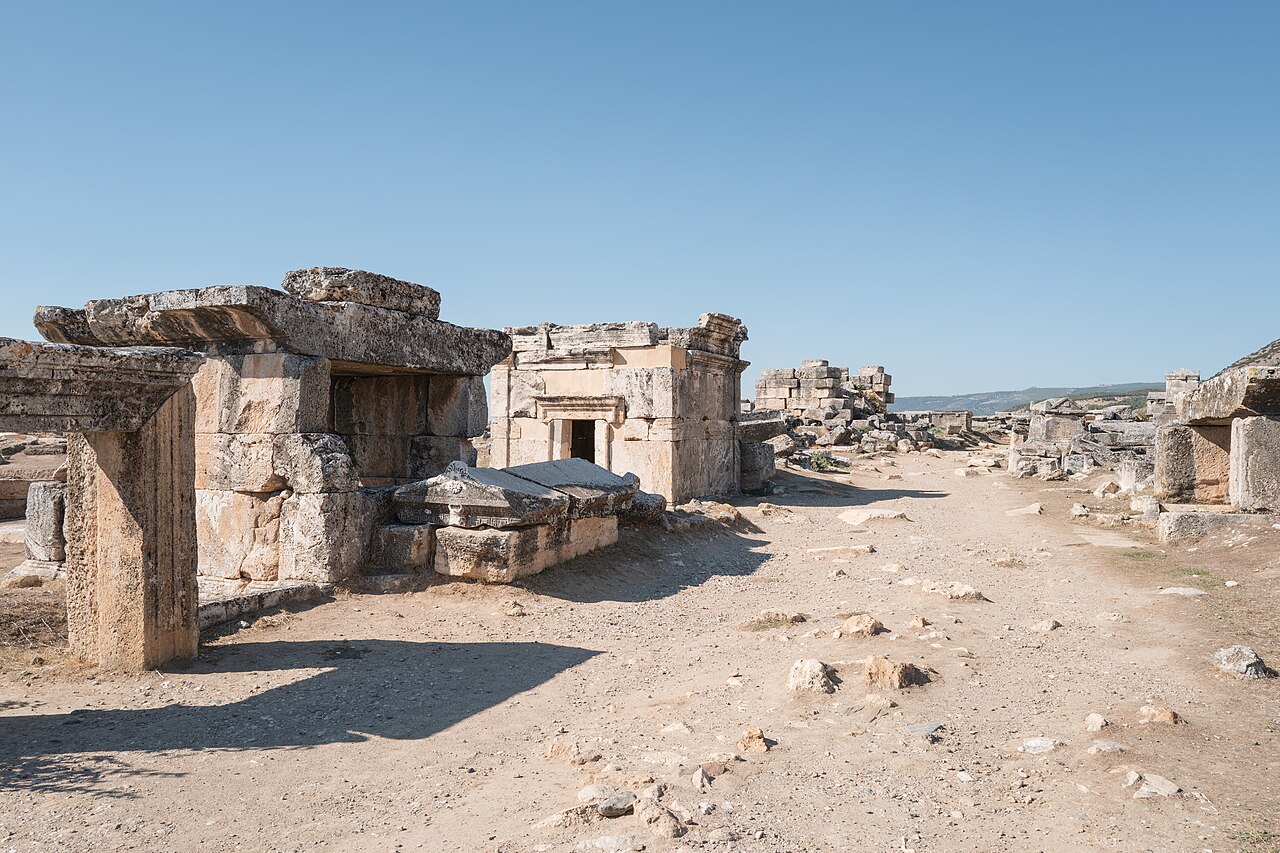
One of the largest and best-preserved ancient cemeteries in Anatolia, with more than a thousand tombs strewn along the road beyond the northern gate. Quiet, atmospheric and included in the Hierapolis ticket.
A sunrise balloon flight drifts above the white terraces and the ruins of Hierapolis with the Denizli plain spread out beneath you. It is quieter and smaller in scale than the better-known balloon valleys, and the setting is unlike any other.
3-4 hours with transfers$$$Get tickets → 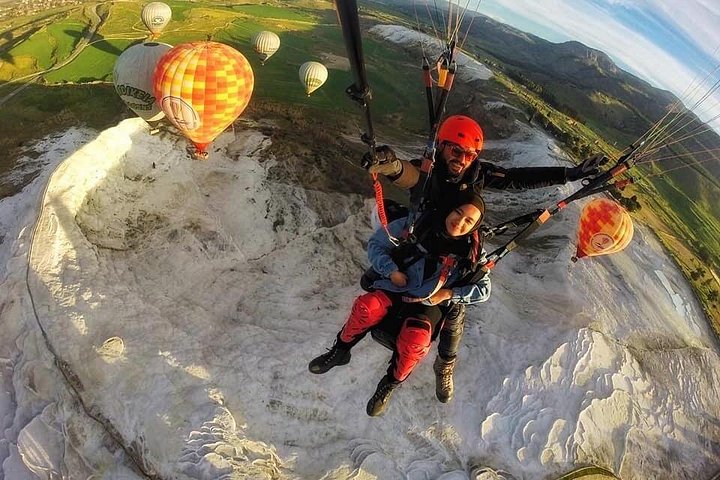
A tandem flight with a local pilot lifts you off a hillside above Pamukkale and floats you over the white terraces and the valley. No experience is needed, and it is one of the cheaper ways to see the Cotton Castle from the air.
45 minutes plus transfers$$Get tickets → 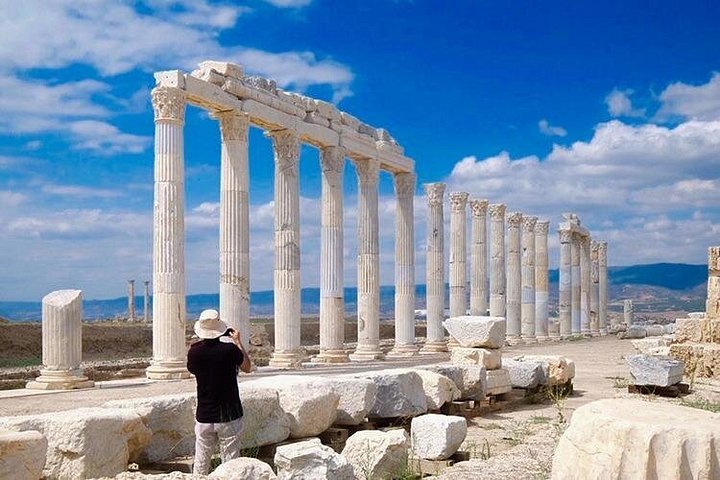
A large, wonderfully uncrowded Roman city near Denizli with a colonnaded street, two theatres, a stadium and a nymphaeum. One of the Seven Churches of Revelation, it is the best add-on to Hierapolis for ruins lovers.
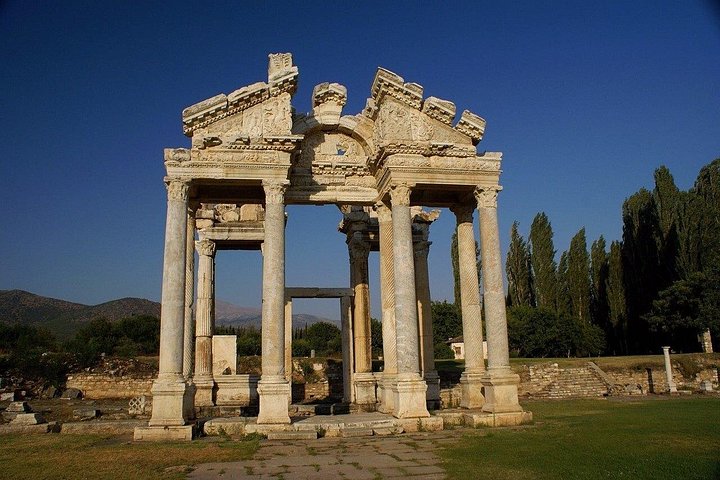
Aphrodisias is a UNESCO-listed marble city of the goddess of love, with a stadium, a carved Sebasteion and a museum of sculpture. A day trip from Pamukkale takes you to one of the finest Roman sculpture sites in Turkey.
Karahayit, known locally as Kirmizi Su or Red Water, is a village of iron-rich thermal springs a few minutes from Pamukkale. Rusty red travertine, hot mineral baths and thermal hotels make it the natural place to soak after a day among the ruins.
Antalya and the coastal resorts sit a long drive from Pamukkale, but a full-day guided trip makes it possible without a car. It is a long day, and it works best if you cannot stay overnight in the valley.
Full day, 10-12 hours$$Get tickets → A steep, grand Roman theatre on the hillside of Hierapolis, with a richly carved stage building and wide views over the Lycus valley. It is one of the best-preserved ancient theatres in this part of Turkey and a highlight of any walk through the ruins.
The ruined Temple of Apollo and the fenced cave mouth of the Plutonium, the ancient Gate of Hell, stand together at the heart of Hierapolis. It is the most atmospheric corner of the ruins, where mythology, volcanic gas and Roman religion meet.
30-60 minutes$$Get tickets →