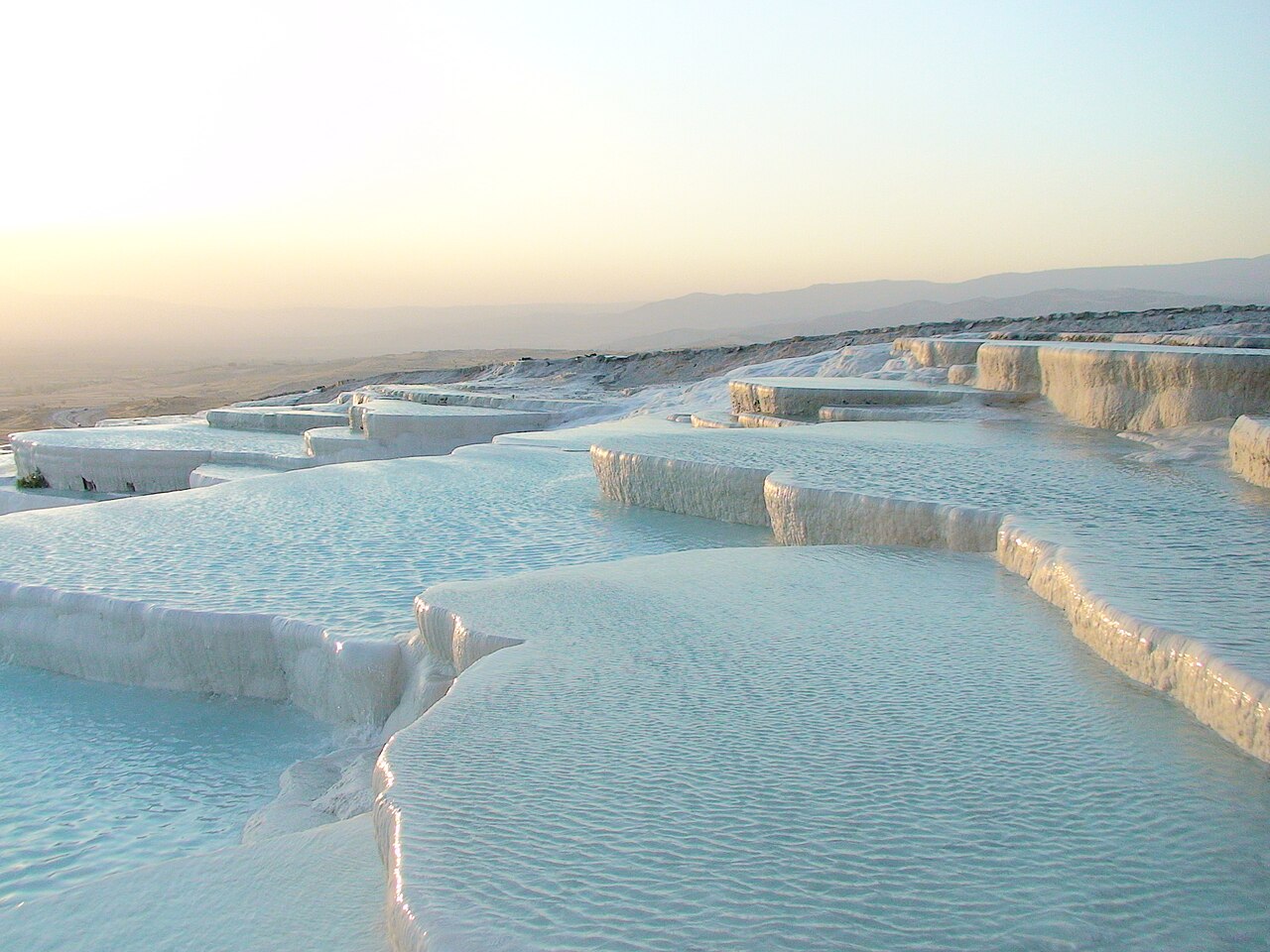
Kaklik Cave, in the hills near Honaz, a short drive from Pamukkale, is often described as the underground cousin of the white terraces. Instead of a sunlit slope, this is a cave formed in the same limestone landscape, where mineral-rich water has built travertine formations, shallow pools and curtains of stone in a cool, humid chamber. A collapsed section of the ceiling lets daylight fall into the cave, and when the sun hits the right angle the effect is memorable, with beams of light on the pale rock and the water below. The cave is much smaller and less visited than the main Pamukkale site, and it appeals to visitors who enjoy geology, photography or simply a change of pace. A staircase and walkways take you down into the chamber and along a route through the formations, and you can see how the water has shaped the rock over a very long time. It is also a nice reminder of the geological forces that make this valley so unusual: the same deep faults and mineral springs that feed Pamukkale and Karahayit shaped the caves, the terraces and the thermal pools.
Getting there
The cave lies in the countryside near Honaz, roughly half an hour from Pamukkale by road, so it fits easily into a half-day or as one stop on a longer tour. Tours that combine Laodicea, Kaklik Cave and Salda Lake are common, and local drivers can also arrange a short visit on their own. A small entrance fee is typically charged on site, and facilities are basic, so treat it as a short, simple stop rather than a full attraction with services.
What to expect
You walk down steps into a cool chamber where the air is damp and the stone can be slippery. Lighting and walkways make the route straightforward, but the surfaces are wet and uneven in places, so wear shoes with real grip and take your time. The formations are pale and sculpted, with small pools and terraces, and the shaft of daylight through the opening is the highlight. Photographers will want a steady hand, because the light levels change quickly and flash can flatten the scene.
Making the most of it
Allow about forty-five minutes to an hour for the cave itself, and more if you are driving. The cave stays cool all year, which is a relief in summer and means a light layer is useful in cooler months. It is a good rain-day option, because most of it is sheltered, and it suits families with children who like a little adventure.
Avoid it if you find damp, low spaces uncomfortable, and check access on the day, since conditions and opening arrangements can change. Combine it with Laodicea in the morning and, if the day is long enough, with Salda Lake.
Context and extras
The cave is a reminder that the geology of the valley extends well beyond the famous slope. Visitors with a particular interest can look at how drips and flows have built formations over long periods, and children often enjoy the sense of discovery. The walkways are modest and the facilities are simple, so treat the visit as a short adventure. If you plan to visit on a day tour, ask the guide how much time will be allowed, because stops can be brief, and take your photographs early before the group arrives.
What to expect
The experience
A short self-guided walk down steps into a travertine cave, usually as one stop on a day tour or a short drive from Pamukkale.
Best time
Any time of year, but a sunny day makes the daylight shaft more striking.
How long
About forty-five minutes to an hour at the cave.
Tips
Wear shoes with grip, because the steps and floor are wet, and bring a light layer.
Quick picks
- Best for
- Geology fans and anyone who wants a cool, quiet stop away from the ruins.
- Families
- Older children enjoy the staircase and the underground setting, but the surfaces are slippery.
- Couples
- A short, atmospheric stop on the way to Laodicea or Salda Lake.
- Pair with
- Laodicea and Salda Lake on the same day trip.
- Time needed
- Allow about an hour.
Good questions
What is Kaklik Cave?+
It is a cave near Honaz with travertine formations and pools, often called the underground Pamukkale.
How far is it from Pamukkale?+
Roughly half an hour by road, depending on traffic and where you start.
Is there an entrance fee?+
A small fee is typically charged on site, but amounts can change, so carry some cash.
Is the cave slippery?+
Yes, the steps and floor are damp, so wear shoes with good grip and move carefully.
Can I combine it with other sights?+
Yes, it is commonly visited with Laodicea and Salda Lake on a full-day tour.