The Panama Canal is the reason many people come to Panama City, and it is easy to see why. A fifty-mile waterway that cuts across the narrowest part of the Americas, it saves ships a voyage of thousands of miles around the southern tip of the continent. Yet standing at the edge of a lock chamber, watching a vessel the size of an office block rise on water that flows by gravity alone, is more powerful than any statistic. This guide explains how the canal works, the story behind it and the best ways to experience it, depending on how much time you have.
How it works
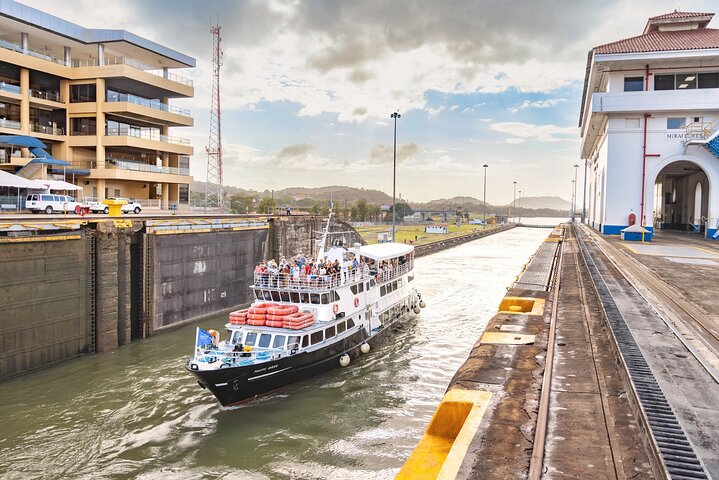
The canal does not cut through at sea level. Instead, ships climb. On the Pacific side they enter a series of lock chambers that lift them about twenty-six metres to Gatun Lake, a vast artificial lake formed by damming the Chagres River. They cross the lake, pass through the narrow Culebra Cut, and are then lowered by another set of locks on the Atlantic side. Each chamber is filled and emptied by gravity, with water flowing from the lake through huge culverts, so there are no pumps. The gates are massive steel doors that swing shut behind the ship, and small locomotives called mules guide ships through the older chambers. A full transit takes roughly eight to ten hours.
A short history
The French began digging in the 1880s under the builder of the Suez Canal but were defeated by landslides, financial collapse and above all by disease, as yellow fever and malaria killed thousands of workers. The United States took over in 1904, first tackling the mosquitoes through sanitation, then pushing through the excavation and the locks. The canal opened in 1914 and was run by the United States for decades before its handover to Panama at the end of 1999. A major expansion added a third set of larger locks, which opened in 2016 and allow much bigger ships to pass. Behind these achievements stand tens of thousands of workers from the Caribbean and elsewhere, whose story is part of the country's identity.
The easiest introduction: Miraflores Locks
About twenty minutes from the city centre, the Miraflores visitor center has viewing terraces, a film and exhibits that explain the system, and it is the place where most people first see a ship pass through. Time your visit for the morning or late afternoon, when traffic is often busiest, and check the transit schedule if you can. This is a half-day outing at most and suits every age and fitness level.
The Atlantic side: Agua Clara and Fort San Lorenzo
The newer locks on the Caribbean side give a view of the expanded canal and its large chambers, which operate with water-saving basins. Many day trips combine them with Fort San Lorenzo, a Spanish fortress on a cliff at the mouth of the Chagres River. It makes a good day for history lovers and gives you a sense of the canal's scale from the opposite end.
On the water: Gatun Lake and the partial transit
Seeing the canal from a boat changes the perspective. A Gatun Lake cruise, often to the islands where monkeys live, shows you the forested lake and the ships that share it, and wildlife is part of the draw. The most complete experience is the partial transit, a daylong boat journey through part of the canal that carries you through a set of locks. It runs on limited dates, so plan ahead. If you want only one canal day on the water, this is the one to choose.
By bike or on foot
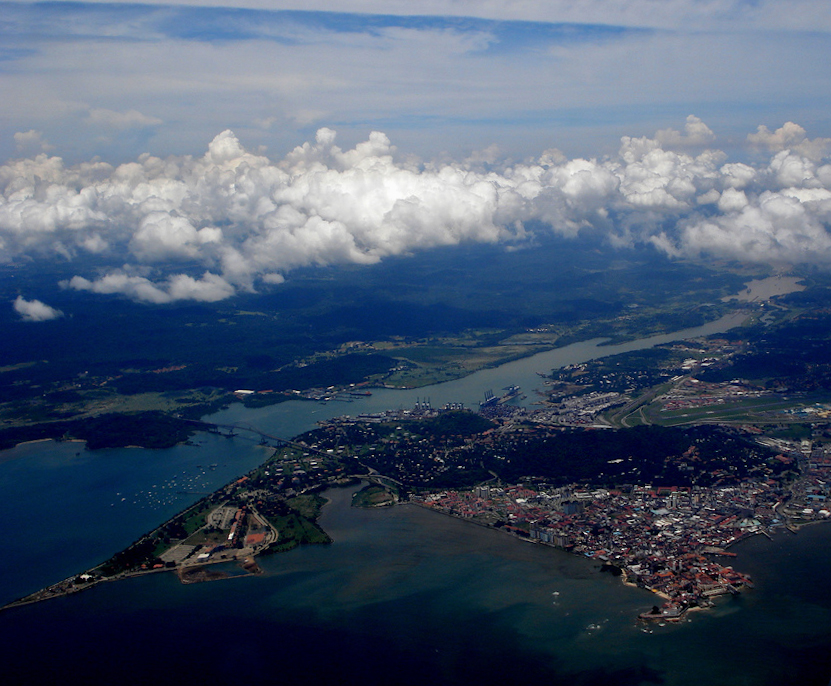
The former Canal Zone around Balboa and Ancon still has its tidy colonial-era streets, and a bike ride through them, ending on the Amador Causeway with the Bridge of the Americas in view, shows a quieter side of the story. For an even broader view, the Biomuseo, designed to celebrate the land bridge that formed when the isthmus rose from the sea, explains why this narrow strip matters to nature as well as trade.
Choosing and combining
For a short stay, Miraflores plus a city tour is enough. With a few days, add the Atlantic locks or a lake cruise. If the canal is the reason for your trip, the partial transit is worth planning around. Combining the locks with lunch and a stroll through Casco Viejo makes a satisfying day, because the old town shows you why the isthmus mattered so much before the canal was ever dug.
Practical tips
Visit in the dry season if you can, roughly December to April, because views are clear and the rain is less likely to interrupt a lake trip. Bring sun protection, water and a hat for open decks and terraces. Mornings are cooler, and wildlife is more active. Where possible, book tickets and tours in advance, particularly for the partial transit and during holiday weeks. Finally, remember that canal traffic follows its own timetable. Ships do not arrive for the benefit of visitors, so a little patience is part of the experience, and the wait is often rewarded with a view you will remember long after you leave.