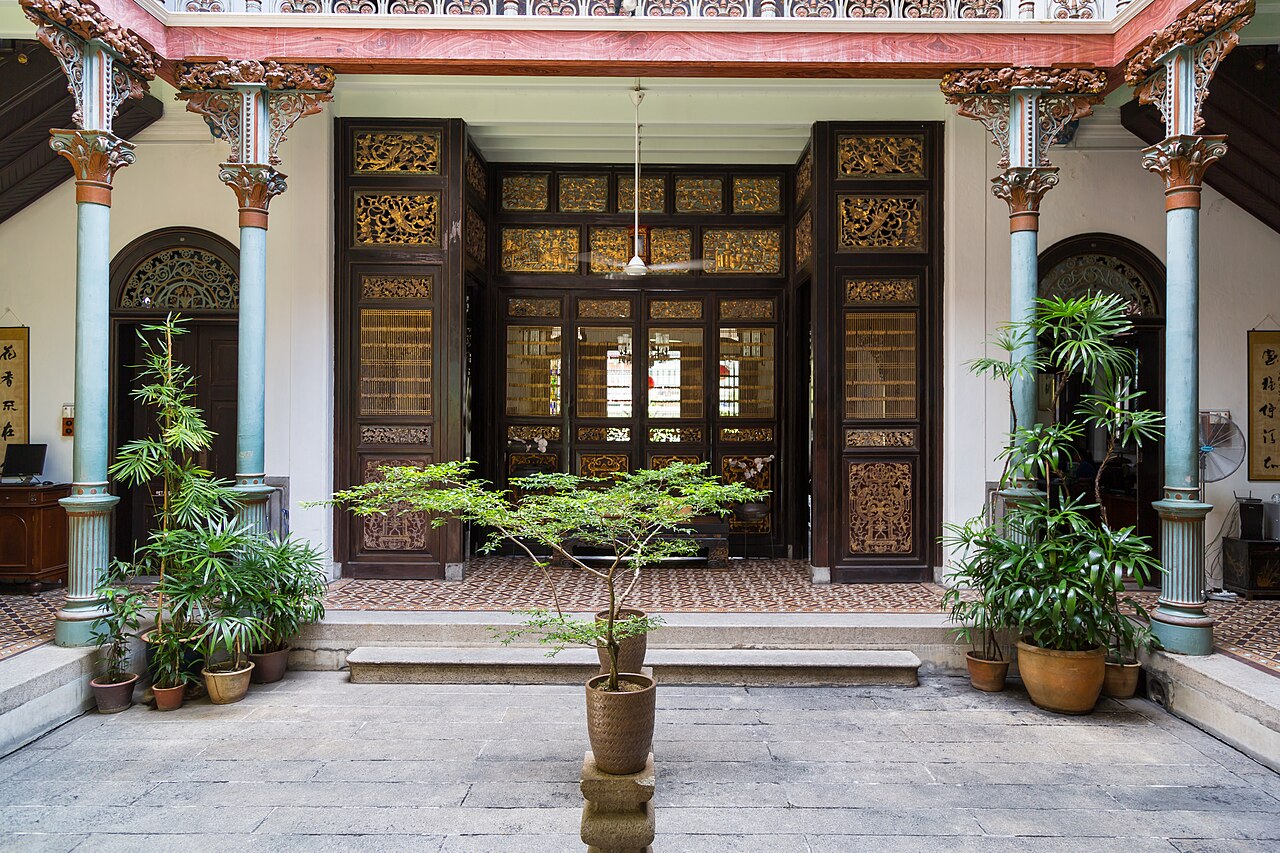
The Pinang Peranakan Mansion is a museum in a former townhouse on Church Street, in the heart of the George Town heritage zone. The house dates from the late nineteenth century and is associated with Chung Keng Quee, a Hakka tin-mining magnate and community leader who rose to prominence in the Straits Settlements, and it has been restored and filled with a large collection of period furnishings. The result is one of the most complete pictures anywhere in Malaysia of Peranakan or Baba Nyonya life, the hybrid Chinese and Malay culture created by families who settled in the Straits ports over several centuries and blended Hokkien customs with Malay food, dress and language. The house itself is a showpiece. You enter through a tall carved timber door and pass into an airwell that lets in light and air, surrounded by rooms decorated with gold-leaf carving, painted panels, glazed tiles, coloured glass and imported fittings. The mix of Chinese, Scottish, English and local influences is typical of the Straits Chinese taste for display, and it explains why Peranakan homes are often described as more is more. Rooms are laid out with ornate blackwood and mother-of-pearl furniture, wedding beds, ancestral altars, embroidered kebaya and beaded slippers, silver betel sets, porcelain, jewellery and photographs, so the visit feels like stepping into a family home rather than a case of labelled objects. Most visitors find the museum most rewarding when they go with a guide or follow the audio or printed notes, because many items only make sense once you know what they are for. The beaded slippers, the tiered food carriers, the sireh sets used to offer betel to guests and the elaborate wedding finery all tell small stories about etiquette, status and ritual. A visit usually takes a little over an hour, longer if you enjoy decorative arts, and it fits neatly into a morning of walking in the old town.
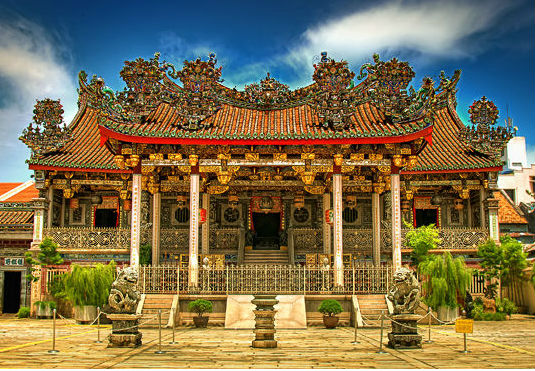
Planning the visit is easy. Church Street, or Lebuh Gereja, is only a short walk from Khoo Kongsi, Armenian Street and the Clan Jetties, so the mansion slots into almost any heritage itinerary. It is often visited on a half-day George Town heritage tour that pairs it with Khoo Kongsi, which is the simplest way to combine the two and gives you a guide for the history.
If you prefer to go independently, aim for the first part of the day, when the rooms are quieter and the air conditioning is most welcome after the heat of the street. Opening days and hours can change, so check before you set out and allow time before closing, since the last entry is earlier than the closing time.
Photography rules can vary from room to room and from year to year, so look for signs and follow staff instructions, and avoid touching the furniture, which is old and fragile. Wear light clothing, since you will move between cool galleries and warm courtyards, and comfortable shoes because the floors are polished and there are steps. The museum is a house rather than a purpose-built gallery, so access for wheelchairs and pushchairs can be limited in places. Ask when you arrive about the best route through the ground floor if mobility is a concern.
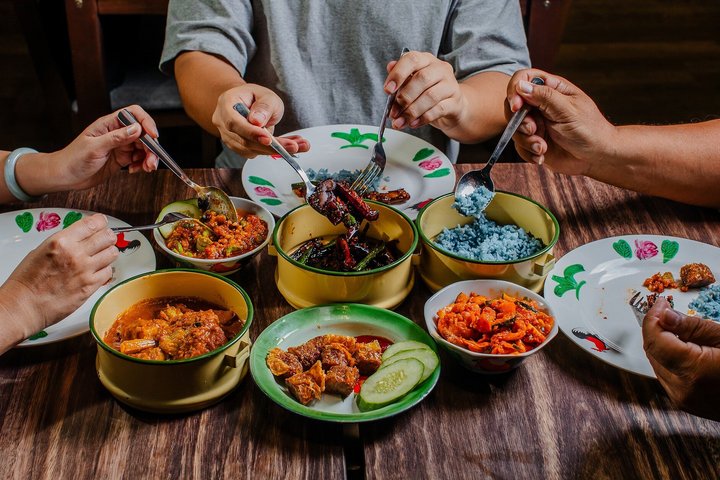
The Peranakan story rewards a little background reading. The Straits Chinese, known as Baba for men and Nyonya for women, developed their own cuisine, with dishes such as laksa, ayam pongteh and kuih that you will meet again at George Town's hawker stalls and restaurants. After the mansion, a bowl of assam laksa or a plate of nyonya kuih makes a natural second chapter, and the Chowrasta and Campbell Street areas are close enough to reach on foot.
Combined with the nearby Blue Mansion, which shows a different, more Hakka and Teochew flavoured style of Chinese merchant house, the Peranakan Mansion helps explain why George Town was one of the wealthiest and most cosmopolitan ports in the region.
Families can enjoy the museum if children are curious about old objects, though young children may tire in the formal rooms. Turn it into a treasure hunt by asking them to spot the tiny beaded slippers, the carved gold doors and the oldest photograph they can find. A one-hour visit is plenty for most families, with ice-cream or a cold drink afterwards on the nearby streets.
What to expect
The experience
A walk-through museum in a restored townhouse, visited on your own with notes or with a guide, and often combined with Khoo Kongsi on a half-day heritage tour.
Best time
Morning, when the galleries are quiet and the heat outside is still mild. Allow for the earlier last entry.
How long
About an hour to an hour and a half, longer for decorative-arts fans.
Tips
Check opening days before you go, follow the photography signs, do not touch the furniture and carry a light layer for the air-conditioned rooms.
Quick picks
- Best for
- Anyone curious about Baba Nyonya culture, antiques and how the Straits Chinese elite lived.
- Families
- Fine for curious older children, who enjoy the tiny beaded slippers and gold-leaf doors. Keep it to an hour for younger ones.
- Couples
- A cool, atmospheric morning stop before a long Peranakan lunch nearby.
- Pair with
- Khoo Kongsi, the Blue Mansion and a bowl of assam laksa or nyonya kuih.
- Time needed
- About an hour, or half a day when combined with Khoo Kongsi and lunch.
Good questions
What is the Pinang Peranakan Mansion?+
It is a museum in a restored late nineteenth-century townhouse on Church Street, filled with Straits Chinese furniture, jewellery, textiles and household objects.
Who were the Peranakan?+
The Peranakan, or Straits Chinese, are descendants of Chinese settlers who adopted many Malay customs, especially in food, dress and language. Men are called Baba and women Nyonya.
Is it worth going with a guide?+
A guide or the notes make a big difference, because many objects only make sense once you know their use. A heritage tour that includes the mansion is an easy way to get that context.
How long should I allow?+
Allow about an hour to an hour and a half. The last entry is earlier than closing time, so arrive with time to spare.
Is it close to other sights?+
Yes. Khoo Kongsi, Armenian Street and the Clan Jetties are all a short walk away, and the street art lanes are nearby.