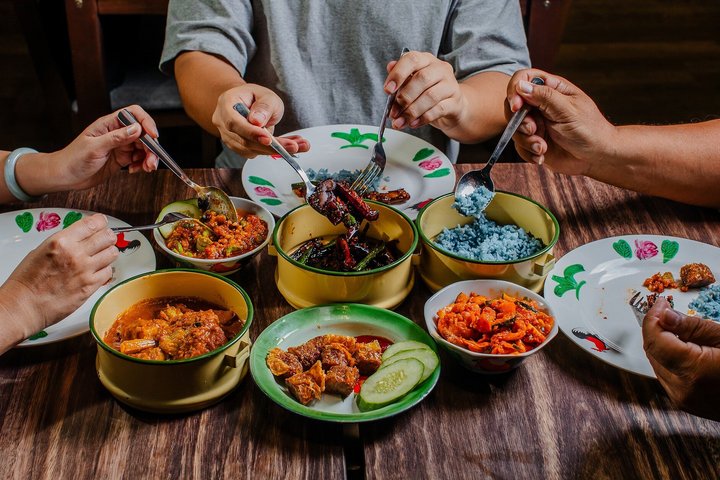
Penang is Malaysia's food capital in the eyes of many Malaysians, and eating is the main activity for a lot of visitors. The island's cooking blends Hokkien, Teochew, Malay, Indian, Peranakan and Thai influences, and the best of it is served at hawker stalls, kopitiams and small family restaurants rather than at formal dining rooms. This guide explains what to eat, how to order and how to avoid the common mistakes.
The classics
Start with char kway teow, flat rice noodles stir-fried over fierce heat with prawns, egg, bean sprouts and chives. Try assam laksa, a sour, spicy fish-based noodle soup with mint, pineapple and a dab of prawn paste, which is quite different from the coconut-rich laksa found elsewhere. Order Hokkien mee, a prawn noodle soup also known as prawn mee, and nasi kandar, steamed rice served with a choice of curries and side dishes, a meal that suits a large appetite. Other regulars include rojak, popiah, lor bak, oyster omelette, curry mee, wantan mee and Nyonya kuih, the small coloured sweets of Peranakan cooking.
Sweet things and drinks
Cendol, shaved ice with green rice-flour jelly, coconut milk, palm sugar and red beans, is the island's signature dessert, and ais kacang and ice kacang are close cousins. For drinks, a kopitiam serves strong, sweet coffee, called kopi, and tea, called teh, with many variations. Ask for kopi o for black with sugar, kopi c for evaporated milk and teh tarik for pulled milk tea. Fresh fruit juices, sugar cane and coconut water are good in the heat, and the island's fruit stalls sell mangosteen, rambutan, pomelo and, in season, durian.
How hawker centres work
Most hawker centres are a collection of stalls around shared tables. Find a table, then walk around and order from the stalls you want, giving your table number so the food is brought over. Drinks stalls usually take orders separately. Pay each vendor as the food arrives or when you finish, using cash for small purchases, and keep small notes handy. Queues are a good sign, but long waits can be a sign of fame rather than quality, so try a mix. Many stalls close one day a week or sell out early, so check opening days and go at the right time.
Kopitiam culture
Kopitiams are old-style coffee shops, often in shophouses, that mix drinks stalls and a few food vendors. They are the best place for breakfast, with kaya toast, soft-boiled eggs and coffee. Settle in, order from the drinks seller and pick food from the stalls in the same shop. It is polite to share tables when places are busy, and no one will rush you.
Choosing stalls
Look for busy stalls with a local crowd, a short menu and food cooked to order. A single dish done well is a good sign, and freshness matters, particularly with seafood. Pay attention to hygiene in the usual way, drink bottled or hot drinks if you are unsure and avoid anything that looks like it has been sitting out in the heat. If you have allergies, particularly to shellfish, nuts or fish sauce, explain them clearly, since many dishes use shrimp paste and peanuts.
Dietary needs
Penang is friendlier to vegetarians than many places, thanks to its Buddhist and Indian communities, with vegetarian restaurants and meatless versions of many dishes. Halal food is widely available, particularly at Malay and Indian stalls, and pork is common at Chinese stalls, so look for halal signs if it matters. Alcohol is available at Chinese coffee shops, bars and many hotels, but not at Muslim-run stalls.
Food tours and classes
A small-group food tour is the quickest way to understand the island's cooking, covering many dishes in a few hours with a guide who explains the stalls and the history. A cooking class and a market visit let you learn the basics of a laksa or curry paste, and a morning tour is helpful if you want to see the wet markets. The Penang Hawker Food Tour is a good first-night option, and the Wonderfood Museum is a fun preview with children. A countryside trip to Balik Pulau adds fruit farms and a famous laksa.
Planning meals
Eat early and eat often. Breakfast at a kopitiam, a late-morning snack, a long lunch, afternoon cendol and a dinner stall crawl will keep you busy. Share dishes so you can try more and keep portions small if you want to fit in several stops. Carry tissues and hand sanitiser, drink water, and wear clothes you do not mind getting a little sauce on. In the hottest hours, take refuge in an air-conditioned cafe and plan your next stop.