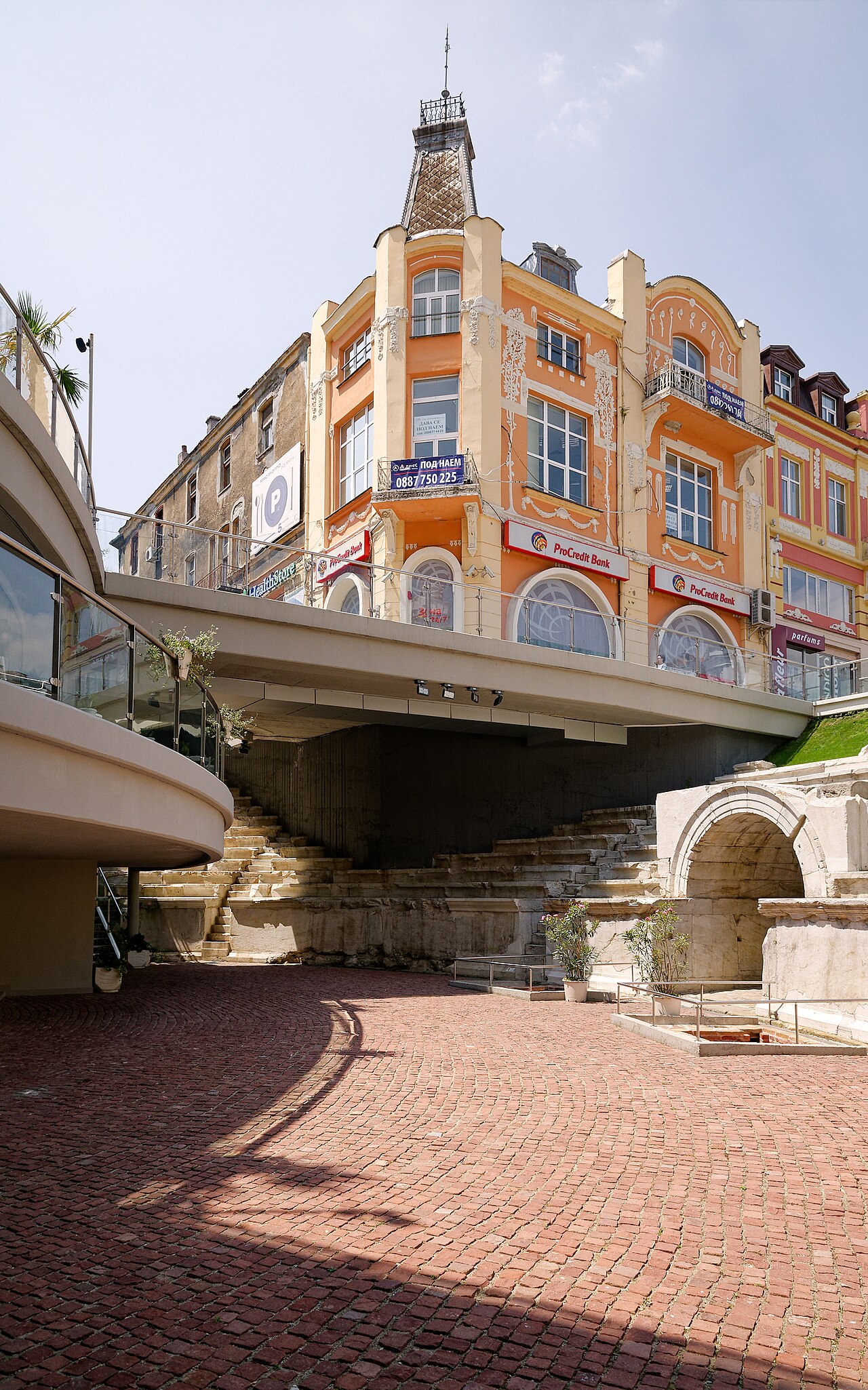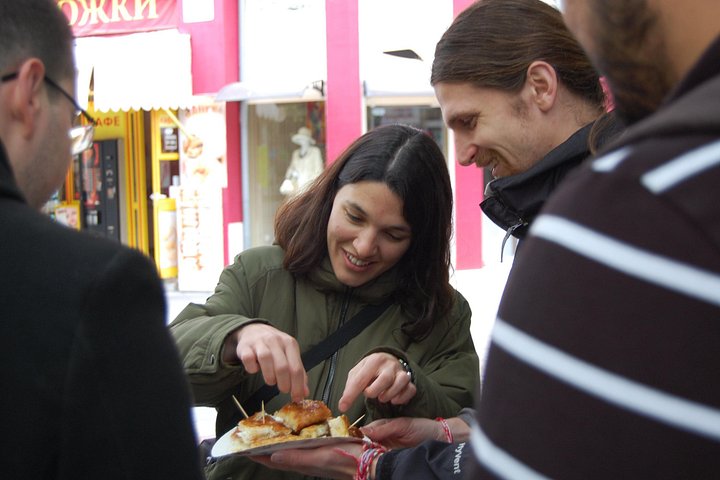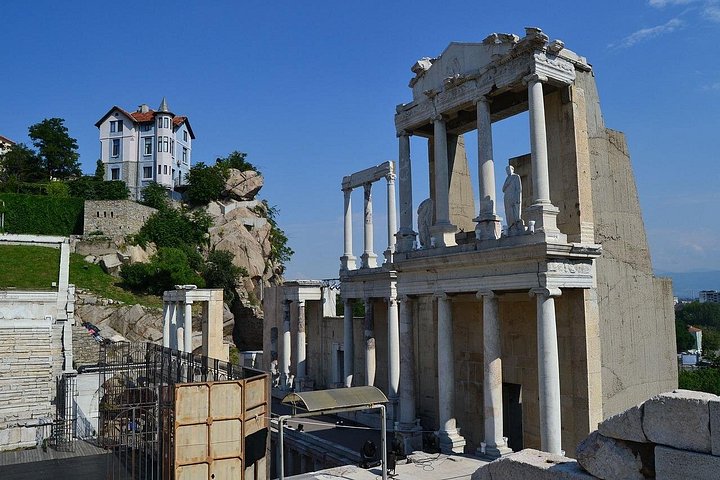
Kapana is the district that gave Plovdiv its modern energy. Once a warren of workshops where smiths, goldsmiths and other craftsmen kept their trades, it now holds small galleries, design studios, wine bars, craft beer pubs, cafes and restaurants, packed into narrow lanes that still carry names from the old trades. The area was revived in the run-up to Plovdiv's year as a European Capital of Culture, and it has kept its mix of local residents and visitors, which gives it a lived-in feel that the Old Town, a few minutes uphill, can lack. There is no ticket and no schedule: you simply wander. Look for street art on the walls, step into a gallery or craft shop, pause for a Bulgarian pastry such as mekitsa, a fried dough served with sweet or savoury toppings, and settle on a terrace for an afternoon coffee or an evening of wine and rakia. Kapana sits right beside the main pedestrian street, between the Roman Stadium and the Old Town, so it is easy to include in any day. The municipality's tourist pages recommend a walk through Kapana as a must-do, and a single wander is enough to understand why.
Understanding the name helps. Kapana means trap in Bulgarian, a nickname usually explained by the district's maze of crooked lanes in which visitors, and shoppers, tend to get lost. Rather than a single sight, it is a district to be in. A good visit has a rhythm: begin with a morning coffee while the craftspeople open their doors, browse the studios and the City Art Gallery in the area, have lunch at a local restaurant serving Bulgarian dishes, and return in the evening when the terraces fill.
The district is compact enough to cover in an hour but pleasant enough to stay for the whole afternoon.
What to eat and drink
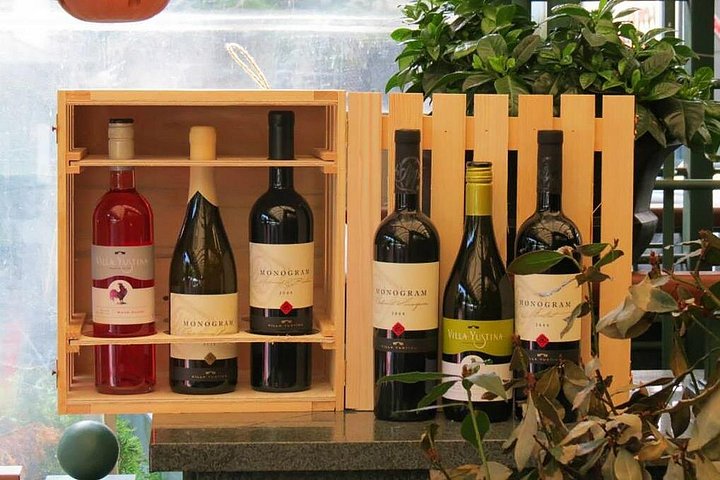
Expect grilled meats, salads of tomatoes and sheep's cheese, soups and stews, dough-based snacks such as banitsa and mekitsa, and a range of Bulgarian wines and rakia. Craft beer bars and specialty coffee shops have multiplied, so you will find modern places beside traditional ones. Reservations help on weekend evenings. If you want a guided introduction, a food walk through central Plovdiv is a good way to try several dishes with a local guide, and it is covered as its own entry on this page.
Practicalities
Kapana is pedestrian-friendly and flat, which makes a welcome change from the cobbled Old Town. It is busiest on warm evenings and at weekends, and quieter on weekday mornings. In winter, many places stay open with indoor seating, and the lanes are lively around holidays. Street art and murals change over time, so each visit can look a little different. Keep an eye on belongings in crowds, and note that some venues keep late hours, so light sleepers should ask about quiet rooms if they stay nearby, as several of our hotels do.
What to expect
The experience
A free, self-guided wander through the pedestrian lanes of Plovdiv's creative quarter, with galleries, craft studios, cafes, bars and restaurants.
Best time
Late afternoon into the evening, when the terraces fill and the lanes come alive; mornings are quieter for coffee and browsing.
How long
One hour for a stroll; two to three if you stop for lunch or dinner.
Tips
Try mekitsa for a quick local snack, reserve for weekend dinners and take a food walk if you want a guided introduction to Bulgarian dishes.
Quick picks
- Best for
- Foodies, café lovers and anyone who wants Plovdiv's contemporary side beside its ancient one.
- Families
- Flat, pedestrian and full of snacks, it suits families, though evenings at the bars can get lively.
- Couples
- A slow dinner on a terrace followed by a wander through the lanes and a glass of local wine.
- Pair with
- The Roman Stadium and the Old Town are both a few minutes away on foot.
- Time needed
- One to three hours.
Good questions
What does Kapana mean?+
It means trap in Bulgarian, a nickname for the maze of crooked lanes in which it is easy to get lost. The streets still carry names from the old crafts.
Is Kapana free to visit?+
Yes. It is an open pedestrian district with no entry fee, and you pay only for what you eat, drink or buy.
When is Kapana at its best?+
Late afternoon and evenings, especially on warm weekends, when terraces fill and the lanes are at their liveliest. Weekday mornings are calmer.
What should I eat there?+
Look for mekitsa, banitsa, grilled meats, salads with sheep's cheese and a glass of local wine or rakia. A food walk is a good introduction.
Is Kapana far from the Old Town?+
No. It is just beside the central pedestrian street, a short walk from the Roman Stadium and a few minutes downhill from the Old Town.