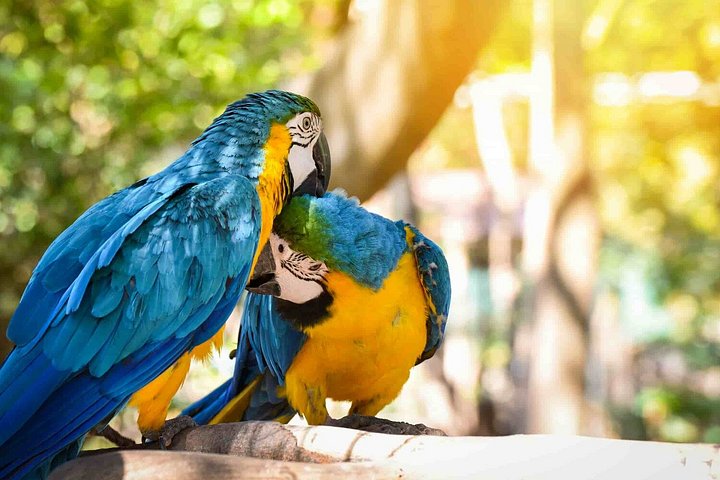
One of the most memorable sights in the Peruvian Amazon is a clay lick, a riverbank where parrots and macaws gather to eat clay. The Tambopata area has several, and they draw birdwatchers and casual visitors alike. This guide explains what is going on, how the main sites differ and how to plan a visit so that you see the best of it.
Why do birds eat clay?
The honest answer is that scientists are still working it out. The leading ideas are that clay helps neutralize toxins found in some seeds and unripe fruit that the birds eat, and that it supplies minerals such as sodium, which can be scarce in the diet of forest animals. Whatever the reason, the behavior is regular, and the birds return to the same banks again and again. That regularity is what makes the clay licks reliable sights for visitors.
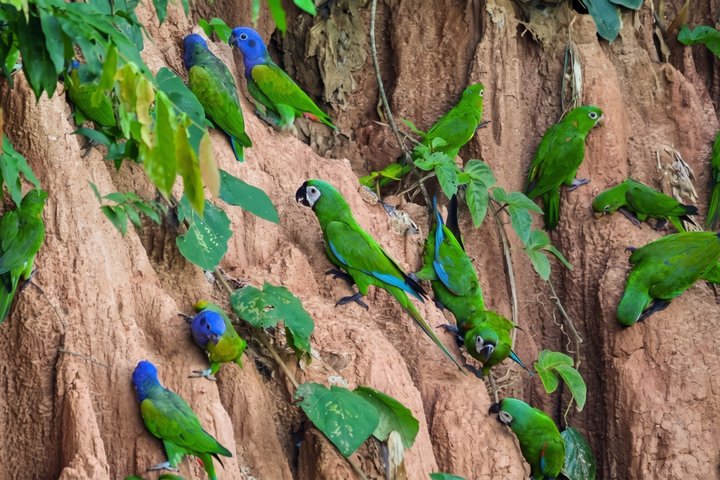
What you see
On a good morning, the bank can be covered with red-and-green macaws, scarlet macaws and a mix of smaller parrots and parakeets. They arrive in waves, perch in nearby trees, and descend to the clay when they feel safe. A passing hawk or a loud noise can send them all into the air in a flash of color and sound. The scene is noisy, colorful and unpredictable, and many travelers rank it among the highlights of their trip.
Chuncho, the big one
The Chuncho clay lick is one of the largest and best-known in the region, and it is reached by a long journey by road and river from Puerto Maldonado. The distance is the main drawback, but the reward is large gatherings and a hide positioned to give good views. You can reach it on a very long day trip, or spread the journey over two days with a night near the river. Many travelers find the two-day format more relaxed, because you arrive fresh for the early morning activity.
Cachuela, the easy one
Collpa Cachuela is closer to town and attracts parrots and parakeets rather than the large macaw flocks of Chuncho. It makes for a shorter, cheaper and gentler outing, and it suits visitors who have only a morning or who want to test their interest before a bigger trip. Do not expect the same scale, but do expect a pleasant morning of birdwatching in a natural setting.
Timing and weather
Early morning is the key. Birds usually arrive soon after sunrise, and activity often drops by mid-morning. Clear, dry mornings tend to be best, and heavy rain can keep birds away. The drier months from May to October are usually more reliable, but there are no guarantees in any season. A good guide will tell you honestly when the signs are poor and will help you find other wildlife while you wait.
Etiquette at the hide
Keep quiet, move slowly and avoid bright clothing. Do not use flash or drones, and do not throw anything to attract birds. If the group is loud, the birds will not come, and everyone loses. Bring binoculars, because even from the hide the birds can be at a distance, and a telephoto lens if you photograph wildlife. Dress in layers, since the pre-dawn river journey can be cool.
How to choose
If you have limited time, take the Cachuela half day. If birds are a priority and you can stand a long day, choose the Chuncho day trip. If you want comfort and photographic light, choose a two-day trip with an overnight. If you want a bigger adventure, look for a three- or four-day program that combines Chuncho with Lake Sandoval and a lodge stay. Ask the operator about group size, the timing of the hide visit and what is included.
A note on expectations
Clay licks are natural events, not shows, and some mornings will be quieter than others. The journey, the river and the forest birds on the way are all part of the experience. Go with an open mind and you will usually leave with a great story.
Combining a clay lick with other sights
Many multi-day programs include both a lake and a clay lick, so you can watch macaws at dawn and paddle among caimans in the afternoon. If you are choosing a lodge, ask about the distance to the nearest lick, since staying closer cuts the pre-dawn travel. Bring a small notebook if you enjoy birdwatching, because the number of species around the hide is often higher than first expected.