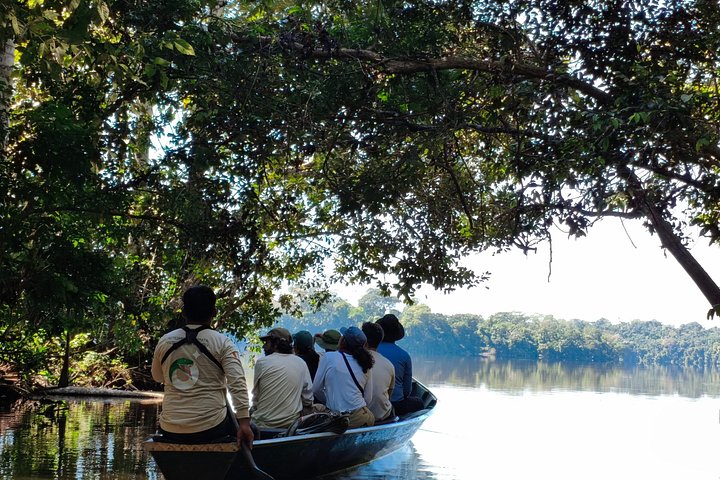
The Tambopata area is one of the most biodiverse corners of the Amazon. The Tambopata National Reserve, together with neighboring protected areas, shelters an enormous variety of birds, mammals, reptiles, amphibians and insects. You will not see everything, and sightings are never guaranteed, but knowing what to look for and how to look will improve your trip. This guide covers the highlights.
Birds
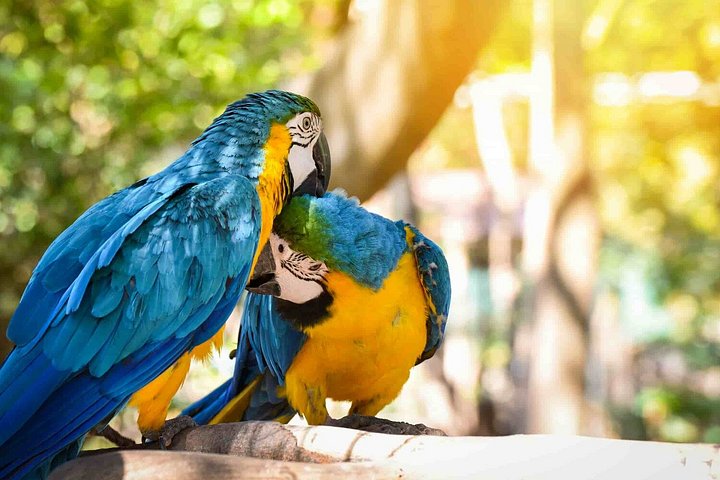
Birds are the easiest wildlife to see. Macaws and parrots are the stars, visible in flight over the forest and gathering at clay licks. Look also for toucans, with their huge bills, and for the unusual hoatzin, a bird that lives by the water and has a punk crest and a strong smell. Herons, kingfishers and egrets work the lake edges, and raptors circle on warm mornings. A good pair of binoculars is the best tool, and guides can identify species by sound.
Monkeys
Several primates live in the region. Squirrel monkeys move in noisy groups through the branches, capuchins forage with energy, and red howler monkeys announce themselves with a deep roar at dawn that can carry for a long distance. Spotting them takes patience, and the first clue is often rustling leaves or a falling piece of fruit. Please do not feed monkeys, which harms their natural behavior.
Giant otters and aquatic life
Giant otters are the headline animals at lakes such as Sandoval. They are large, social and vocal, and they hunt fish in family groups. Seeing them is a thrill, but they are shy and move around, so luck plays a role. Caimans lie along the banks, and at night their eyes reflect light. River turtles bask on logs, and pink river dolphins live in parts of the Amazon basin, though they are not a feature of every trip.
Sloths and other mammals
Three-toed sloths hang in the canopy and are hard to spot because they move so little. Guides look for a ball-like shape in a fork of a tree. Capybaras graze at the water edge, agoutis scurry along the forest floor and peccaries move in herds. The rarest big animals, such as jaguars, tapirs and giant anteaters, live in the area, but most visitors do not see them. Treat any such sighting as a gift.
Reptiles and amphibians
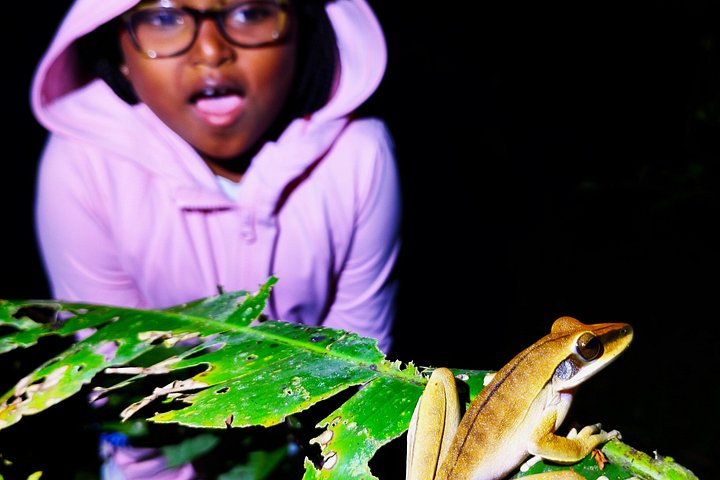
Frogs are abundant and spectacular, particularly after rain, when the night is filled with calls. Look for tree frogs on leaves and tiny poison dart frogs on the forest floor. Lizards bask on trunks and branches, and snakes are present but rarely seen. Guides know how to handle encounters, so follow their advice and keep your distance.
Insects and spiders
The insect life is staggering. Leafcutter ants march in lines carrying pieces of leaf, army ants swarm in columns, and butterflies in electric blue flit through clearings. Night walks reveal stick insects, katydids, huge moths and tarantulas resting by their burrows. Watching ants carry leaves for a few minutes is a good way to slow down and appreciate the small scale of the forest.
How to see more
Move slowly and stop often. Listen for calls, rustling and splashes. Scan the edges and the mid-level of the forest, not just the ground. Wear muted clothing, avoid perfume and speak softly. Early morning and late afternoon are the best times, and rain can bring out frogs and reduce bird activity. A good guide is the most important factor, so choose tours with trained naturalists and small groups.
Be a responsible watcher
Keep a respectful distance, never touch or feed animals, avoid flash photography at night and take your litter with you. Follow trail rules and stay with the group. Support operators who hire local guides and care for the forest. The reward is not only a better experience, but a forest that stays healthy for the next visitor.
A note on photography
A telephoto lens is useful, but binoculars give you more time with each animal. Practice with your camera before you go, since the forest is dark and the animals are fast. Take a few shots, then put the camera down and enjoy the moment. Many of the most memorable experiences are the ones you simply watch.